
Healthcare systems across the Asia Pacific are undergoing a profound transformation. Faced with increasing patient acuity, workforce shortages, rising operational costs, and growing expectations around quality outcomes, hospitals are being challenged to do more with the resources available.
While medical technology continues to advance rapidly, the next frontier of healthcare innovation is no longer defined by individual devices alone. It is defined by how effectively hospitals can connect data, workflows, and clinical decision-making across the continuum of care.
In many hospitals today, operating rooms generate vast amounts of information—from physiological monitoring and ventilation parameters to anaesthesia delivery and perioperative documentation. Yet much of this data remains fragmented across systems, requiring clinicians to manually interpret information from multiple sources.
The challenge is no longer collecting data. The challenge is transforming data into actionable clinical intelligence. This is where the concept of the Smart Anaesthesia Workstation is becoming increasingly relevant.
The Evolution of the Smart and Connected Operating Room
Traditionally, anaesthesia workstations have served as essential platforms for gas delivery, ventilation, and patient monitoring. These capabilities remain critical, but modern perioperative care requires much more.
Today's clinicians must simultaneously manage anaesthetic depth, ventilation quality, hemodynamic stability, recovery trajectories, documentation requirements, and operational efficiency. As surgical complexity increases, the need for integrated clinical decision support becomes increasingly important.
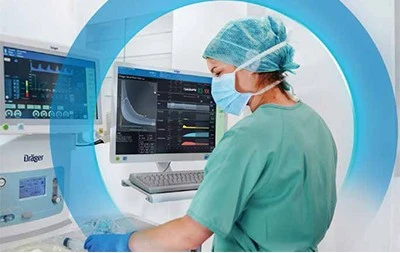
The Smart Anaesthesia Workstation represents the next stage in this evolution. By integrating advanced anaesthesia delivery, protective ventilation strategies, pharmacological modelling, digital workflows, and clinical analytics into a single ecosystem, it enables clinicians to move beyond monitoring toward informed and anticipatory decision-making.
Enabling Predictive Perioperative Care
One of the most exciting developments in modern anaesthesia practice is the ability to visualise and anticipate patient responses before they occur. Tools such as SmartPilot View help clinicians model the interaction of hypnotic and analgesic agents in real time, providing a visual representation of predicted drug effects. Similar to how a GPS helps drivers anticipate upcoming road conditions, predictive decision support tools help anaesthesiologists make more informed adjustments throughout the perioperative journey.
Beyond improving decision-making, several published clinical studies have demonstrated that optimizing anaesthetic depth enhances hemodynamic stability, reduces anaesthetic drug requirements, and contributes to a lower incidence of postoperative nausea.
This shift from reactive intervention to predictive management has the potential to improve consistency, support smoother patient recovery, and enhance clinical confidence during complex procedures. As healthcare increasingly embraces data-driven care models, predictive technologies will play an important role in supporting clinical excellence.
Supporting Protective Ventilation and Sustainable Care
Another area where digital innovation is creating a meaningful impact is protective ventilation. The growing body of evidence supporting lung-protective ventilation strategies has made ventilation management a critical component of perioperative care. Smart Anaesthesia Workstations provide continuous visibility into key ventilation parameters, helping clinicians align practice with evidence-based ventilation approaches.
At the same time, hospitals are placing greater emphasis on sustainability and resource optimisation. Low-Flow Anaesthesia has emerged as an important opportunity to reduce anaesthetic agent consumption while minimising environmental impact.
By combining analytics, guidance tools, and workflow integration, connected anaesthesia platforms make it easier for clinicians to adopt and sustain these practices without adding complexity to care delivery.
Building Toward the Intelligent Hospital
The broader vision extends beyond the operating room. Connected perioperative platforms serve as a critical foundation for building the digital infrastructure needed to support enterprise-wide visibility across acute-care environments. Data generated in the operating room can contribute to larger clinical intelligence frameworks that support quality monitoring, workflow optimisation, predictive analytics, and future AI-enabled care pathways. Over time, these capabilities will help hospitals transition from isolated monitoring environments toward integrated acute-care command models where clinical and operational decisions can be supported through real-time intelligence.
At Dräger, we believe the future of connected healthcare is no longer a distant vision; it is ready to be realised across the Asia Pacific region today. Our Smart Anaesthesia Workstation and Smart Anaesthesia Workstation Surveillance capabilities represent pivotal milestones in this transformation journey. Far beyond individual technologies, they serve as foundational building blocks for the intelligent hospital—bringing together connected devices, clinical intelligence, and real-time insights to enable safer care, greater operational efficiency, and more informed decision-making across acute care environments.
The journey from devices to decisions is already underway. While the intelligent hospital will continue to evolve through new layers of connectivity and clinical intelligence, Smart Anaesthesia Workstations and Surveillance solutions mark an important step toward that future.
As Dräger, our ambition is to help champion this shift toward integrated acute-care intelligence and partner with our customers to help shape this future, transforming data into insight, insight into informed action, and ultimately from informed action to better patient outcomes.