
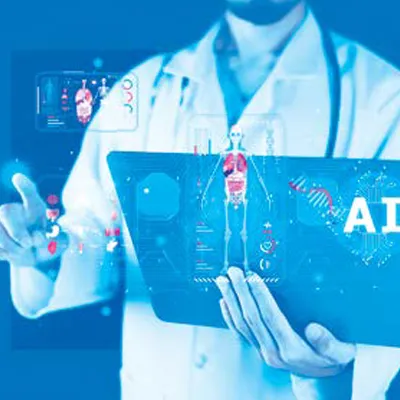
Artificial intelligence (AI) is revolutionizing medical diagnostics across Africa, addressing critical challenges in accessibility, efficiency, and accuracy. Over 400 million people in sub-Saharan Africa lack essential healthcare services, with fewer than 2 pathologists per million people in some regions, leading to delayed or missed diagnoses. In rural communities, where 60% of the population resides, inadequate infrastructure and limited access to specialized medical professionals hinder early disease detection. AI-driven solutions are closing these gaps by enhancing image analysis, pattern recognition, and predictive modeling in microbiology and pathology. These innovations are transforming point-of-care diagnostics, enabling real-time disease detection and improving accuracy in areas where traditional laboratory services are scarce. AI-powered diagnostic tools are streamlining workflows, reducing human error, and increasing efficiency, ensuring that patients receive timely and accurate diagnoses even in the most resource-constrained settings.
Across clinical laboratories, hospitals, and mobile health initiatives, AI-integrated automated diagnostic systems are streamlining operations, reducing dependency on manual processes, and ensuring reproducibility in test results. The ability to process high volumes of diagnostic data with improved accuracy and speed is especially critical in African healthcare systems, where workforce shortages and high patient loads challenge conventional approaches. AI is not just optimizing laboratory efficiency; it is enabling decentralization of diagnostics, bringing sophisticated testing closer to communities through telemedicine, mobile labs, and AI-powered diagnostic devices. These innovations hold potential in tackling endemic diseases such as malaria, tuberculosis, and HIV/AIDS, as well as rising burdens of non-communicable diseases (NCDs) such as cancer and cardiovascular conditions.
Beyond automation, AI is modernizing early disease detection through biomarker analysis, enabling personalized and precision medicine approaches tailored to the genetic and epidemiological profiles of African populations. Machine learning algorithms can identify subtle variations in biological data, facilitating early diagnosis of conditions such as sickle cell disease, cervical cancer, and diabetes, which disproportionately affect African communities. With AI-driven biomarker detection, clinicians can anticipate disease progression, enhance screening programs, and optimize treatment protocols. The ability to identify patterns within epic datasets is empowering healthcare providers with real-time insights, ultimately reducing the prevalence of late-stage disease presentation and lowering mortality rates.
AI-driven diagnostics continue to gain traction in African healthcare, their responsible and ethical integration remains a key priority. Ensuring transparency, data security, and regulatory compliance is essential to maintaining patient trust and safeguarding diagnostic integrity. Addressing challenges related to bias in AI models, interoperability of digital health systems, and equitable access to AI-powered solutions is critical to ensuring that AI-driven diagnostics benefit all populations, including those in marginalized and rural communities. The future of AI in African healthcare depends on strong policy frameworks, collaborative innovation, and investment in capacity-building initiatives to empower health professionals and institutions with the skills and infrastructure needed to adopt and scale AI-driven diagnostic solutions.
The convergence of AI with emerging technologies such as robotics and the Internet of Things (IoT) is paving the way for a transformative future in diagnostics. Robotic-assisted workflows are enhancing sample handling, processing, and result interpretation, while IoT-enabled devices facilitate seamless real-time data exchange between diagnostic platforms and healthcare providers. These developments are not only improving efficiency but also expanding the reach of diagnostic services to remote and underserved areas, bridging gaps in healthcare accessibility. As AI-driven innovations continue to evolve, their role in diagnostics will be instrumental in shaping a future where precision, speed, and accessibility define the next generation of healthcare solutions.
Africa has a unique opportunity to leapfrog traditional healthcare barriers, expand access to life-saving diagnostic services, and strengthen disease surveillance and management. The integration of artificial intelligence (AI) in healthcare diagnostics is transforming the Africa healthcare industry, creating opportunities for enhanced efficiency, accessibility, and cost-effectiveness. AI-driven diagnostic solutions have emerged as a powerful tool in reducing the burden on healthcare systems, improving accuracy, and accelerating decision-making processes. For business leaders and investors, AI in diagnostics presents a lucrative market with immense growth potential, driven by increasing demand for early detection, affordability, and personalized medicine.
The Business Case for AI in Africa’s Healthcare Diagnostics
AI-driven diagnostics present a significant business opportunity within Africa’s healthcare sector, aligning with the continent’s urgent need for efficiency, accessibility, and value-based care. While healthcare systems across Africa have traditionally faced financial constraints, infrastructure gaps, and regulatory complexities, the growing recognition of AI’s potential to enhance diagnostics and reduce costs is driving increased adoption. Governments, private healthcare providers, and technology companies are beginning to see AI as a viable solution to overcoming workforce shortages, accelerating disease detection, and improving patient outcomes.
From a business perspective, AI-powered diagnostics offer substantial advantages by reducing operational costs, optimizing workflow efficiencies, and addressing critical healthcare delivery challenges. In medical imaging, pathology, genomics, and point-of-care testing, AI is revolutionizing diagnostic accuracy, minimizing dependency on specialist physicians, and increasing access to life-saving interventions. These capabilities are particularly critical in low-resource environments, where limited access to radiologists, pathologists, and diagnostic laboratories often delays treatment and leads to poor health outcomes. AI-driven diagnostics allow faster, more reliable disease detection, ensuring that patients, even in rural and underserved regions, receive timely and appropriate care.
Africa’s healthcare industry is at an inflection point, where investments in AI-powered diagnostics can create sustainable business models that bridge the gap between health innovation and economic growth. As AI adoption expands, it is becoming clear that companies operating in the African health-tech space have an opportunity to capture a growing market by developing solutions tailored to the continent’s unique healthcare needs. Unlike in developed markets, where AI is largely used to enhance efficiency in existing healthcare systems, in Africa, AI-driven diagnostics are addressing fundamental challenges, such as shortages of skilled healthcare professionals, limited access to advanced medical equipment, and fragmented healthcare infrastructures.
Major healthcare institutions and multinational corporations are increasingly directing investments toward AI-powered diagnostic solutions in Africa, recognizing the market potential for scalable and cost-effective interventions. Global tech giants and medical innovators, such as Siemens Healthineers, Google’s DeepMind, and IBM Watson Health, have begun integrating AI solutions into radiology, pathology, and genomics. These AI algorithms can analyze medical images, detect disease markers in blood samples, and interpret pathology slides with greater accuracy and speed than traditional methods, allowing for earlier intervention and improved patient management.
The business case for AI-driven diagnostics in Africa is further strengthened by the rising demand for decentralized and scalable solutions. AI-enabled point-of-care (PoC) testing, wearable health devices, and mobile diagnostic applications are unlocking new commercial opportunities while simultaneously improving access to high-quality diagnostics in remote and underserved regions. These technologies allow patients to receive real-time health assessments without needing to visit a specialized diagnostic center, significantly reducing the burden on overstretched healthcare facilities. For businesses, this shift translates into broader market penetration, diversified revenue streams, and long-term sustainability in a rapidly evolving healthcare ecosystem.
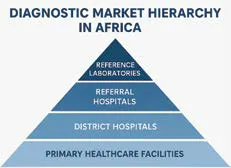
AI’s ability to democratize healthcare access is particularly relevant in Africa’s urban-rural divide, where urban centers have relatively better healthcare services while rural populations face barriers to timely and affordable diagnostics. The integration of AI-powered solutions is breaking down these barriers, allowing healthcare providers to offer scalable, cost-effective, and efficient diagnostic services. Companies investing in AI-driven healthcare innovations in Africa have an opportunity to not only drive financial returns but also contribute to health equity and systemic improvement in medical service delivery.
Major healthcare institutions and multinational corporations are increasingly directing investments toward AI-powered diagnostic solutions in Africa, recognizing the market potential for scalable and cost-effective interventions. Global tech giants and medical innovators, such as Siemens Healthineers, Google’s DeepMind, and IBM Watson Health, have begun integrating AI solutions into radiology, pathology, and genomics. These AI algorithms can analyze medical images, detect disease markers in blood samples, and interpret pathology slides with greater accuracy and speed than traditional methods, allowing for earlier intervention and improved patient management.
The business case for AI-driven diagnostics in Africa is further strengthened by the rising demand for decentralized and scalable solutions. AI-enabled point-of-care (PoC) testing, wearable health devices, and mobile diagnostic applications are unlocking new commercial opportunities while simultaneously improving access to high-quality diagnostics in remote and underserved regions. These technologies allow patients to receive real-time health assessments without needing to visit a specialized diagnostic center, significantly reducing the burden on overstretched healthcare facilities. For businesses, this shift translates into broader market penetration, diversified revenue streams, and long-term sustainability in a fast-paced healthcare ecosystem.
AI’s ability to democratize healthcare access is particularly relevant in Africa’s urban-rural divide, where urban centers have relatively better healthcare services while rural populations face barriers to timely and affordable diagnostics. The integration of AI-powered solutions is breaking down these barriers, allowing healthcare providers to offer scalable, cost-effective, and efficient diagnostic services. Companies investing in AI-driven healthcare innovations in Africa have an opportunity to not only drive financial returns but also contribute to health equity and systemic improvement in medical service delivery.
Market Demand for Accessible and Cost-Effective Diagnostic Solutions in Africa
The demand for accessible and cost-effective diagnostic solutions in Africa is rising due to high disease burdens, limited healthcare infrastructure, and disparities in access to medical expertise. Many African countries face significant challenges in delivering timely and affordable diagnostics, with rural communities, in particular, experiencing shortages of medical professionals and laboratory facilities. Traditional diagnostic methods remain costly and time-consuming, making it difficult for underserved populations to receive early medical intervention.
AI-driven diagnostic tools are revolutionizing healthcare accessibility by offering rapid, scalable, and cost-efficient alternatives. These technologies reduce reliance on expensive equipment and specialized personnel, enabling real-time disease detection through automated image analysis, predictive modeling, and mobile health platforms. In regions where radiologists and pathologists are scarce, AI serves as a virtual assistant, providing immediate diagnostic support and easing the burden on overworked healthcare workers.
The increasing prevalence of non-communicable diseases (NCDs) such as cancer, diabetes, and cardiovascular conditions further underscores the need for early, AI-powered diagnostics. With AI capable of analyzing medical images, detecting disease markers, and supporting remote consultations via telemedicine, these innovations are bridging healthcare gaps, enhancing point-of-care solutions, and ensuring timely interventions, particularly in remote and underserved African communities.
How AI is Disrupting Africa’s Traditional Healthcare Business Models
The Africa’s healthcare business models is shifting from hospital-centric care to a decentralized, patient-centered approach through the integration of AI-driven diagnostics. Traditional diagnostic pathways in many African countries often involve long wait times, manual test interpretations, and fragmented referral systems, delaying critical treatment and burdening already stretched healthcare infrastructures. AI is streamlining this process by providing real-time, data-driven insights, reducing dependency on specialist availability, and optimizing resource utilization.
A key disruption is the expansion of AI-powered point-of-care (PoC) solutions that bring diagnostics closer to the patient. Wearable devices, mobile applications, and home-based testing kits powered by AI are reducing the pressure on overburdened hospitals while enhancing healthcare accessibility in rural and underserved areas. These innovations are lowering operational costs, increasing efficiency, and enabling healthcare providers to reach populations that previously lacked diagnostic access.
AI is augmenting the capabilities of radiologists, pathologists, and general practitioners by assisting in medical image interpretation, early disease detection, and predictive analytics. AI-powered platforms like Qure.ai and Zebra Medical Vision are already enhancing diagnostic accuracy in medical imaging. As AI-driven diagnostics gain traction, healthcare financing models are evolving, with insurers and governments exploring value-based care strategies that prioritize early detection and preventive healthcare, ultimately reducing long-term healthcare expenditures.
The Economic Burden of Late Diagnosis and the Need for AI-Driven Point-of-Care (PoC) Solutions in Africa
Late diagnosis is a significant economic and public health challenge in Africa, contributing to higher mortality rates, escalating treatment costs, and diminished workforce productivity. Many patients, particularly in rural and underserved areas, experience delays in diagnosis due to limited access to medical specialists, diagnostic equipment, and well-equipped laboratories. As a result, diseases such as cancer, tuberculosis, diabetes, and cardiovascular conditions are often detected at advanced stages, leading to higher treatment costs, increased hospitalizations, and preventable deaths.
AI-driven point-of-care (PoC) solutions are transforming this reality by enabling rapid, on-site diagnostics that support immediate clinical decision-making. Unlike conventional laboratory-based tests that require specialized infrastructure and long turnaround times, AI-powered PoC devices provide real-time analysis, facilitating early detection and intervention, especially in resource-limited settings.
Innovations such as AI-driven handheld ultrasound scanners, smartphone-based diagnostic tools, and portable ECG devices are bringing affordable and high-quality diagnostics to primary healthcare providers across Africa. For instance, mobile AI-powered retinal imaging systems are improving diabetes-related blindness detection in remote areas. Increased investment in AI-driven PoC solutions by governments and global health organizations is enhancing healthcare sustainability, reducing long-term treatment costs, and ensuring more efficient resource allocation across Africa’s healthcare systems.
References
Bajwa, J., Munir, U., Nori, A., & Williams, B. (2021). Artificial intelligence in healthcare: Transforming the practice of medicine. Future Healthcare Journal, 8(2), e188–e194. https://doi.org/10.7861/fhj.2021-0095
Kondo, T. S., Diwani, S. A., Nyamawe, A. S., et al. (2025). Exploring the status of artificial intelligence for healthcare research in Africa: A bibliometric and thematic analysis. AI & Ethics, 5, 117–138. https://doi.org/10.1007/s43681-023-00359-5
Owoyemi, A., Boyd, A., Osiyemi, A., & Owoyemi, J. (2020). Artificial intelligence for healthcare in Africa. Frontiers in Digital Health, 2. https://doi.org/10.3389/fdgth.2020.00006
MDPI Healthcare. (n.d.). (No specific title was provided; ensure this source is relevant and properly cited.)