
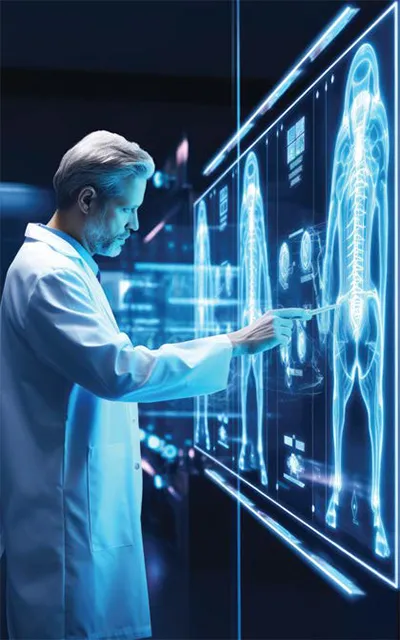
Southeast Asia’s healthcare systems are facing a triple threat. Deemed an ageing population, the ASEAN population is getting older, faster, and that means more people will need care. According to the World Health Organisation (WHO), 1 in 5 people here will be aged 60 or above by 2050 . Hospitals and healthcare facilities will need to handle this surge to treat the complex health problems older people often have.
Additionally, non-communicable diseases like cardiovascular disease (CVD) are becoming more common, imposing a growing health burden in Southeast Asia , draining resources from healthcare systems. The region is also facing a significant shortage of healthcare professionals – by 2030, the estimated shortages of health workers will be 6.9 million, nearly 40% of this shortage burden will be in the Southeast Asia region.
This is not helped by healthcare workforce challenges such as the increasing risk of burnout faced by healthcare workers. Already, a 2021 study found that 20% of Southeast Asian frontline healthcare workers reported job burnout, while moderate anxiety and depression were affecting 10% and 4% of the respondents.
Tackling the triple threat with imaging technologies
In response, healthcare systems are shifting from volume-based care to value-based care, transitioning from merely providing medical services towards optimising patient outcomes and cost-effectiveness. Investing in imaging technologies is an imperative for healthcare providers to enable value-based care. Radiology scans are often critical in ensuring accurate and effective diseases management. Access to imaging technologies is the key to early disease detection and diagnosis, which allow for timely access to effective treatments, lowering cost of care in the long run.
Technologies also help healthcare facilities relieve administrative tasks and ease workflow so that healthcare professionals can dedicate more time to patient interactions and outcomes. This not only enhances their professional satisfaction and reduces burn-out, but also paves the way for better quality care for patients.
CT modality, a cornerstone for timely diagnosis and access to care
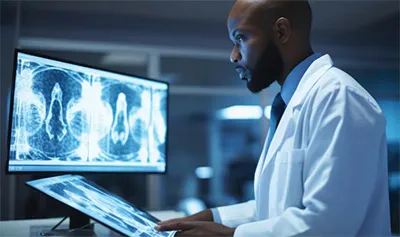
Zooming into the imaging needs in ASEAN, the modality of computed tomography (CT) scan is a cornerstone for accurate diagnosis of a wide range of medical conditions due to its ability to provide incredibly detailed views inside the body with speed and accuracy. CT scans capture cross-sectional images, like slices of bread, revealing bones, organs, and soft tissues in high resolution. This detailed information allows doctors to diagnose even the most complex and difficult-to-treat conditions, from infections and tumors to blood clots and bleeding. Furthermore, the precise information from CT scans goes beyond diagnosis where doctors can use these images to plan surgeries and other procedures with greater precision, ultimately leading to better patient outcomes.
CT Powered by AI and Advancements Enabling Short-staffed Radiology Departments
Over the last decades, there have been huge advancements in the CT modality, from time taken to complete a scan, image resolution, reduction of radiation doses to advanced techniques for specific examinations. With the challenges we are seeing today, the next generations of CTs must be designed with healthcare professionals in mind, empowering them to see beyond clinical complexities and workflow obstacles to improve outcomes, consistency and productivity, and offering a new perspective in sustainable healthcare.
Today, first-time right imaging enabled by spectral-detector CT systems presents significant benefits in reducing the human and financial costs of missed and delayed diagnoses. Unnecessary, suboptimal, repeat imaging leads to wastage of health systems’ resources and healthcare workers’ time. These systems deliver high quality images for every patient on every scan and a time-saving workflow which enable healthcare professionals to rapidly provide a confident diagnosis and an effective treatment plan for every patient. In some cases, 26% reduction in follow-up scans due to incomplete diagnosis, and 34% decrease in overall time to diagnosis have been observed with these systems . These systems also feature an advanced visualisation workspace powered by artificial intelligence (AI) to bring clinical insights directly into clinical workflows to inspire confident decisions for various clinical domains from Oncology to Cardiovascular and enables integration of results virtually, anyway, including the primary reading environment.
AI can deliver next-level diagnostic confidence and advanced workflow which will free both CT technicians and radiologists from tedious, time-consuming tasks so they can spend more time focused on their patients. AI can be leveraged for new clinical capabilities and more workflow advances to address diagnostic imaging needs for complex diseases where precise patient diagnosis is crucial. For example, more accurate and reliable imaging results are needed to better manage increase in complex cardiac cases. High quality AI-enabled CT systems can triage patients presenting with chest pain with undiagnosed coronary artery disease to free them from unnecessary invasive procedures by meeting the advanced imaging requirements for this “CT first” approach. With its detector technology to support AI-based reconstruction, high-quality imaging can be delivered at much lower radiation dose.
Advanced technologies also enhance productivity of high-throughput, short-staffed radiology departments. Newer CT systems feature virtual tools to facilitate remote collaboration, education, and training, which can be instrumental in overcoming challenges related to increased patient caseloads, complex cases, staff shortages, and budget constraints. These tools facilitate virtual over-the-shoulder support, enabling expert imaging technologists to assist their less experienced or specialised colleagues at distant locations while the patient is undergoing a diagnostic scan procedure. Collaborations such as these bring about the added advantage of enhancing healthcare access in remote and rural areas, where there is often a scarcity of specialised staff, such as radiologists.
Emphasising lifetime value and sustainability, eco-design principles can be employed in the design of CT systems to lower energy consumption and promote circularity. Reliable services, upgrades and clinical offerings can be applied to extend the life-time value and uptime and future readiness of the system.
Partnership is key
Technology is bringing countless possibilities to address the imaging needs of patients and improve healthcare workforce experiences. To ensure health systems truly reap the benefits of these innovations, collaboration between healthcare providers and technology innovators is key. Aside from workforce shortages, we are seeing a shortage of imaging equipment in low- and middle-income countries (LMICs) including in ASEAN. For instance, while high-income countries (HICs) boast nearly 40 CT scanners per million inhabitants, LMICs have fewer than 1. With imaging being essential to ensure timely diagnosis, appropriate treatment of diseases, and access to quality care for patients, healthcare providers and technology innovator must work together to address this.
Indeed, collaboration creates a platform for knowledge and best practise sharing, allowing technology providers to better understand and meet the needs and demands of hospitals and the healthcare ecosystem. With these technological advancements, across CT and imaging, healthcare practitioners can be better supported and enabled to deliver the best care for patients and to help meet the healthcare needs across ASEAN.