
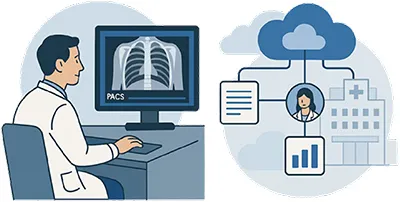
While AI, Gen AI, and Agentic AI Agents dominate the headlines and capture attention with their buzz, it’s essential not to lose sight of what really matters today. Today, I’d like to focus on practical insights. The migration of digital medical imaging to the cloud is one such vital topic. This foundational shift is quietly revolutionising patient care and hospital operations by addressing urgent challenges like soaring data costs, limited infrastructure space, and the need for interconnected healthcare ecosystems.
Cloud adoption is not just a technology upgrade; it represents a cultural and strategic transformation for healthcare institutions. Early adopters experience faster systems, lower costs, and higher clinician satisfaction, while the cloud enables advanced AI, hospital-at-home care, and global research collaboration for the future. For healthcare leaders, embracing this change means redefining the patients’ experience and creating adaptive hospitals where technology and empathetic care evolve hand in hand.
The Transformative Journey from Analog to Digital
Over the past thirty years, healthcare has undergone a profound transformation, moving from analog operations dominated by film-based medical imaging, paper records, and physical patient files toward an integrated digital transformation. Three decades ago, the concept of a "digital hospital" was largely aspirational - a future vision rather than an operational reality. The introduction of Picture Archiving and Communication Systems (PACS) during the 1990s marked a pivotal moment when hospitals began digitising imaging workflows, despite skepticism over technical feasibility and costs. PACS demonstrated that digital imaging could significantly enhance clinical workflows and patient care.
Today, as hospitals transition from traditional on-premises infrastructures to cloud-based platforms, this evolution continues into a new chapter characterised by scalability, collaboration, and intelligence in healthcare delivery. This shift is far beyond a mere technological upgrade; it represents a reinvention of how hospitals operate, how clinicians interact with patient data, and how care is experienced by patients.
Early Milestones: From Film to Digital Imaging Ecosystems
Initially, adopting PACS was a bold and uncertain move. Many questioned whether digital storage and management of medical images was feasible or practical. However, as healthcare organisations connected PACS with electronic medical records (EMR), hospital information systems (HIS), and early mobile hospital applications, a fully integrated digital ecosystem began to take shape. Over time, tons of clinical records were digitised, enabling seamless access and managing patient care with improved efficiency and reliability. This foundation allowed hospitals not only to meet advanced global recognition benchmarks, such as Newsweek World Best Smart Hospital, HIMSS Analytics maturity models, etc, but also to maintain stable operations.
The COVID-19 pandemic showcased the power of digital transformation. Hospitals rapidly deployed artificial intelligence (AI) models that could classify chest X-rays for infection markers, detect polyps during colonoscopies, and generate structured digital reports that enhanced diagnostic speed and accuracy. What was once a visionary goal had become a daily clinical practice.
Leading global healthcare organisations, including Mayo Clinic, Cleveland Clinic, and Samsung Medical Center, took digital imaging a step further by integrating it with advanced analytics. They combined imaging data with genomics, pathology, and wearable health monitors to create a comprehensive picture of patient health, expanding radiology’s boundaries into multidisciplinary collaboration and reinforcing digital imaging's role in clinical excellence.
Limitations of Traditional Infrastructure
Despite technological advances, traditional on-premises infrastructure struggled to keep pace with the exponential growth of medical imaging. Hospitals faced escalating storage costs, limited physical space for server expansion, and reduced competitiveness due to isolated local data systems, which hindered collaboration in the increasingly connected global healthcare ecosystem. For example, large tertiary hospitals performing hundreds of surgeries daily generate terabytes of imaging data, which places significant demands on local servers that require constant hardware upgrades and costly staff support.
Globally, leading medical centers, medical innovators, and healthcare providers recognised these limitations and decisively moved towards cloud-based solutions, aiming to avoid slowdown and remain competitive.
The Cloud Shift: Strategic and Cultural Evolution
Migration to the cloud represents not only a technical upgrade but also a strategic and cultural evolution within healthcare organisations. Patient privacy, data security, and compliance with strict regulatory frameworks remain paramount concerns that require robust safeguards.
Many successful transitions begin with hybrid cloud models that combine local data centers and cloud infrastructure. This approach balances local data control with cloud scalability. Hospitals adopt state-of-the-art security measures, including zero-trust architecture, multi-factor authentication, and end-to-end encryption, to satisfy regulators and reassure patients and staff.
Financially, hospitals conduct thorough total cost of ownership (TCO) analysis, finding that while initial cloud migration involves substantial investments - covering migration planning, data transfer, and new licensing models - the long-term benefits include significantly reduced operational expenses, improved system responsiveness, and enhanced disaster resilience. Cloud services offer unmatched agility, dynamically scaling resources in response to fluctuating demand, such as during pandemics or mass-casualty events, which traditional servers struggle to match.
Leading hospital systems leverage Google Cloud, Amazon Web Services (AWS), Microsoft Azure, and hybrid cloud orchestration tools, achieving a blend of reliability, compliance, and performance. This enables radiologists faster retrieve prior studies and patients shorter wait times with more accurate diagnoses.
Cultural Transformation in Healthcare IT
The cloud shift triggers a profound cultural change in healthcare organisations. IT, once viewed as a background support function, now assumes a central role as an enabler of clinical innovation, research collaboration, and patient engagement.
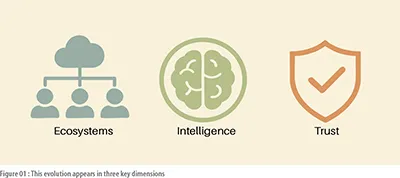
This evolution appears in three key dimensions:
From Silos to Ecosystems: Cloud platforms dissolve barriers among departments, institutions, and across national borders. Real-time collaboration on shared datasets accelerates scientific discovery and improves patient outcomes, as seen in multinational cancer research using federated cloud-hosted imaging datasets that preserve privacy.
From Infrastructure to Intelligence: Healthcare systems focus less on raw data storage and more on generating actionable insights by integrating imaging, laboratory, and clinical data through AI and analytics. Early-warning systems for sepsis, integrated with EMR and imaging data, predict patient risk hours before symptoms appear, enabling timely intervention and saving lives.
From Compliance to Trust: Security strategies evolve to build sustained patient trust beyond regulatory checklists. Patients increasingly demand transparency about how their data is stored, accessed, and used to improve care. Hospitals that communicate openly about data protection and privacy earn stronger patient loyalty.
Overall, cloud transformation reshapes the landscape of hospitals, embedding IT deeply into clinical excellence, research progress, and patient empowerment.
The Promise of a Cloud-Powered Future
Hospitals adopting cloud platforms unlock opportunities for pioneering, patient-centric care. Large-scale AI models can analyse vast imaging and pathology datasets, enabling earlier diagnosis, precision treatment, and personalised preventive care.
Patient engagement is enhanced by integrated digital assistants, remote monitoring, and hospital-at-home programs supported by seamless data flow across platforms. For example, diabetic patients can upload continuous glucose monitoring data from wearables, automatically analysed alongside retinal images and lab results to generate personalised alerts and treatment adjustments shared instantly with their care teams.
Cloud technology makes it easier and faster for hospitals and institutions to share medical data. For example, Korea’s “MyHealthWay” project lets patients access their key health information through QR codes, showing how cloud systems can support nationwide data sharing and connectivity.
Looking ahead, cloud-enabled smart hospitals are set to drive innovation in multiple ways. They will enable AI to operate at an unprecedented scale without being limited by hardware constraints. Patient-centered engagement will improve using digital concierges and remote monitoring technologies. Additionally, there will be closer integration between research and clinical care, accelerating the translation of new discoveries into practical treatments. Furthermore, these hospitals will facilitate global collaboration through multinational clinical trials and teleconsultations.
The smart hospital of the Future is defined not merely by technology stacks, but by how effectively technology integrates into patient journeys, fosters equity and access, and expands care beyond physical walls.

Remaining Challenges to Overcome
Despite these advances, migrating to cloud ecosystems presents ongoing challenges. Governance models need to evolve to effectively oversee cloud operations. Clinicians require training and must adapt to new workflows to fully utilise the technology. Financial models also need to shift from traditional capital expenditures to more flexible, operational spending. Securing clinician buy-in is critical, as digital tools that are underused risk failure without strong support from frontline staff. To minimise disruption, investments in change management are necessary, including tailored training programs, feedback mechanisms, and the development of user-friendly interfaces.
While hurdles persist, the overarching trend is unstoppable - healthcare IT is moving from isolated, locally focused infrastructures toward interconnected, intelligent, and scalable cloud ecosystems that empower superior patient care and operational excellence.
Lessons for Healthcare Leaders
Healthcare leaders driving cloud transformations should consider these guiding principles:
• Vision Before Technology: Align cloud adoption with a broader mission of patient-centered, data-driven care rather than short-lived technology trends.
• Security as an Enabler: Employ rigorous security frameworks to exceed regulatory compliance and actively build patient and provider trust.
• Hybrid Flexibility: Use a practical blend of local and cloud resources to balance innovation and governance needs.
• Financial Transparency: Conduct detailed cost-benefit and outcome-based analyses to demonstrate the broad value of cloud migration beyond cost savings.
• Culture-Driven Pace: Technology readiness is less important than the willingness of clinicians, patients, and regulators to embrace change and innovation.
Hospitals driven by vision and trust - rather than cloud popularity alone - achieve true value: security acts as a strategic enabler, hybrid models ease transitions, financial discipline turns cloud from a cost to an asset, and culture ultimately speeds transformation.
Toward the Smart Hospital of the Future
The migration of digital imaging to the cloud is a significant leap in building smart hospitals - an evolution comparable to PACS’s introduction in the 1990s. Future hospitals will be defined by seamless patient interactions via digital platforms, global clinician collaboration, and data functioning as an engine of intelligence.
The true measure of cloud transformation lies in its impact on human health, delivering more accurate and timely diagnoses, reducing patient wait times, and enabling safer, more efficient treatments. These advancements contribute to improved overall patient outcomes and a better experience. The journey from film-based imaging to cloud-powered care embodies healthcare’s capacity for innovation and adaptation.
Conclusion
Digital imaging’s path from film to cloud underscores healthcare’s continuous drive to innovate and improve. Hospitals that combine visionary leadership, meticulous planning, and trust-building will lead the way in shaping a future where technology enhances human well-being.
By embracing cloud platforms, healthcare organisations can navigate complexity and uncertainty while unlocking unprecedented opportunities for smarter, faster, and more compassionate care.
The lesson of the last thirty years is clear: bold, well-executed choices foster lasting transformation. The next leap, powered by cloud technology, will define the smart hospitals of tomorrow.