
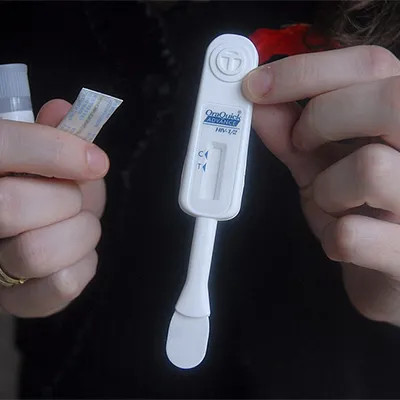
In the modern world of busy healthcare, the future of the diagnostics is no longer a question, but the motivation towards innovation. Incessant need of quicker, precise and available diagnostic methods is drastically changing the way illnesses are diagnosed and addressed. Embracing the middle of this transformation, is a new emerging trend hurriedly sweeping across the world, point of care testing, or POCT. As it can send the results quickly and make clinical decisions fast and easy, the POCT test is being called the diagnostics of the future. Whether this is really the new standard of care or it is another transitional lobby during the diuretics revolution, remains a question.
Understanding the Shift: What Is the Future of Diagnostics?
The classical model of diagnosis, the sample is taken, brought to the laboratory, processed, and the results are delivered, is usually accompanied by delays and logistic difficulties. The current patient needs and burdens on the healthcare sector continue to escalate, and the call to have high-speed diagnostic tests capabilities is getting louder. What then is the future of diagnostics? It manifests as speed, individualization, and decentralization.
The direction of future diagnostics will be overcoming the barrier between diagnostic and intervention. The best diagnostic device will be any device, which is available, precise, cheap, and one that provides real-time feedback. Point-of-care testing equipment make exactly that effort. They allow clinicians and even patients to make instant decisions as POCT tests remove the time lag occurring between sample harvesting and result delivery.
Point of Care Testing in Spotlight
What then is the point of care testing? And the so called POCT is really nothing more than diagnostic testing being performed in or around the locality of patient care whether it’s within hospitals, in clinics, inside ambulances, at home or even inside retail pharmacies. Point of care diagnostic tools are built on a model of speed and convenience as compared to the traditional laboratory based diagnostics. They are small, easy to use and do not need heavy infrastructures.
PoC testing types are everywhere always in the form of glucose monitors, pregnancy kits, antigen tests (of COVID-19), troponin tests (diagnosing cardiac attack in the ED). The only thing that is common with all these POCT tests is that they facilitate a faster diagnosis to, consequently, commence treatment quicker.
The outcomes of the point of care testing in the context of the COVID-19 pandemic replaced any doubts about decentralizing diagnostics since it was proven possible, and even essential. POCT is no longer a luxury, it is now a clinical requirement (especially in scenarios of time sensitivity such as cardiac events, infectious disease and critical care).
The POCT Advantage: Why the Healthcare Industry Is Leaning In
This is the reason why point of care diagnosis solutions are becoming popular among geographical boundaries. A comparison of traditional lab testing and POCT has been provided here below, and what one can notice is the powerful advantage of the latter:
| Advantage | Conventional Lab Testing | Point of Care Testing |
| Time to Results | Hours to Days | Minutes |
| Infrastructure | Requires centralized labs | Portable and compact |
| Accessibility | Limited to hospitals/labs | Available in clinics, homes, ambulances |
| Cost | High due to logistics and personnel | Cost-effective in the long term |
| Usability | Needs skilled technicians | Often usable by clinicians or even patients |
This responsiveness of point-of-care testing equipment’s means that there is no need to wait-out lab turnouts before administering treatment. Great speed enables emergency rooms to choose between life and death. The POCT tests have sometimes been the diagnosis modality available in remote areas where the healthcare infrastructure is poorly developed.
However, it has more important implications than clinical urgency. Patient empowerment in the future is all about diagnostics. The picture of a diabetic person testing his/her blood sugar levels at home with a rapid diagnostic test, titrating the amount of insulin that should be taken and preventing hospitalization comes to mind. This is the trait of control which POCT is bringing up to the palms of patients, or a new era of self-management of health.
Disrupting the Norm: Is POCT Becoming the Standard?
With so many advantages attached to POCT tests, are they the emerging standards to healthcare diagnostics? The industry numbers do indicate as such. Market research shows that the total market size of point of care testing in the globe will rise to USD 75 billion by 2030 with a CAGR of 10 percent. Chronic disease rate, aging populations and rising demand of at-home diagnostics are contributing to this surge.
However, there is more to that. Point-of-care diagnostics devices have been able to fit cloud systems and EHRs (Electronic Health Records), which guarantee real-time data synchronization and improved patient monitoring as a result of the digital health revolution. This meeting of diagnostics and information is characteristic of diagnostics in the future whereby health data is not inert but part of a river to decision making pathways.
We shall just give a few very famous examples of point-of-care testing:
• Troponin Tests: Are performed in the ERs and used to specify the presence of myocardial infarction in a few minutes.
• HbA1c Analyzers: These are employed in monitoring diabetes in a clinic or even in a pharmacy.
• Influenza and COVID-19 Antigen Tests: Quick diagnosis to limit an infectious spread.
• INR Meters: These are used at home by patients on anticoagulants to determine blood clotting time at home.
All these POCT tests are not only enhancing quality care to patients but also alleviating pressure off centralized labs. Point of care diagnostic infrastructure is an aspect that is seeing more and more hospitals and diagnostic chain budgets being committed to.
Challenges on the Road Ahead
Nevertheless, the point of care testing is not without its challenges even though it shows a lot of promise. A major issue is that the accuracy and reliability varies against central lab method. Not every POCT test is a good test and some with poor calibration or use can give misleading results.
Regulation and quality control also form another barrier. Point-of-care testing devices are usually utilized in a place where there is no mandatory control of the laboratory, which makes standardization and compliance very important. Besides, it is also important to train healthcare providers and patients in the field of usage of these devices correctly.
In some cases of low-resource situations, cost can also prove to be a barrier, but the introduction of novel funding and the government initiatives are slowly opening up access to point of care diagnostic tools.
Future Diagnostics: Blending AI, IoT, and POCT
Since the thing of the future of diagnostic is more than just a vision, one cannot but mention the influence of new technologies. The Internet of Things (IoT) and Artificial Intelligence (AI) are about to bring POCT to a new dimension.
Due to the Artificial Intelligence (AI) and Internet of Things (IoT), POCT will reach new heights. Consider a POCT test that does not merely provide instant results but pattern scans the data to determine the risks or the spread of the disease through the use of AI.
Biosensors are already under development to use wearable point-of-care testing devices to detect vital biomarkers in sweat or saliva or in interstitial fluid. Such devices can be used in real-time to transfer data to mobile applications enabling round the clock health tracking. The combination of diagnostics as a part of everyday life will characterize the future of diagnostics, which are preventive, predictive, and personalized.
The Industry Speaks: POCT Market Insights
The following is a picture of the current state of POCT and where it is headed:
| Metric | Value/Trend |
| Global POCT Market Size (2024) | ~$45 Billion |
| Projected Market Size (2030) | ~$75 Billion |
| CAGR | ~10% |
| Top Segments | Glucose Testing, Infectious Disease, Cardiac Markers |
| Key Players | Abbott, Roche, Siemens Healthineers, Danaher, BD |
| Innovations in Pipeline | AI-powered POCT, Non-invasive biosensors, Mobile-integrated platforms |
This thriving market indicates faith that the stakeholders, including governments and health care providers as well as patients, have in point of care testing. It even tends to allude that POCT tests are no more supplementary but at the heart of future diagnostic plans.
Conclusion: A Diagnostic Revolution in Motion
Then, is POCT now the new healthcare timeline? The response is more and more coming back as: yes, but not without qualifications. Expected to bring pace, efficiency, and patient involvement facets to new heights, point of care testing should be paired with adequate quality checks, professional training, and smooth digital integration in order to meet much-hyped expectations.
Where the timing of an action can change the outcome and the ability to access it can mean the difference between life and death; POC diagnostics devices are not an option anymore, - that is a necessity. The development is here, whether it is in simple rapid diagnostic tests kits or more complex, AI-enabled point-of-care testing devices.
Carrying on with our discussion of the question what is the future of diagnostics, one thing is evident: decentralization is a hot topic and POCT tests are on the frontline of the movement. Whether point of care testing will succeed traditional methods or not is not the issue since it is inevitable and the only issue is how swift and how wide this move is going to take place.
The best diagnostics in this new, tech-enabled future will not only detect disease - it will predict, educate and enable. And in this world, point-of-care testing examples will cease to be a rather rare exception - they will become the norm.