
Q1. The cardiovascular disease burden across Asia continues to rise due to ageing populations, diabetes, urbanisation, and lifestyle changes. From your perspective, how is this epidemiological shift reshaping priorities for cardiac surgery, vascular care, and transplant programs across the region?
The epidemiological shift toward ageing populations and higher diabetes prevalence is fundamentally reshaping cardiovascular care priorities in Asia. Health systems are moving from acute intervention to long-term disease management, with greater emphasis on early detection, minimally invasive surgery, and preventive vascular care. Cardiac surgery programs are increasingly integrating hybrid procedures, while transplant programs face rising demand alongside organ scarcity. Additionally, there is a stronger focus on managing complex comorbidities and improving perioperative outcomes. In India, there is also a stronger push toward preventive cardiology and structured follow-up care, alongside improving access in tier-2 and tier-3 cities through expanded cardiac networks.
Q2. Asia represents a highly diverse healthcare ecosystem with significant variations in infrastructure, access, and clinical capabilities. How do you assess the current readiness of Asian healthcare systems to adopt advanced intraoperative imaging technologies such as fluorescence-guided surgery?
Asia’s readiness to adopt advanced intraoperative imaging technologies varies significantly across regions. Highly developed systems such as Japan, South Korea, and Singapore demonstrate strong infrastructure, trained personnel, and a willingness to innovate. However, many emerging markets face limitations in funding, access, and technical expertise. Within India itself, leading tertiary hospitals in metros such as Delhi, Mumbai, and Chennai are well-positioned, with advanced infrastructure and exposure to global standards. However, adoption in smaller centres is constrained by cost sensitivity and training gaps. Despite this, India’s large procedural volumes and increasing focus on quality outcomes are strong drivers. Adoption readiness will ultimately depend on institutional priorities, availability of training programs, and alignment with national healthcare strategies focused on quality improvement and digital transformation.

Q3. Fluorescence-guided imaging is increasingly being discussed as a tool for improving surgical precision and perfusion assessment. In cardiovascular and vascular procedures specifically, where do you see the strongest clinical value being demonstrated today?
Fluorescence-guided imaging shows strong clinical value in cardiovascular procedures where precise, real-time perfusion assessment is critical. Key applications include intraoperative assessment of graft patency and flow during Coronary Artery Bypass Grafting (CABG), where it provides immediate confirmation of successful revascularisation.
It is also valuable in flow assessment in shunts during congenital heart surgeries, supporting accurate evaluation of complex circulatory pathways. In vascular interventions, fluorescence imaging plays an important role in identifying endoleaks during endovascular aneurysm repair (EVARs), enabling timely intraoperative correction.
Additionally, it continues to support established applications such as the evaluation of blood flow in peripheral arterial bypass procedures and assessment of tissue perfusion in aneurysm repairs. Overall, its ability to provide objective, real-time visualisation of blood flow is driving stronger clinical confidence and improved surgical precision across a range of cardiovascular procedures.
Q4. In complex cardiac and vascular surgeries, intraoperative decision-making can directly influence postoperative outcomes. How does fluorescence imaging enhance real-time surgical assessment compared to traditional visualisation or perfusion evaluation methods?
Fluorescence imaging significantly enhances intraoperative decision-making by providing real-time, objective visualisation of tissue perfusion and vascular integrity. Unlike traditional methods such as visual inspection or imaging techniques like MRI and CT scans, fluorescence enables dynamic assessment of blood flow at the microvascular level during the procedure itself.
This allows surgeons to immediately identify compromised perfusion and make corrective interventions. For example, it can be used to verify bypass graft flow during CABG or detect endoleaks during EVAR procedures intraoperatively, reducing the likelihood of postoperative complications.
In complex cardiovascular surgeries, this capability helps lower the risk of graft failure, ischemia, and reintervention. Overall, it introduces a higher level of precision and confidence compared to conventional evaluation techniques, which supports better surgical outcomes.
Q5. One of the emerging areas of interest is the use of fluorescence imaging in wound management and limb preservation. Could you elaborate on how this technology is influencing outcomes in diabetic foot ulcers, ischemic wounds, and peripheral arterial disease cases?
Fluorescence imaging is increasingly influencing wound management and limb preservation, particularly in diabetic and ischemic conditions. It enables clinicians to assess tissue viability and perfusion more accurately, guiding decisions on debridement, revascularisation, and wound closure. In diabetic foot ulcers, it helps identify poorly perfused areas that may not heal, allowing earlier and more targeted intervention. Similarly, in peripheral arterial disease, it supports the evaluation of revascularisation success. This can improve healing rates, reduce complications, and support better limb preservation outcomes.
Q6. Across many Asian countries, clinicians are facing increasing rates of diabetes-related vascular complications and amputations. How significant do you believe fluorescence-guided perfusion assessment could become in supporting limb salvage strategies and reducing preventable amputations?
Fluorescence-guided perfusion assessment has significant potential in addressing rising rates of diabetes-related amputations in Asia. By providing early and precise identification of compromised blood flow, it supports timely interventions that can prevent progression to severe ischemia. In limb salvage strategies, it helps guide revascularisation procedures and optimise wound management. Preventing avoidable amputations has major implications not only for patient quality of life, but also for long-term healthcare costs and rehabilitation burden.
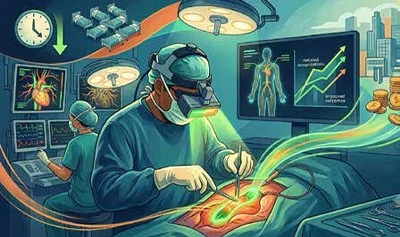
Q7. From a clinical workflow perspective, what are the major barriers currently limiting broader adoption of fluorescence-guided surgery in Asia — cost constraints, training gaps, reimbursement limitations, or resistance to new technologies?
Several barriers limit the broader adoption of fluorescence-guided surgery in Asia. Cost remains a primary concern, particularly in resource-constrained settings where capital investments must be carefully justified. Training gaps and limited familiarity with the technology also pose challenges. Additionally, reimbursement frameworks in many countries do not yet support advanced imaging techniques, reducing incentives for adoption. Resistance to change among clinicians and institutional inertia can further slow uptake. However, as more evidence emerges demonstrating reductions in complications, reoperations, and hospital stay, the value proposition is becoming increasingly compelling.
Q8. As hospitals increasingly focus on value-based healthcare and outcome-driven models, how can fluorescence-guided imaging contribute to reducing complications, readmissions, reoperations, and overall treatment costs in cardiovascular care?
Fluorescence-guided imaging aligns well with value-based healthcare by improving surgical outcomes and reducing complications. By enabling better intraoperative assessment, it can lower rates of graft failure, wound complications, and reoperations. This may contribute to shorter hospital stays and fewer readmissions. Even modest reductions in major complications can translate into significant downstream cost savings for healthcare systems. While initial investment may be higher, the long-term benefits in patient outcomes and healthcare efficiency make it an attractive option for outcome-driven care models.
Q9. In transplant and reconstructive vascular procedures, tissue viability and perfusion assessment are critical. How do you see fluorescence imaging evolving in these highly specialised surgical settings over the next few years?
These settings require precise assessment of tissue viability and perfusion to ensure success. Fluorescence technology provides immediate feedback on graft perfusion and microvascular integrity, reducing uncertainty. Over the next few years, its integration with advanced imaging platforms and surgical navigation systems is likely to expand. This evolution will enhance surgical precision, improve outcomes, and support more complex procedures, particularly in high-risk patients and technically demanding cases.
Q10. The integration of imaging technologies with AI, digital surgery platforms, and data analytics is rapidly advancing. Do you foresee fluorescence-guided surgery becoming part of a broader intelligent surgical ecosystem in cardiovascular medicine?
Fluorescence-guided surgery is likely to become part of a broader intelligent surgical ecosystem. There is growing interest in integrating fluorescence imaging with AI and data analytics to enhance the interpretation of imaging data and support clinical decision-making. Real-time analytics could provide predictive insights into tissue viability and surgical outcomes. Over time, fluorescence imaging could evolve from a visual tool into a more quantitative and predictive decision-support platform within connected, data-driven surgical environments.
Q11. Adoption of advanced surgical technologies often depends on evidence generation and physician confidence. What kind of clinical studies, outcome data, or regional validation will be necessary to accelerate wider acceptance across Asia?
Wider adoption of fluorescence-guided surgery in Asia will depend on robust clinical evidence and regional validation. Recently, there's been a series of product approvals across the region that can pave the way for establishing its foothold across the region. Additionally, training programs and clinical guidelines incorporating fluorescence imaging can further build physician confidence. This applies to all countries in Asia, as real-world data from diverse healthcare settings in Asia will be important to address regional variability. Ultimately, strong evidence and local relevance will be key drivers of broader acceptance.
Q12. Many healthcare systems in Asia operate under resource constraints while also managing very large patient volumes. How can healthcare leaders balance innovation adoption with affordability and equitable access when considering fluorescence-guided surgical technologies?
Innovation adoption can go hand in hand with affordability and equitable access. In high-volume markets like India, healthcare systems can prioritise deployment in centres of excellence where clinical impact is greatest, such as complex cardiac, vascular, and limb salvage cases. This allows systems to demonstrate value before scaling. Over time, lower-cost imaging platforms may also help expand access beyond large tertiary centres.
Q13. Looking ahead, which cardiovascular or vascular applications of fluorescence imaging do you believe remain underexplored but hold the greatest future potential in Asia’s healthcare landscape?
Several underexplored applications of fluorescence imaging hold significant potential in Asia. These include its use in microvascular surgery for complex reconstructions, early detection of graft failure in transplant procedures, and integration into hybrid cardiovascular interventions. Additionally, its role in chronic wound management and preventive vascular care remains underutilised. Expanding its application in minimally invasive and robotic surgeries could also drive innovation. Quantitative perfusion assessment and software-driven analysis may also become increasingly important in vascular and wound care applications as clinical experience grows.
Q14. Finally, as someone closely observing both cardiovascular trends and imaging innovation, what is your long-term outlook on the role of fluorescence-guided surgery in transforming cardiovascular care standards across Asia over the next decade?
The long-term outlook for fluorescence-guided surgery in Asia is highly promising. Over the next decade, it is likely to become increasingly integrated into cardiovascular and vascular procedures, as clinical evidence continues to demonstrate improvements in surgical precision, complication reduction, and patient outcomes. Integration with digital and AI-driven platforms is also a major future opportunity that could further enhance its utility. Over time, I believe fluorescence-guided imaging could easily become an integral component of standard cardiovascular and vascular surgical practice across Asia.
Read the full article — it's free
Register with AsianHHM to unlock expert insights, research articles and in-depth industry analysis.