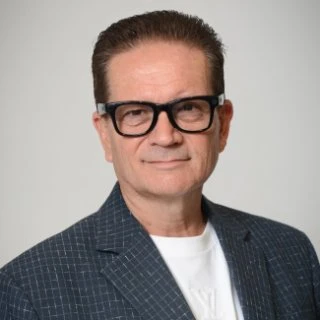

1. You identify as a “Digital Health Humanist.” How does this philosophy shape your approach to healthcare innovation in an increasingly technology-driven world?
As a Digital Health Humanist, I place people, not technology, at the center of innovation. While AI, data, and digital tools are powerful enablers, they must serve human needs, values, and dignity. My approach is to design systems that enhance empathy, trust, and accessibility, rather than replace them. This means co-creating solutions with patients, clinicians, and communities, ensuring relevance and adoption. Technology should augment human intelligence, not diminish it. In a rapidly evolving landscape, this philosophy acts as a compass, guiding organisations toward meaningful outcomes: better health, improved experiences, and sustainable systems.
2. With 30 years of experience across pharma and chemicals, what major shifts have defined the evolution of digital health—and where do you see it heading next?
We have moved from siloed, product-centric healthcare to connected, data-driven ecosystems. First came digitisation, then interoperability, and now intelligent systems powered by AI. Another major shift is from reactive “sick care” to proactive and preventive health. Looking ahead, AI, personalised medicine, and digital twins will reshape care into a continuous, predictive, and individualised model. However, the true transformation will depend on new business models, adaptive regulations, and stronger cross-sector collaboration to bring these innovations to scale.
3. AI is a central theme at this year’s summit. What practical steps should organisations take to ensure AI adoption is both effective and ethically grounded?
Organisations must begin with a clear purpose and a defined use case. High-quality, representative data is essential to avoid bias. Strong governance frameworks should ensure transparency, explainability, and accountability. Multidisciplinary collaboration between clinicians, technologists, and ethicists is key. Continuous monitoring is needed to maintain performance and safety. Equally important is investing in education and change management to build trust. Ethical AI is not a one-time effort, but an ongoing commitment to responsible and human-centered innovation.
4. As AI becomes more embedded in clinical and operational workflows, how do we strike the right balance between automation and human judgement?
The goal is not replacement but augmentation. AI processes data at scale, while humans provide context, empathy, and ethical reasoning. AI should support decisions, not make them autonomously. Clear guidelines for human oversight are essential. Clinicians must be trained to interpret AI outputs critically. Trust will emerge through transparency and consistent outcomes. Ultimately, automation should free healthcare professionals from repetitive tasks, allowing them to focus more on patient care and human connection.
5. The summit focuses on moving from insight to implementation. In your view, what are the most common barriers that prevent healthcare innovation from scaling in real-world settings?
Barriers are primarily systemic rather than technological. Fragmentation, misaligned incentives, and outdated reimbursement models slow adoption. Regulatory complexity and lack of interoperability further limit scalability. Cultural resistance and insufficient change management are often underestimated. Many innovations fail because they are not integrated into clinical workflows. Additionally, funding gaps between pilot and scale stages remain a challenge. Overcoming these barriers requires ecosystem alignment and a shared focus on measurable outcomes.

6. Can you share an example where cross-sector collaboration—between pharma, tech, and healthcare providers—has successfully delivered measurable patient outcomes?
A compelling example is AI-driven clinical decision support systems developed by technology companies, validated through pharmaceutical research, and implemented in hospital settings. These collaborations have improved early diagnosis and reduced treatment delays, particularly in oncology. Their success lies in aligned objectives, shared data standards, and clear governance. They demonstrate that meaningful healthcare transformation requires coordinated efforts across sectors, delivering both clinical and economic value.
7. How can healthcare systems ensure that digital transformation remains inclusive and accessible, particularly for underserved populations?
Inclusivity must be built into design from the beginning. This includes addressing digital literacy, affordability, and infrastructure access. Solutions should be culturally adapted and multilingual. Engaging underserved communities in co-creation ensures relevance. Hybrid care models combining digital and physical services can expand access. Additionally, AI systems must be trained on diverse datasets to avoid bias. True transformation ensures equitable access to innovation and improved outcomes for all populations.
8. With Basel emerging as a key hub for healthcare innovation, how do you see regional ecosystems influencing global healthtech progress?
Regional ecosystems like Basel act as powerful innovation accelerators. They bring together academia, industry, startups, and policymakers, enabling rapid collaboration and experimentation. Basel’s strong life sciences foundation, combined with digital innovation, creates a unique environment for breakthroughs. These ecosystems serve as testing grounds for scalable solutions that can expand globally. Local innovation, when supported effectively, can drive global transformation in healthcare.
9. Among the summit’s core themes—AI, next-generation therapeutics, preventive health, and modernising care—which area do you believe will drive the most disruptive change in the coming decade?
Preventive and personalised health will be the most disruptive. Moving from treating disease to predicting and preventing it fundamentally transforms healthcare. AI and real-world data will enable continuous monitoring and early intervention. This shift will redefine clinical practice, insurance models, and patient engagement. It represents a systemic transformation from episodic care to lifelong health management.

10. What role should policymakers play in accelerating innovation while maintaining strong ethical and regulatory standards?
Policymakers must enable innovation through adaptive and forward-looking frameworks. They should support innovation sandboxes, data-sharing infrastructures, and outcome-based reimbursement models. At the same time, they must ensure patient safety, data privacy, and ethical standards. Collaboration with industry and healthcare stakeholders is essential. The objective is to create a balanced environment where innovation can thrive responsibly.
11. Startups are a vital part of the healthtech ecosystem. What advice would you offer to founders looking to scale solutions within complex healthcare systems?
Startups must focus on solving real problems and understanding healthcare complexity. Integration into clinical workflows is critical. Building partnerships with providers, payers, and regulators early on is essential. Evidence generation demonstrating value will accelerate adoption. Founders must be prepared for long timelines and regulatory challenges. Designing for scalability from the start and maintaining resilience are key success factors.
12. You are deeply involved in mentoring emerging talent. What capabilities or mindset shifts are essential for the next generation of healthcare leaders?
Future leaders must think across disciplines, combining technology, healthcare, and human sciences. Adaptability, curiosity, and emotional intelligence are essential. They must embrace collaboration and ecosystem thinking rather than siloed approaches. Leadership in healthcare requires balancing innovation with empathy and purpose. The ability to navigate uncertainty and drive meaningful change will define successful leaders.
13. As a futurist, what is one healthcare transformation you believe will happen sooner than most expect?
Continuous, AI-driven health monitoring will become standard sooner than expected. Through wearables and integrated data platforms, healthcare will shift from episodic visits to real-time insights. This will enable earlier diagnosis, personalised interventions, and better outcomes. It will fundamentally change how individuals interact with healthcare, making them active participants in managing their health.
14. What key message would you like to share with attendees of Health.Tech Global Summit 2026, as they work to turn ideas into real-world impact?
Innovation without implementation has no impact. The technologies already exist, but the challenge lies in scaling them effectively. This requires collaboration, courage, and rethinking traditional models. Focus on outcomes, design with people in mind, and align technology with purpose. The future of healthcare is not just digital—it is human.