1. From your perspective, what made MedTech World Malta 2025 a meaningful platform for industry dialogue and engagement this year?
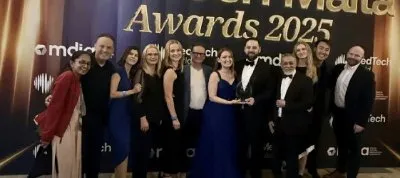
MedTech World Malta 2025 stood out by uniting global investors, innovators, policymakers, and healthcare leaders in the historic Sacra Infermeria, creating an atmosphere where meaningful dialogue flourished. The presence of the Prime Minister, several ministers, and members of parliament added strong institutional support, while the mix of startups from many continents enabled true cross-regional exchange. The event format, including CEO and investor-only gatherings, curated networking dinners, day zero visits to Valletta and Mdina, and tours of incubators, created trust and genuine relationship building. A major highlight was the Final Gala Dinner and Awards Ceremony, which brought the entire ecosystem together in a celebratory and inspiring atmosphere. This multi-layered structure made the event not only impactful but also deeply memorable and strategically valuable.
2. You participated through presentations and interactions across the event. What were the central ideas or themes you aimed to highlight during your participation?
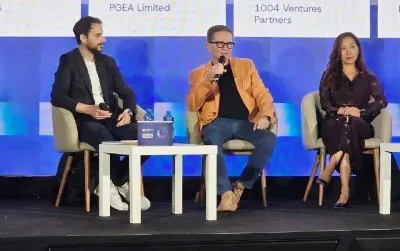
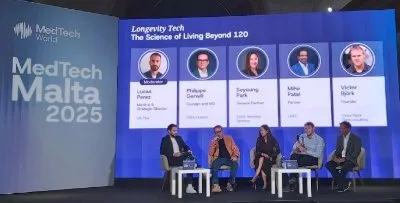
During my participation, especially on the Longevity panel, I focused on the transition from reactive care to a proactive and preventive health model that prioritises quality of life and health span. I emphasised the importance of digital biomarkers and AI-supported insights as essential foundations for early prediction and personalised intervention. Given the high presence of investors, I spoke about sustainable models built on evidence and long-term value. My central message was simple: longevity must serve humanity, not just scientific ambition.
3. What concepts or viewpoints did you feel were most relevant to the audience, given the rapid evolution of digital health, ethical AI, and human-centric innovation?
Participants were most interested in concepts that link responsible AI, predictive health, and longevity in a practical and ethical manner. There was a strong interest in continuous monitoring as tools that can shift healthcare from crisis response to proactive management. Many attendees sought clarity on how AI can support clinicians without increasing their burden, and how to maintain fairness, transparency, and data security. The audience appreciated discussions that brought together scientific rigor, ethical responsibility, and future oriented thinking.
4. How would you describe the overall reception of your session and discussions? Were there any recurring questions or concerns raised by visitors that caught your attention?
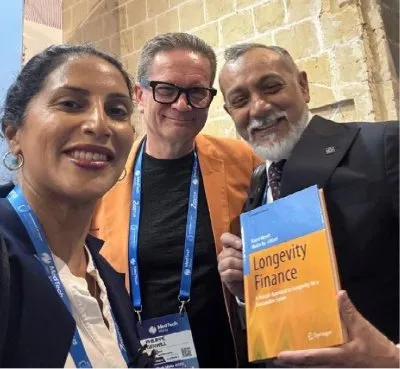
The reception of my Longevity panel was very positive, and many attendees reached out afterwards to continue the discussion. Participants were particularly interested in the reliability of biological age metrics, the scientific maturity of biomarkers, and the practical integration of predictive tools into clinical workflows. Investors asked about sustainable and credible business models, while clinicians raised questions about responsible use, data accuracy, and workflow compatibility. Conversations during the dinners and the Final Gala Dinner created a more open environment where people explored topics such as algorithmic bias, data sovereignty, and the socioeconomic implications of longer health spans. Across all exchanges, one recurring theme stood out: how to balance technological ambition with responsible and equitable implementation that truly serves patients and society.
5. Reflecting on the three-day event, what discussions or exchanges stood out to you as particularly insightful or industry-shaping?
Several discussions were especially insightful. The CEO and investor only sessions provided a rare opportunity to understand how global capital is repositioning itself toward longevity, preventive health, and early diagnostics. Conversations with Maltese government officials revealed a strong national ambition to develop a leading innovation ecosystem in digital health. The day zero cultural visits to Valletta, Mdina, and local incubators encouraged deeper and more informal exchanges with founders working on novel biomarkers, VR-based therapies, and predictive analytics. Many of the most meaningful conversations continued during the curated dinners and culminated at the Final Gala Dinner and Awards, where participants shared reflections in a relaxed and inspiring atmosphere. These multi-dimensional interactions helped shape a clearer understanding of how MedTech is evolving globally.
6. Among the technologies and solutions exhibited, which areas of innovation do you believe captured the broader direction in which MedTech is heading?
Three groups of technologies illustrated the direction of MedTech. Longevity innovations, AI-supported diagnostics, wearable sensors, and continuous monitoring systems demonstrated the shift from episodic care to real time predictive health management. Hybrid models of care, enabled by robotics, remote support, and mental health platforms, highlighted the rising importance of home centered healthcare. Startups from many regions presented solutions with global scaling potential, while investors focused on interoperable and integrated ecosystems.
7. Every organisation attends events with certain goals in mind. From a neutral industry standpoint, how do you think companies generally evaluate whether such participation meets their strategic objectives?
Companies typically evaluate event participation using strategic alignment, commercial outcomes, and ecosystem intelligence. Strategically, they assess whether they met the right mix of investors, partners, policymakers, and innovators. Commercially, they examine the quality of leads, partnership opportunities, investor interest, and the number of follow-up meetings secured. Ecosystem intelligence includes insights into longevity, digital health trends, regulatory developments, and competitive dynamics. Informal settings such as evening dinners and the Final Gala Dinner reinforce trust and relationships that cannot be built in formal sessions alone. Many organisations, therefore, measure success by both immediate outcomes and long-term strategic influence.
8. In your view, what factors typically influence a company’s decision to choose one event over another in an increasingly crowded global conference landscape?
Companies consider several criteria when choosing among global events. The quality and relevance of attendees is often the most important element, as organisations seek meaningful discussions with decision makers, innovators, and investors. MedTech World Malta offers a rare combination of high-level political presence, international investor interest, and strong startup representation. Curated formats such as CEO only gatherings, investor roundtables, cultural visits, exclusive dinners, and the Final Gala Dinner create authentic trust building environments. Event credibility, visibility potential, logistical simplicity, and the cultural value of the location also play important roles. The historical significance of the Sacra Infermeria enhances the prestige of the event. Ultimately, companies select conferences that offer depth of engagement rather than purely transactional networking.
9. Budgeting for large-scale events can be complex. What considerations do you believe organisations should keep in mind when allocating resources for participation?
Organisations should plan their budgets with a holistic view of all activities that generate value. Beyond exhibition or sponsorship costs, they must account for travel, accommodation, preparation of communication materials, and participation in exclusive gatherings such as CEO roundtables, curated dinners, incubator tours, and the Final Gala Dinner. These elements are often where the most meaningful opportunities arise. Companies should also consider the opportunity cost of sending senior leaders, as their presence in high-level discussions often determines the quality of connections formed. It is generally more effective to invest in fewer, high impact events rather than many with limited strategic relevance. Budget planning should also include resources for structured post event follow up to convert interest into tangible outcomes.
10. Is there an effective framework or approach that companies can use to assess the value or outcome of event participation - both quantitatively and qualitatively?
An effective assessment framework combines measurable indicators with qualitative insights. Quantitatively, companies track the number of qualified leads, partnership discussions, investor connections, and confirmed follow up meetings, especially those initiated during CEO only gatherings or investor roundtables. Qualitatively, organisations evaluate the depth of conversations, strategic relevance, access to policymakers, and insights gained from panels, incubator visits, cultural engagements, and evening events. The Final Gala Dinner and Awards Ceremony also provide a valuable qualitative measure, as it creates a high trust setting for relationship strengthening. A structured post event scorecard that integrates both types of indicators allows leadership teams to determine whether the event supported both immediate business objectives and long term ecosystem positioning.
11. Post-event follow-up often determines long-term value. What next steps do you believe companies should prioritize after returning from an event like this?
After an event of this scale, companies should quickly organise their contacts, distinguishing between investors, strategy partners, policymakers, and innovators. Personalised follow up during the first week is essential, especially with relationships established during the curated dinners and the Final Gala Dinner. Internal debriefs help align product strategies, market assumptions, and partnership priorities based on insights gathered during panels, visits, and discussions. Publishing post event reflections reinforces visibility and strengthens positioning. Organisations should also identify the most promising opportunities and assign clear owners, timelines, and expected outcomes. Well-structured follow up is the key factor that transforms participation into a pipeline for collaborations, pilots, or investment relationships, and ensures that the event’s momentum translates into tangible long term value.
12. Based on your international experience, what best practices should companies adopt when planning event participation - right from initial selection to on-ground engagement?
Effective participation begins with selecting events that align with strategic goals, whether visibility, investment, or partnership development. At MedTech World Malta, the greatest value comes from engaging in all layers of the experience, including CEO only gatherings, investor dialogues, and day zero cultural visits, incubator tours, networking dinners, and the Final Gala Dinner. On-site, teams should be ready to communicate both technical and strategic value, while being open to informal dialogues where trust is built more naturally. After the event, structured follow up and internal analysis ensure that insights are integrated.
13. What broader trends or signals from MedTech World Malta 2025 do you think will influence the global MedTech and digital health ecosystem in the coming year?
The event revealed several important trends that will shape the coming year in MedTech and digital health. Longevity is emerging as a major global pillar, supported by biological age analytics, digital twins, and multi omics insights. Preventive and home centered models of care are gaining momentum, driven by wearable sensors and continuous monitoring technologies. Strong political and investor presence in Malta highlighted national ambitions to attract global health innovation ecosystems. Overall, the trends point toward anticipatory, data-driven, and globally connected healthcare.
14. Finally, how do you foresee the role of global MedTech gatherings evolving as the industry moves toward deeper integration of AI, data ethics, automation, and patient-centric frameworks?
Global MedTech gatherings will become more than traditional conferences. They will evolve into platforms where technology, regulation, investment, ethics, and culture converge to shape the future of healthcare. As AI, automation, and longevity progress, these events will serve as spaces for building international alliances, defining responsible implementation frameworks, and accelerating cross-border innovation. Exclusive formats, such as CEO forums, investor meetings, cultural visits, curated networking events, and the Final Gala Dinner, will grow even more important for building trust.
--AHHM Issue 71--