
1. How do you perceive telehealth's role in bridging the gap for underserved and rural populations, and what factors are crucial in ensuring its effectiveness in these settings?
Telehealth, including telehospice and telepalliative care, plays a transformative role in reaching underserved and rural communities by providing consistent access to palliative care despite
Geographical challenges. Studies show that telehealth can match the quality of life benefits offered by in-person care, making it a viable solution for patients in remote areas.
To ensure its effectiveness, three factors are crucial: First, a reliable internet infrastructure is essential to prevent communication interruptions. Second, culturally sensitive care delivery is vital; providers must understand and respect patients’ backgrounds. Lastly, providers need telecommunication training to effectively convey empathy and build rapport virtually. With these elements in place, telehealth can effectively bridge the care gap for remote populations.
2. In what ways does telehealth enhance operational efficiency within healthcare facilities, and how can healthcare providers leverage this to maximize resource allocation?
Telehealth enhances operational efficiency by minimizing the need for physical space and resources, allowing healthcare providers to serve more patients without additional infrastructure. This is especially useful in palliative care, where routine follow-ups can be managed virtually, and easing logistical demands.
Telehealth reduces travel time and costs, freeing up in-person appointments for complex cases and supporting resource reallocation to high-need areas. Studies suggest savings of $147–$186 per telehealth visit, which can be redirected to critical care areas. Integrating telehealth and
In-person care helps healthcare providers manage larger patient loads, making the system more adaptable and resource-efficient.
3. Could you elaborate on the impact of telehealth in symptom management, especially in palliative care, and how it affects both patient experience and care outcomes?
Telepalliative care profoundly improves symptom management for serious illnesses, addressing complex issues like pain, nausea, and anxiety. This model enables frequent and flexible
Patient-provider interactions, allowing for proactive care adjustments that enhance quality of life.
Patients often find comfort and reassurance in connecting with their care team from home, reducing stress and supporting a positive care experience. Telepalliative care’s holistic approach also integrates mental and emotional support, ensuring comprehensive symptom management. This model is especially beneficial for patients who face barriers to in-person visits, improving both patient experience and outcomes.
4. What are some challenges you encounter with telehealth when managing patient expectations for quality of care, particularly in remote or Resource-limited areas?
Challenges in telehealth may include a less familiar personal connection, which is critical in palliative care. Virtual interactions may lack the warmth of in-person visits, potentially affecting patients' perception of care. Improvements and increased familiarity have helped overcome both perceived and actual barriers.
Technical issues, like limited internet access in rural areas, can disrupt communication and impact the quality of care. Some patients, especially older adults, may find digital platforms intimidating. To address these issues, providers can use a hybrid model with occasional
In-person visits for sensitive discussions, and offer tech support to ease patient adaptation to virtual care.
5. How does telehealth contribute to interdisciplinary collaboration in palliative care, and what strategies do you use to optimize communication among diverse healthcare professionals?
Telehealth enables seamless collaboration among palliative care teams, including physicians, nurses, social workers, and chaplains, regardless of their locations. This multidisciplinary approach is essential in palliative care, where needs span physical, emotional, and spiritual domains.
Using integrated electronic health records (EHRs) with telehealth further enhances communication, allowing real-time access to patient updates for all team members. Regular virtual meetings ensure everyone stays aligned on care strategies, fostering a unified approach to patient care and reducing misunderstandings.
6. From a caregiver’s perspective, how does telehealth improve their ability to support patients, and what areas do you think could still benefit from improvement?
Telehospice is highly beneficial for caregivers, providing flexible support that caregivers can access from home. This reduces the physical and emotional strain of travel and allows caregivers to balance their responsibilities more effectively.
Caregivers report greater confidence in managing symptoms due to real-time guidance and support from healthcare providers. However, areas for improvement include offering caregivers training in telehospice technology and integrating caregiver-specific resources, such as virtual support groups, to better support them in their role.
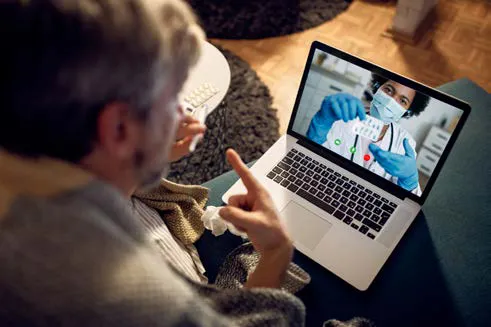
7. What have you observed regarding patient and caregiver satisfaction with telehealth, and how does this mode of care compare to traditional, in-person consultations?
Patients and caregivers generally report high satisfaction with telehealth, appreciating the comfort of receiving care at home. Many feel it supports a sense of normalcy and independence, reducing stress related to travel and frequent in-person visits.
Telehealth achieves similar quality outcomes in palliative care as in-person consultations, though some patients still value the personal connection of face-to-face visits. A hybrid model, combining virtual and in-person care based on patient needs, may offer the ideal balance of rapport and convenience.
8. Can you discuss the primary technological barriers you face with telehealth, especially in rural areas, and how these barriers impact care delivery?
Telehospice and telepalliative care face significant technological barriers in rural areas, including limited high-speed internet, lack of digital devices, and low digital literacy among patients. These issues can disrupt communication and delay care delivery.
To address these barriers, community partnerships are essential to enhance internet services and provide necessary devices. Additionally, training programs can help patients and caregivers navigate telehealth technology effectively, ensuring they can fully engage with telehospice services.
9. How do you address ethical concerns in telehealth, such as maintaining cultural sensitivity and respecting patient values, particularly in end-of-life care scenarios?
Ethical concerns in telehealth are managed by respecting patients' cultural and personal values, which is especially crucial in palliative care. Providers listen actively, use interpreters when necessary, and adapt care plans to reflect each patient’s values.
Building rapport is essential in virtual care, particularly in end-of-life scenarios. An initial
In-person visit can help establish trust, laying a foundation for ongoing virtual interactions that respect each patient’s preferences. Telehealth should be flexible, accommodating patients who may prefer in-person visits for sensitive issues.
10. What measures do you implement to ensure data privacy and security in telehealth consultations, and how do you see these evolving with increased telehealth adoption?
Data privacy and security are critical in telehospice and telepalliative care, where sensitive information is frequently exchanged. We use secure, HIPAA-compliant video platforms and encrypted communication channels, following strict privacy guidelines to protect patient data.
With telehealth’s growth, we expect security measures to include features like two-factor authentication, regular security audits, and software updates. Emerging technologies, like biometric authentication and enhanced encryption, will likely be adopted to maintain patient trust and protect sensitive health information.
11. How do you handle situations where telehealth may fall short in providing the nuanced, personal interactions often needed in sensitive care contexts like hospice care?
While telehospice is effective, it may sometimes lack the personal depth needed in hospice care, which often involves complex emotional needs. Certain sensitive discussions, like end-of-life goals, may benefit from in-person interactions.
A hybrid model is ideal, allowing an initial in-person visit to establish rapport, followed by telehospice sessions to maintain continuity. Including family members in virtual visits can also create a comforting environment, fostering a sense of community support around the patient.
12. In what ways could artificial intelligence and machine learning potentially enhance telehealth services in the future, and what specific patient needs could these innovations address?
Artificial intelligence (AI) and machine learning (ML) have significant potential to enhance telehealth by personalizing and streamlining services. For example, AI can analyze patient data to predict symptom changes, enabling proactive care adjustments, particularly in symptom management, where timely responses are critical.
AI can also automate routine tasks like scheduling and reminders, reducing administrative burdens and creating a seamless experience. Additionally, AI-powered chatbots can provide basic patient guidance between appointments, helping to improve patient engagement and reduce anxiety.
13. What are the most critical steps that healthcare organizations and policymakers should take to expand telehealth’s reach and efficacy across diverse patient populations?
Expanding telehealth requires affordable internet access, especially in rural areas, supported by government and private sector investment. Reliable broadband is fundamental to making telehealth accessible.
Healthcare providers also need infrastructure and telehealth training, supported by policies that reimburse virtual visits at rates comparable to in-person care. Finally, telehealth platforms should be accessible to those with limited digital literacy or language barriers, using User-friendly design and multilingual support to ensure inclusive access.
14. As telehealth continues to advance, what are some emerging trends or areas for improvement that you believe could further transform access and quality of care in healthcare operations?
Emerging trends include early-stage telepalliative care, enabling patients to establish a care relationship soon after diagnosis, and hybrid models that combine in-person and virtual care for a personalized approach. Enhanced training for providers in telecommunication skills is also essential, ensuring they can build rapport in virtual settings.
Improving telehealth accessibility for elderly and rural populations, with simpler devices and user-friendly platforms, will make telehealth more inclusive. Together, these trends position telehealth as a cornerstone of accessible, high-quality care for diverse patient populations.
References:
Doolittle, G. C., Nelson, E. L., Spaulding, A. O., Lomenick, A. F., Krebill, H. M., Adams, N. J., Kuhlman, S. J., & Barnes, J. L. (2019). TeleHospice: A community-engaged model for utilizing mobile tablets to enhance rural hospice care. American Journal of Hospice and Palliative Medicine, 36(9), 795–800. https://doi.org/10.1177/1049909119829458
National Consensus Project for Quality Palliative Care. (2018). Clinical practice guidelines for quality palliative care (4th ed.). National Coalition for Hospice and Palliative Care. Retrieved from https://www.nationalcoalitionhpc.org/ncp-guidelines/
Parmanto, B., Lewis, A. N. Jr., Graham, K. M., & Bertolet, M. H. (2016). Development of the Telehealth Usability Questionnaire (TUQ). International Journal of Telerehabilitation, 8(1), 3–10. https://doi.org/10.5195/ijt.2016.6196
Shah, N., Goodwin, A. J., Verdin, R., Clark, J. T., Rheingold, A. A., Ruggiero, K. J., Simpson, A. N., & Ford, D. W. (2023). Evaluation of a telehealth-enabled pilot program to address intensive care unit healthcare worker mental health distress. Telemedicine Reports, 4(1), 249–258. https://doi.org/10.1089/tmr.2023.0017
Grisaffe, D. B. (2007). Questions about the ultimate question: Conceptual considerations in evaluating Reichheld’s net promoter score (NPS). Journal of Consumer Satisfaction, Dissatisfaction & Complaining Behavior, 20, 36–53.
DeVon, H. A., Block, M. E., Moyle-Wright, P., Ernst, D. M., Hayden, S. J., Lazzara, D. J., Savoy,
S. M., & Kostas-Polston, E. (2007). A psychometric toolbox for testing validity and reliability.
Journal of Nursing Scholarship, 39(2), 155–164. https://doi.org/10.1111/j.1547-5069.2007.00161.x
Smith, D. J., Huntington, J., & Sloan, J. A. (2006). Choosing the "correct" assessment tool. Current Problems in Cancer, 30(6), 272–282. https://doi.org/10.1016/j.currproblcancer.2006.08.005
Samuel, G., & Derrick, G. (2020). Defining ethical standards for the application of digital tools to population health research. Bulletin of the World Health Organization, 98(4), 239. https://doi.org/10.2471/BLT.19.237370
Oliver, D. P., Demiris, G., Wittenberg-Lyles, E., Washington, K., Day, T., & Novak, H. (2012). A systematic review of the evidence base for telehospice. Telemedicine Journal and e-Health, 18(1), 38–47. https://doi.org/10.1089/tmj.2011.0061