
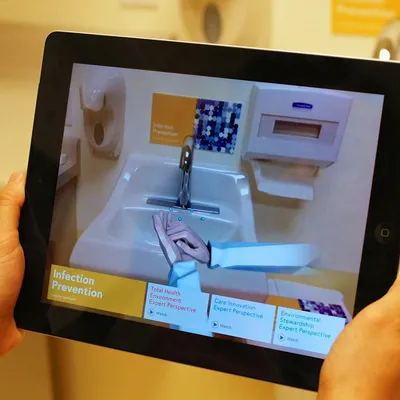
The Urgent Need for Smarter Hygiene Measures
The elimination of healthcare-derived infections were always in the top priorities in hospitals yet, there has not been a more necessary time for effective infection control programs than the one today. HAIs remain significant burden and have implications not only on patient’s outcomes, but also health care cost around the world. While old conventional methods of infection control find it hard to cope with rising risks and hospital complications, technology has come to the rescue to redefine the approach of sanitation in healthcare institutions. Smart infection control employs modern tools like the application of IoT, artificial intelligence (AI), robotics, and data analytics in making the common processes smart proactive strategies that result in better patients’ safety and operations’ efficiency.
The Impact of Healthcare-Associated Infections

Many patients are infected every year by HAIs such as MRSA, C. difficile, ventilator associated pneumonia and catheter associated infections. According to the reports of World health organization (WHO), during hospital stay 7 out of 100 patients in developed countries can be at risk of contracting at least one HAI. Within the developing countries, this number varies from 15 patients out of 100 admitted into the hospital this is in the case of having cancer. These infections cause a longer hospital stay, increased therapies, resistance against antibiotics, and death.
In terms of economy, HAIs cost a lot. In the U.S. single country, the Centers for Disease Prevention and Control estimates cost to range from US$28 to US$45 billion every year. Such numbers require a technological leap in the management of the infectious diseases.
What Is Smart Infection Control?
Smart infection control refers to using interconnected digital technology to mitigate, track and control infection dangers in a healthcare setting. Instead of relying on manual processes and auditing, smart systems employ the use of real-time data to drive decision-making.
Such as IoT devices, AI algorithms, robotic cleaners, and data dashboards, technologies provide unpardoned visibility and control over hygiene practices. This move from reactive to proactive endeavor is transforming hospitals to be safer and efficient.
IoT Devices: Real-Time Hygiene Monitoring

The Internet of Things (IoT) has a core level in smart infection control. Sensors in sanitizer dispenser, in doors, and in-patient beds can be programmed to track usage, occupancy, temperature, and air quality.
For instance, the smart hand sanitizing dispensers record the frequency of staff on how they sanitize their hands. These devices can be interfaced with staff ID badges by using either RFID or Bluetooth to monitor staff safety on individual levels. In the event that a nurse enters a patient’s room without sanitizing, a real-time alert can be set off. In the same vein, room occupancy sensors are able to notify if a particular space is empty, so that the cleaning team and the disinfection process are automatically initiated.
The IoT-enabled air quality monitors can also notify the staff about increased humidity or carbon dioxide levels – conditions that favor the survival of the pathogens. Facilities can, therefore, minimize the risks of microbial growth and airborne transmission by taking actions on such data in time.
AI-Powered Predictive Analytics
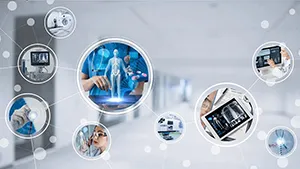
Artificial intelligence (AI) further increases the level of intelligence in infection control as they forecast high-risk scenarios. Using electronic health records (EHRs), sensor data, and patient history, AI can detect patients that are at a higher risk of infections. For example, machine learning algorithms may identify potential infection clusters well in advance before they are manifested, and thus, the hospitals can isolate infected patients and avoid cross-contamination.
AI is also improving cleaning schedules. Instead of having fixated routines, hospitals can have cleaning crews in place depending on real-time risk assessments. This allows to prioritize the high-touch or high-risk areas.
Namely, AI assists in antimicrobial stewardship programs by providing an adequate choice of antibiotics, eliminating the needless prescriptions, and preventing drug resistance.
Robotics and Automation in Hospital Cleaning
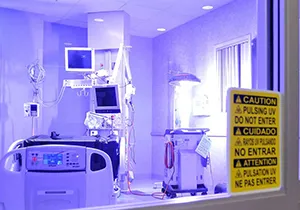
Patient rooms and operating theatres are being radically transformed by the use of robotic-disinfection systems especially when using UV-C light.
The cells of this type of robots release ultraviolet rays that degrade the DNA of dangerously harmful bacteria, virus, and fungi and sterilize surfaces without human involvement.
A UV robot can independently move around the room after a patient discharge to cover those areas that might be skipped in the manual cleaning. This minimizes human error and guarantees continuity in disinfection levels, especially in high-risk areas as the ICUs and isolation wards.
Besides UV robots, manual cleaning and fogging are also being automated into daily operations, thus, freeing up human resources and enhancing the throughput of cleaning.
Smart Hand Hygiene Compliance Systems
Hand hygiene plays the key role in the prevention of HAIs, but the compliance rates leave a lot to be desired. Hand hygiene smart systems track and report in real-time the hygiene behavior. These systems rely on use of sensors, wearables, and tracking of locations to make sure that healthcare workers adhere to the protocols before and after contact with patients.
When times of compliance lapses arise, systems may send alerts or send performance reports to infection control teams instantly. The long-time effect is that this doesn’t just promulgate good hygiene practice but also it engenders a culture of responsibility and consciousness.
Using these systems, hospitals have recorded improvement rates of 30–40% in the compliance with hand hygiene and a reduction in HAIs to match.
Instrument Sterilization: Traceability and Safety
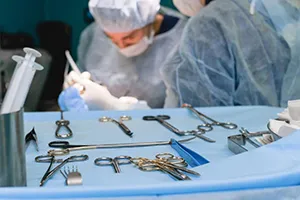
Sterilization of surgical instruments and medical devices is another sector which is being revolutionized with the development of technology. Outdated ways are usually paper based and manual, are error prone and not transparent. Smart sterilization solutions nowadays utilize barcodes or RFID tags to follow every instrument throughout all steps of the sterilization cycle including its decontamination and inspection, autoclaving, and storage.
The systems ensure that every cycle is held to the standard of temperature, pressure, and time. When any of the parameters fail then instruments are flagged before reaching a patient, thus reducing risk. Hospitals enjoy the advantage of total traceability and compliance to the regulatory standards.
Real-Time Location Systems (RTLS) for Infection Containment
Real-Time Location Systems (RTLS) is a technology that implements technologies such as infrared, RFID and Wi-Fi in locating the position and movement of staff, patients and equipment’s. For infection control, RTLS becomes vital especially when it comes to tracing contacts in the time of an outbreak.
RTLS data will be able to identify all the personnel, equipment, and rooms that came into contact with the patient when a patient tests positive for a contagious infection. This enables the hospital to isolate risks, decontaminate pertinent areas and alert people who have been exposed quickly.
In addition to the infection control, RTLS also helps to reduce wait times, optimize asset usage, and avoid equipment loss.
Benefits of Smart Infection Control in Healthcare
The switch to smart infection control is full of advantages:
• Improved Patient Safety: Early detection and focus intervention saves lives from developing HAIs.
• Operational Efficiency: Automation eliminates manual work, which enables the staff to attend to patients.
• Real-Time Data: Round-the- clock monitoring gives viable insights to enhance hygiene performance.
• Regulatory Compliance: Hospitals can easily record and prove compliance to hygiene regulations.
• Cost Savings: Prevention of complications causing infection has a positive effect on the costs of treatment and days spent in hospital.
And lastly, through increased visibility and accountability on hygiene-related operations, these systems also build general trust; i.e., among patients, families and health care workers.
Real-World Implementations and Case Studies
Smart infection control is being embraced by hospitals across the world with tremendous success. From Cleveland Clinic in the U.S, the use of UV-C robots and RFID hygiene monitors improved the hand hygiene compliance by 35% and reduced HAIs by 30% in a year.
In India, Narayana Health utilized AI models and RTLS at the time of the COVID-19 crisis to identify high risk patients and manage bed utilization while expediting the procedures for controlling infections. The UK’s National Health Service (NHS) has implemented real time dashboards and robotic automatic cleaning alerts, based on which the service has made enormous improvements in terms of cleanliness scores and patient safety.
These case studies show how an adoptive approach towards smart infection control can bring about real, quantifiable results.
Challenges to Adoption
While appearing with a number of benefits, there are a few obstacles to the deployment of smart infection control technologies on a large scale
• High Initial Costs: Many systems are capital intense in nature..
• Technical Integration: Conflict with the existing IT infrastructure may be complex.
• Workforce Resistance: Staff could first object to surveillance technologies, or changes in workflow.
• Training Requirements: The use of smart systems in an effective manner calls for staff training.
• Data Privacy and Security: Patient and staff tracking systems are guided by the rules such as HIPAA and GDPR.
Overcoming such barriers by way of engagement of stakeholders, pilot programs and a gradual rollout can greatly facilitate adoption.
Future Outlook: The Next Frontier in Infection Control
The future of smart infection control is very bright. Some of the emerging technologies include AI-powered robots that identify contamination using computer vision, next gen biosensors and cloud hygiene analytics are in the making.
Blockchain can provide tamper-proof hygiene logs, whereas surveillance systems based on genomics can track and identify infections at the level of molecules. As in the industry adopts value-based care models, smart infection control shall be at the core of delivering quality outcomes and cost-effective results.
Conclusion
Smart infection control is transforming the management of hospitals in ensuring cleanliness and the safety of patients. With the help of AI, IoT, robotics, and real-time analytics, healthcare providers can step out from the practices of the past and deliver a safer and more efficient care environment. The technology is not something that is just for luxury, but is fast-becoming a necessity. Hospitals that adopt these innovation advances will be in a better position to cope with the existing and prospective infection menace, minimize HAIs, and provide the best possible care.