
Drones, once primarily associated with photography and recreational use, are now making waves across various industries such as Construction, Agriculture, Energy, Telecommunication and of course Healthcare. In Malaysia, the use of unmanned aerial vehicle (UAV) technology in healthcare sector is slowly gaining momentum, especially hospitals are keen in exploring possibilities of using it in providing quick and efficient turnaround time help improve human lives. However, its implementation comes with challenges, limitations, and regulatory considerations.
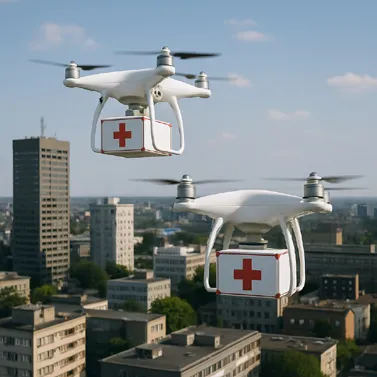
Untested, but potential usage
1. Medical Supply Delivery
Drones are being explored to transport critical medical supplies, such as blood, vaccines, and medications, especially to remote or hard-to-reach areas. In Malaysia, where rural healthcare facilities often face logistical challenges, drones can bridge the gap by ensuring timely delivery of life-saving resources. For instance, a 2023 study by the World Economic Forum highlighted that drone deliveries in Rwanda reduced blood transfusion delays by 50%, a model that could be replicated in East Malaysian states like Sabah and Sarawak.
Beyond rural areas, urban hospitals could also benefit from drone-based logistics, particularly in bypassing traffic congestion during peak hours. Companies like Zipline have already demonstrated the feasibility of long-range medical drone deliveries in Africa, showcasing how Malaysia could adopt similar systems with proper investment and regulatory adjustments.
2. Emergency Response
During emergencies, such as natural disasters or accidents, drones can deliver defibrillators, first-aid kits, or other essential equipment to the scene faster than traditional methods. This can significantly improve survival rates in critical situations. Additionally, drones equipped with thermal imaging and high-resolution cameras can assist in disaster assessment. For example, during the recent gas pipe explosion in Putra Heights, drones could be deployed to assess the extent of damage and locate victims more efficiently than ground teams, reducing response time and improving rescue coordination.
The integration of AI-powered drones for real-time emergency triage is another emerging application. Researchers at Universiti Putra Malaysia (UPM) have proposed using drones with machine learning algorithms to detect survivors in disaster zones, which could revolutionize Malaysia’s emergency medical services (EMS).
3. Organ Transport
Drones are being tested globally for organ transplant logistics. In Malaysia, where traffic congestion in urban areas can delay organ deliveries, drones could ensure faster and more efficient transport of organs like kidneys or corneas. A 2021 Johns Hopkins University study successfully demonstrated the world’s first drone-assisted kidney transplant delivery, proving that Unmanned Aerial Vehicle (UAV) can maintain organ viability during transit.
To boost Malaysia’s National Transplant Resource Centre’s challenges in coordinating organ transfers between states, perhaps drone networks could be a game-changer. However, stringent temperature and stability controls must be implemented to ensure organ preservation during flight.
4. Disinfection and Surveillance
Drones equipped with UV-C light or electrostatic sprayers can disinfect large hospital areas, reducing the risk of healthcare-associated infections (HAIs). During the COVID-19 pandemic, countries like China and South Korea utilized disinfection drones in public spaces, a strategy that Malaysian hospitals could adopt for high-risk zones like ICUs and operating theatres.
Beyond disinfection, drones with LiDAR sensors can perform structural inspections of high-rise hospital buildings, identifying structural defects. This proactive maintenance enhances facility management.
5. Dengue Eradication
According to the World Health Organization (WHO), dengue has become the most prominent mosquito-borne illness globally and is spreading at an unprecedented rate, with its global incidence rising by 30 times over the last five decades. To address this life threatening problem, a start up in Brazil have come out with an innovative approach using Drones: Drones that release sterile male mosquitoes.
Researchers introduced sterile male mosquitoes into areas with high rates of mosquito-borne illnesses. By mating with local females, these sterile males disrupt reproduction, reducing the mosquito population over time and helping to lower the incidence of disease. Drones which could carry 17,000 mosquitoes per 10-minute flight over a 25-acre area is a game changing innovation. Since 2021, Birdview has collaborated with various institutions—including the United Nations, the University of São Paulo (USP), and Brazil’s state-run Agricultural Research Corporation (Embrapa)—to evaluate the effectiveness of using drones to deploy mosquitoes aimed at controlling disease transmission.
Challenges and Limitations
1. Technical Limitations
Drones have limited battery life (typically 20-40 minutes per charge) and payload capacity (usually 2-5 kg), restricting the type and quantity of medical supplies they can transport. Adverse weather conditions, such as Malaysia’s frequent heavy rain and thunderstorms, can further disrupt operations.
Research into hydrogen fuel cell-powered drones and swarm drone technology (multiple drones working in unison) could mitigate these limitations, but such advancements require further testing before large-scale healthcare deployment.
2. Infrastructure and Cost
Implementing drone technology requires significant investment in charging stations, flight control software, and trained personnel. For many Malaysian hospitals, particularly those in rural areas with limited budgets, these costs may be prohibitive without government or private sector support.
Public-private partnerships (PPPs) could be a solution. For example, Telekom Malaysia and MDEC (Malaysia Digital Economy Corporation) have previously supported drone initiatives in agriculture, suggesting a similar model could be applied to healthcare.
3. Privacy and Safety Concerns
Drones equipped with cameras raise privacy concerns, particularly in hospital settings where patient confidentiality is paramount under Malaysia’s Personal Data Protection Act (PDPA 2010). Additionally, drone malfunctions or collisions could pose safety risks in densely populated areas.
Implementing encrypted data transmission and geo-fencing technology (to prevent drones from entering restricted zones) could help address these concerns.
4. Regulatory Hurdles
The Civil Aviation Authority of Malaysia (CAAM) enforces strict drone regulations under the Malaysia Civil Aviation Regulations (MCAR) 2016, including flight altitude limits (400 feet), no-fly zones, and mandatory operator permits. These rules, while necessary for safety, slow down healthcare drone adoption.
Streamlining permit processes for medical drones, similar to the Federal Aviation Administration’s (FAA) Part 107 waiver system in the U.S., could accelerate approvals for emergency medical deliveries.
CAAM Laws Pertaining to Drone Use in Malaysia
To ensure safe and responsible drone operations, CAAM has established a comprehensive regulatory framework under the Malaysia Civil Aviation Regulations (MCAR) 2016. Key laws and guidelines include:
1. Registration and Licensing
All drones weighing more than 20 kilograms must be registered with CAAM. Operators must obtain a Remote Pilot License (RPL) for commercial drone use, including healthcare applications. For drones below 20 kilograms, operators must apply for an Operator Permit if used for commercial purposes.
2. No-Fly Zones
Drones are prohibited from flying near airports, military installations, and other restricted areas. Hospitals located within 5 kilometers of an airport may face additional restrictions, requiring special approval from CAAM.
3. Flight Altitude and Distance
Drones must not fly higher than 400 feet (122 meters) above ground level. Operators must maintain a line-of-sight with the drone at all times and ensure it remains within a maximum horizontal distance of 500 meters.
4. Privacy and Data Protection
Drone operators must comply with Malaysia’s Personal Data Protection Act (PDPA) when capturing images or videos. Hospitals using drones for surveillance or monitoring must ensure patient confidentiality is maintained.
5. Safety and Insurance
Operators must conduct pre-flight checks to ensure the drone is in good working condition. Commercial drone operators, including those in healthcare, are required to have third-party liability insurance to cover potential damages or accidents.
6. Emergency Operations
In emergencies, such as disaster relief or urgent medical deliveries, operators may apply for special permits to bypass certain restrictions. However, safety protocols must still be followed.
Conclusion
Drones represent a promising tool for enhancing healthcare delivery in Malaysia. While challenges remain, strategic investments, regulatory refinements, and pilot projects can unlock their full potential. By learning from global successes and adapting them to local needs, Malaysia could position itself as a leader in medical drone innovation in Southeast Asia.
References
1. CAAM (2023). Malaysia Civil Aviation Regulations (MCAR) 2016.
2. Johns Hopkins University (2021). First Successful Drone-Assisted Kidney Transport.
3. PDPA (2010). Malaysia’s Personal Data Protection Act.
4. World Economic Forum (2023). Drones for Health: Lessons from Rwanda.