


In healthcare management, there will be inevitable situations of ethical considerations and decisions, with associated innate complexity that exists in the industry. Navigating these challenges requires a deep understanding of ethics and its principles, being always committed to patient well-being, and maintaining the highest levels of integrity.
Ethics is an inherent and inseparable part of clinical medicine. Healthcare providers, including doctors and healthcare managers, have an ethical obligation to benefit the patient, to avoid or minimize harm and to respect the values and preferences of the patient.(1)
We shall discuss various commonly seen ethical dilemmas encountered by healthcare managers and to provide ways to address these while focusing on patient well-being and adhering to ethical conduct and management.
The progress of science and medicine is fast, therefore quickly adapting to new situations but continuing to maintain ethical considerations will be of importance in the long term.
Understanding Ethical Principles in Healthcare
Ethics is a broad term that covers the study of the nature of morals and the specific moral choices to be made. Normative ethics attempts to answer the question, “Which general moral norms for the guidance and evaluation of conduct should we accept, and why?” (1)
The physicians’ “accepted role” to provide competent and trustworthy service to their patients, is an example of particular morality–norms that bind groups because of their culture, religion, profession and include responsibilities, ideals and professional standards. This “accepted role” has been codified as professional standards in physician organizations at multiple levels, including internationally. (1)
Before discussion specific ethical dilemmas, it is important to establish a foundation in ethical principles that guide healthcare management.
Principles of ethics in healthcare management include:
- Beneficence
- Non-maleficence
- Autonomy
- Justice
The first two principles are based on Hippocratic Oath “to help and to do no harm”. Autonomy and Justice evolved later in time. (1)
Beneficence is the obligation to act for the benefit of the patient and supports a number of moral rules to protect and defend the right of others, prevent harm, remove conditions that will cause harm, help persons with disabilities, and rescue persons in danger. (1)
Non-maleficence is the obligation not to harm the patient, including the moral rules − do not kill, do not cause pain or suffering, do not incapacitate, do not cause offense, and do not deprive others of the goods of life. (1)
Autonomy is interpreted as that all persons have intrinsic and unconditional worth, and therefore, should have the power to make rational decisions and moral choices, and each should be allowed to exercise his or her capacity for self-determination. (1)
Justice is generally interpreted as fair, equitable, and appropriate treatment of persons. In clinical settings, distributive justice is the most suitable to define this principle. Distributive justice refers to the fair, equitable, and appropriate distribution of health-care resources determined by justified norms that structure the terms of social cooperation. The substance of distributive justice can be translated to each person. This involves an equal share, according to need, according to contribution, according to merit and according to free-market exchanges. (1)
By adhering to these 4 principles of patient autonomy, beneficence, non-maleficence, and justice, and keeping these are the core to healthcare management decision-making, one will achieve ethical guidance.
1. Always Be Patient-Centered
The core reason for being of healthcare management is provide high-quality healthcare to patients. Patients’ well-being has to be at the forefront of all management decisions. Being always patient-centered, focusing on the individual’s needs, values and preferences, is a cornerstone to guide ethical healthcare management.
Maintaining patients’ dignity, autonomy, and his/her right to make informed healthcare decisions must remain the guide.
As clinical professionals, healthcare management guided by ethical principles, patients are assured that their interests are being placed topmost in priority above all else, leading to better clinical and service outcomes and quality, enhanced patient satisfaction, and better adherence to treatment plans.
An ethical dilemma may rise when there is a conflict between the four principles of ethics. In a complex case which a potentially life-saving intervention, conflict between the principles of beneficence and autonomy may arise. Beneficence is a standard of traditional practice in medicine. However, beneficence may face the contrasting paradigm of respect for autonomy.(1)

Trust between doctor and patient is essential for effective communication. Trust though intangible but it is an asset in healthcare management. Ethical management and behaviour build trust, and that effectively build a good reputation, which has multiple benefits to not only patients but also in attracting and retaining healthcare staff. Moreover, Trust and Reputation has always been built upon the ethical principles of care, including “first do no harm”.
Trust and reputation, once lost, will become a huge uphill task to regain, making ethical decision-making a top priority in healthcare management.
An example of trust lost is what happened in some countries for many years (17).
2. Resources and Financial Considerations
An ethical dilemma that is commonly faced by healthcare management is the balance between productivity and quality of care. Resources of time, finances and manpower are finite, while quality at times require more resources to keep up.
An example will be an increasingly large number of patients in a system that must be attended to, with resource allocation that are not in line with the growth in workload. This is a dilemma that needs clear:
• Resources projection in tandem with workload growth
• Communications strategy for all staff involved, to prevent the unintended consequences of staff turnover leading to ironically more resources needed to train new replacement staff, and keep up with productivity long term
• Operational processes improvement and optimisation to enhance productivity
• Training and upskilling
• Leveraging technology to minimise errors, increase efficiency and productivity
• Focus on improving patient care quality and well-being, instead of simply maximising profits
Resource constraints often create dilemma in clinical settings, between the doctors’ decision and patient’s quality of therapeutic compliance. As the world has recently been painfully reminded, rationing is necessary given our finite resources. An example is that of limited healthcare professionals with the necessary skillsets, novel medicine or new medical intervention for critical diseases that may potentially live saving for the patients. Not to mention that these resources may be given to one patient are not necessarily available to others. Hence, how to justify the “justice”? (1,2)
The limited resources often lead to rationing. Rationing within healthcare systems may be explicit (i.e., based on stated principles or transparent rules), such as the rules governing donor organ allocation. However, rationing may also be implicit (without formal stated rules or principles), such as allocation of intensive care unit beds. These decisions occur at both the systems level and in everyday choices made in providing care to individual patients. Whilst ethicists have offered several principles that embody different conceptions of how to fairly distribute scarce resources, it still poses a considerable challenge on what is perceived by the “normal” norm or the historical beneficence principle. (1) (2)
3. Balancing Interests of Stakeholders
Most organizations have a large and diverse set of stakeholders, including patients, staff, investors, the community and the government. Balancing the sometimes competing interests of these stakeholders is key in navigating this dilemma.
Healthcare managers must ensure that decisions do not compromise patient care quality, and that staff well-being is not sacrificed for financial benefits alone.
Ethical decision-making equips healthcare managers with the guiding principles to weigh these competing interests thoughtfully, aligning these with the core role of providing good quality care to patients while maintaining and sustaining the healthcare organization.
In navigating the interest of various stakeholders, one common scenario that happens in many countries is that of rising drug costs. High drug prices directly challenge the principle of distributive justice. The prescription of medicine with rising drug prices also raises many ethical issues that revolve around interactions between doctors and patients. It can and has created the conflict between “for the benefit of the patient” or “I have right on my choice of medicine.” Moreover, in the case of high drug costs, external factors such as industry, payers, pharmacy benefit managers, health systems, and current models of health care financing, also play a significant role. (2)
In one survey of physicians, communities, and economists about how to balance such trade-offs, it is agreed that generally all should prioritize treatment modalities that can be made available to everyone. However, it is mentioned that this view is tempered by impulses to maximize usefulness and to rescue those in need. Finding an acceptable balance between these competing ethical goals remains a serious challenge for the development of explicit rationing policies. (3)
4. Ethics in Crisis
During periods of crisis, like a pandemic or a natural disaster, ethical healthcare management is especially critical. Difficult decisions need to be made, such as resource allocation and prioritization of care. Ethical principles provide a moral compass to guide these challenging choices, ensuring that these decisions are made with the best interests of patients and the community in mind.
An example of ethical dilemma facing due to the limited resources was clearly demonstrated during COVID-19 pandemic. Rationing of resources happened almost every day during the pandemic.
5. Legal Compliance
Ethical healthcare management comply with legal requirements. Regulatory bodies and laws governing healthcare are typically designed to protect patients, uphold quality care, and maintain the integrity of the profession and industry.
Always prioritize ethical practices to ensure healthcare organizations remain in compliance with the relevant laws and regulations, minimising the risk of legal issues and maintains a culture of integrity.
An example is the use of Artificial Intelligence (AI) support in clinical decision making aiding clinicians in treatment planning. But ultimately, laws in most countries still holds the physician accountable and liable to the decision made by him/her, and not the AI system. How then does one manage this balance when patients are expecting technology enhanced clinical decision making?
In Indonesia, the fourth largest country in the world by population size, in the year 2020, telemedicine was seen as a “new” innovation (though not necessarily new since this terminology has been coined in Indonesian healthcare since 2010), experienced ethical and legal dilemmas. During that year, regulations of telemedicine were deemed to be far from adequate despite the enactment of Ministry of Health Regulation No. 20 of 2019 concerning the Implementation of Telemedicine Between Health Service Facilities. The challenges arose due to the existing regulations which only regulated for telemedicine between health facilities but what actually happened was that telemedicine was mostly deployed in personal settings between doctors and patients. So from a legal perspective, this was considered to violate existing regulations, because there were no rules that framed these and could well jeopardize the position of physicians in the event of medical disputes. However, with telemedicine, patients derived tremendous benefits of faster access and more affordable services for physician consultations. (9)
6. Long-Term Sustainability
Ethical healthcare management makes decisions with consideration for the long-term viability of the organization. This includes, but not limited to, maintaining a robust financial position, performing market studies then developing strategic plans for growth, and works in partnerships that benefit the community the organisation serves.
Ethical healthcare managers do not make short-sighted decisions that jeopardize the long-term sustainability of the organization. They prioritize strategic planning, research, and development to ensure that the healthcare facility can continue to serve its community effectively.
Business continuity in a healthcare facility is primarily affected by the implementation of ethics in the daily operations. (11, 12) Similar to other businesses, the basis of corporate social initiatives are genuinely guided by moral values or ethics for long term goals. (12)
In healthcare, post COVID-19 pandemic, there has been a shift in paradigm that the healthcare industry should evolve from not only evidence‐based healthcare but to a more sustainable healthcare system. Evidence‐based medicine was often strictly science‐based focusing on scientific rigour hence implicit presumption that if the evidence is rigorous, then good practice will follow. However, sustainable healthcare, in contrast, will consider not only the science and the rigorous evidences, but also how medicine can provide effective healthcare access to many more communities. Sustainable healthcare represents how healthcare can become equitable, evenly distributed geographically and between generations, and ecologically sustainable. (13)
7. Ethical Leadership
Ethical dilemmas and moral debates in healthcare have triggered a rising concern about the ethics, integrity and social responsibility of health care organizations. Healthcare managers often face the challenges when they balance interest of all stakeholders. Hence the ethical behavior of organizations throughout management levels has increasingly gained attention in social scientific research, particularly in the leadership field. (13)
Ethical leadership highlights the role of leaders in generating an atmosphere of trust, integrity and fairness. (13) When the leadership acts in tandem with ethical principles consistently, they serve as role models for their respective teams, sowing the seeds of integrity, honesty, and a strong commitment to ethical values.
Ethical leadership is defined as “the demonstration of normatively appropriate conduct through personal actions and interpersonal relationships and the promotion of such conduct to followers through two-way communication, reinforcement and decision-making.” Two dimensions of ethical leadership are:
1. the moral person which refers to leader’s personal traits and behaviors, by being altruistic, honest, trustworthy and fair, caring and supporting their team members, and
2. the moral manager who will shape and cultivate the behaviour of others in their team. (13)
Such ethical leadership builds a culture where ethical behavior is the norm and not the exception.
Health-care organizations are expected to assume responsibility for society, promoting public health, respecting the rights and dignity of patients and ensuring humanity and patient safety.
8. Employee Well-Being
Managers create a workplace culture that is positive, values employee well-being, fairness, and respect. This leads to better job satisfaction, high rates of staff retention, and in turn, improved patient care and quality.
Ethical management practices include fair compensation, opportunities for professional growth, and creating a safe and inclusive work environment. A study in Hong Kong found that ethical leadership is crucial in predicting employee wellbeing and organizational performance in the construction industry. (15) A study in China, ethical leadership is valued by adopting explicit ethical aspects to reduce work stress and improve the wellbeing of employees. (15,16)
Ethical leadership encourages employees to act morally by communication, modelling, punishment, and motivation. In this way, ethical leadership generates positive outcomes among which is the improvement of employee wellbeing.(16)
When healthcare professionals are satisfied with their work conditions, they are more likely to provide better care and patient experiences.
Some Approaches for Ethical Decision-Making Guidance for Healthcare Management
1. Establishing Ethical Committees
Management of healthcare organizations should form committees dedicated to addressing ethical issues that invariably arise from time to time. Such a committee should include physicians, healthcare managers, senior nurses, allied health professionals and others invited to attend depending on the issue on hand, to provide diverse perspectives and expertise to advise on ethical matters and guide decision making.
2. Staff Training on Ethical Principles
Ensure that healthcare professionals receive ongoing training in ethical principles and dilemmas, including examples of real-life cases which are challenging to provoke deep thinking and considerations for learnings on decision making that affects patients ethically. This empowers staff to make sound ethical decisions consistently in their day-to-day work.
3. Encouraging Open Communication
Building and encouraging a culture of open communication allows healthcare managers and staff to openly discuss ethical concerns. This includes having townhall events, small group engagements, cross-functional and one-on-one conversations.
Developing transparency leads to collaborative problem-solving and a shared ethical responsibility, that will embed in the culture of the organisation.
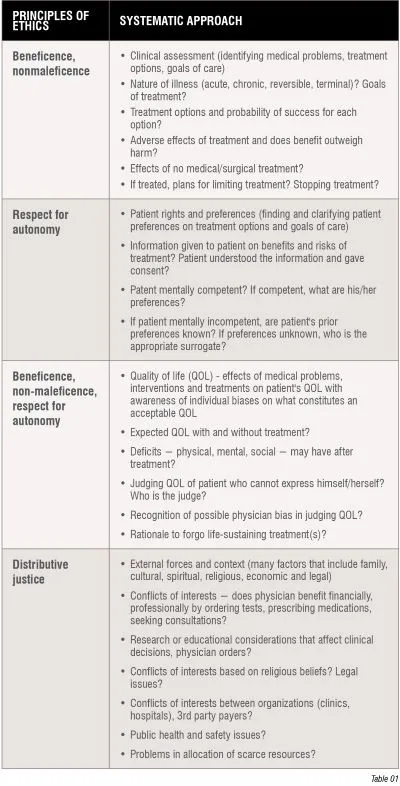
4. Systematic Approach for Ethical Problem Solving
A framework for a practical approach to address ethical issues in clinical settings which uses the systematic format that is familiar for all practicing healthcare professionals & healthcare managers is as follows: (10)
Conclusion
Navigating ethical challenges in healthcare management requires a proactive approach based upon sound ethical principles, thoughtful decision-making processes, and continuing education. By acknowledging the complexities of these ethical challenges and developing strategies to address them, healthcare managers can then contribute to building a culture of integrity, compassion, and patient-centered care. This builds trust and a positive reputation for the benefit for all in the healthcare system.
References:
1. Varkey B. Principles of clinical ethics and their application to practice. Medical Principles and Practice. 2020 Jun 4;30(1):17–28. doi:10.1159/000509119
2. 1. Tsou AY, Graf WD, Russell JA, Epstein LG. Ethical perspectives on costly drugs and Health Care. Neurology. 2021 Oct 5;97(14):685–92. doi:10.1212/wnl.0000000000012571.
3. Scheunemann LP, White DB. The ethics and reality of rationing in medicine. Chest. 2011 Dec;140(6):1625–32. doi:10.1378/chest.11-0622.
4. Beauchamp TL. Principlism in bioethics. International Library of Ethics, Law, and the New Medicine. 2016;1–16. doi:10.1007/978-3-319-43419-3_1.
5. Emanuel EJ, Persad G, Upshur R, Thome B, Parker M, Glickman A, et al. Fair allocation of scarce medical resources in the time of covid-19. New England Journal of Medicine. 2020 May 21;382(21):2049–55.doi:10.1056/nejmsb2005114
6. Lo B. Resolving ethical dilemmas: a guide for clinicians. Lippincott Williams & Wilkins; 2012 Jan 3.
7. Gallagher TH, Studdert D, Levinson W. Disclosing harmful medical errors to patients. New England Journal of Medicine. 2007 Jun 28;356(26):2713–9. doi:10.1056/nejmra070568.
8 Truog RD, Mitchell C, Daley GQ. The toughest triage — allocating ventilators in a pandemic. New England Journal of Medicine. 2020 May 21;382(21):1973–5. doi:10.1056/nejmp2005689.
9 Kuntardjo C. Dimensions of ethics and telemedicine in Indonesia: enough of PERMENKES number 20 year 2019 as a frame of telemedicine practices in Indonesia? SOEPRA. 2020 Apr 30;6(1). doi:10.24167/shk.v6i1.2606.
10. Jonsen AR, Siegler M, Winslade WJ. Clinical ethics: a practical approach to ethical decisions in clinical medicine. Linacre Quarterly. 2010;50(2):13.
11. Marina A, Wahjono SI. BUSINESS ETHICS FOR BUSINESS SUSTAINABILITY IN MUHAMMADIYAH HOSPITAL: EVIDENCE FROM PONOROGO, INDONESIA. Journal of Indonesian Economy and Business. 2017 Sept;32(3):178–89.
12. Graafland, J., and B. Van de Ven, 2016. “Strategic and Moral Motivation for Corporate Social Responsibilities.” Journal of Corporate Citizenship, 22, 111-123
13. Berg H, Askheim C, Heggen KM, Sandset TJ, Engebretsen E. From evidence‐based to Sustainable Healthcare: Cochrane Revisited. Journal of Evaluation in Clinical Practice. 2022 May 15;28(5):741–4. doi:10.1111/jep.13698
14. Franczukowska AA, Krczal E, Knapp C, Baumgartner M. Examining ethical leadership in health care organizations and its impacts on employee work attitudes: An empirical analysis from Austria. Leadership in Health Services. 2021 Jun 2;34(3):229–47. doi:10.1108/lhs-06-2020-0034
15. Nawaz Khan A, Khan NA, Soomro MA. Influence of ethical leadership in managing human resources in construction companies. Journal of Construction Engineering and Management. 2020 Nov 1;146(11):04020125.
16. Cheng J, Zhang L, Lin Y, Guo H, Zhang S. Enhancing employee wellbeing by Ethical Leadership in the construction industry: The role of perceived organizational support. Frontiers in Public Health. 2022 Sept 16;10. doi:10.3389/fpubh.2022.935557
17. Exploring Chinese Elderly’s Trust in the Healthcare System: Empirical Evidence from a Population-Based Survey in China