Cancer Diagnostics

Thomas Rudolph,Chairman of the Board, 428 Pharma
This interview with Thomas Rudolph delves into the transformative advancements in cancer diagnostics, highlighting key technologies like liquid biopsy, next-generation sequencing (NGS), and multi-omics. It also explores challenges in integrating these innovations, the role of AI, ethical considerations, and future prospects in personalized medicine and precision oncology.
1. Can you elaborate on the recent advancements in cancer diagnostics that have significantly impacted early detection and treatment outcomes?
At least three technologies with major impact: better screening technologies and access to these, molecular differentiation of cancer subtypes (NGS and other), synergistic combination treatments across multiple lines of treatment.
2. How has the integration of liquid biopsy techniques revolutionized the approach to cancer diagnostics compared to traditional tissue biopsies?
A lot for liquid tumors, somewhat for solid tumors where clearly identified circulating cancer markers are known/ can be detected, or tumor markers with reasonable sensitivity are known.
3. What are the key biomarkers currently being targeted in precision medicine for cancer, and how are they identified through advanced diagnostic methods?
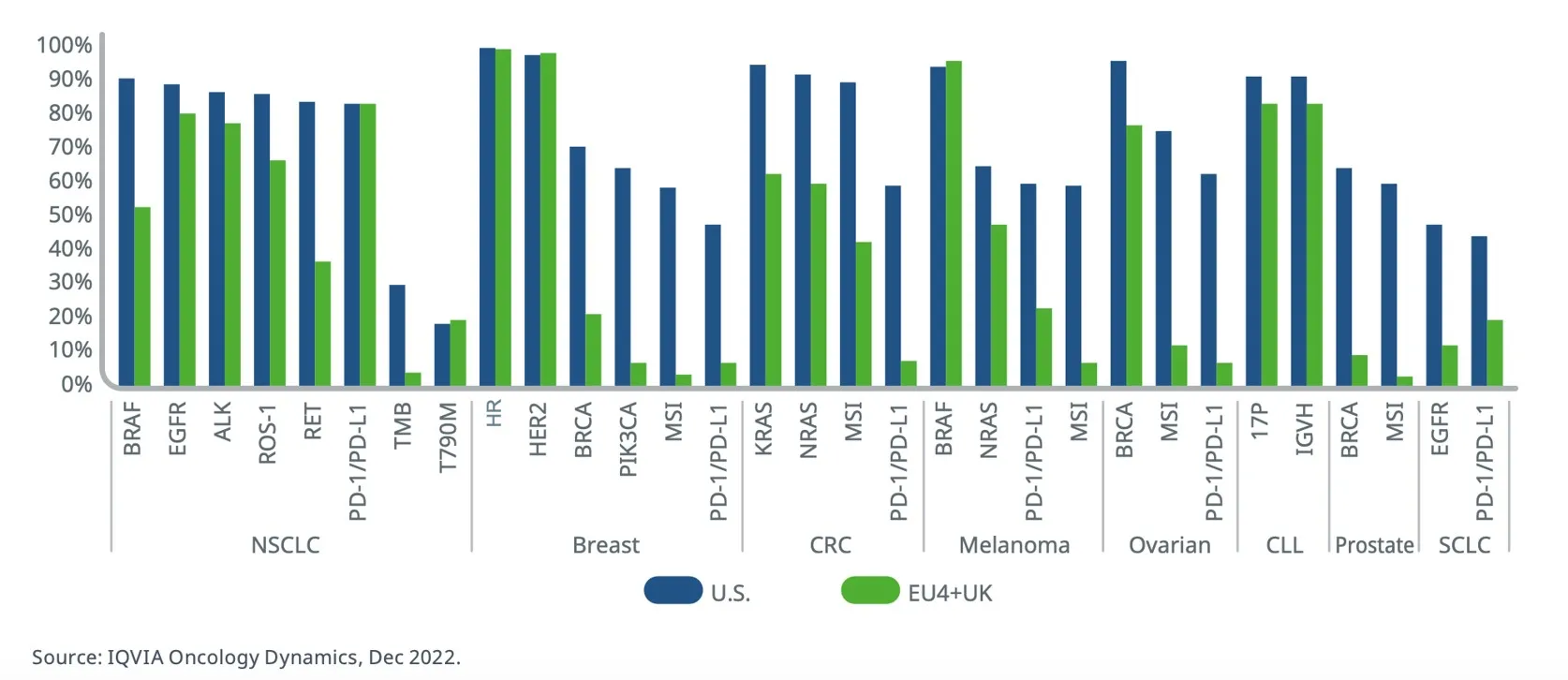
Besides older ones (e.g., HER2 in Breast Cancer, hormonal status in Prostate Cancer, etc..) PD1 status for immune-oncology, on a more granular level status of BRAF, EGFR, ALK, ROS-1, RET, and to some extent TMB as well as T790M in NSCLC, to name a specific tumor type. Others that can be pan-tumor are also BRAF and KRAS, as well as PD1/L1and MSI as a newer one. Given the need for screening of multiple targets/ mutations, either more panel diagnostics are being used, or some form of sequencing (either hot spots for known mutations with therapeutic implications, or full genome sequencing, ideally of multiple tumor samples).
4. In what ways are next-generation sequencing (NGS) technologies enhancing the accuracy and speed of cancer diagnostics?
Significantly, both full-genome sequencing for a better understanding of tumor biology, as well as hot spot sequencing to identify known treatment relevant characteristics of the tumor at comparatively lower cost.
5. How do you foresee the role of artificial intelligence and machine learning in improving the accuracy and efficiency of cancer diagnostic processes?
In radiology, it can play an important role in to accelerate screening for early disease, in NGS based diagnostics, it can help to provide an initial assessment of potential treatment options, leveraging information from thousands of papers, as well as thousands of therapeutic options. In the future, tumor mutation prediction could become an important cornerstone for individualized treatment, including specific vaccinations. Prediction of most important and highest probability mutations will be very important as the immune system especially in severe cancer cases will require time to develop capabilities to fight tumor cell based on specific vaccinations against molecular targets/mutations.

6. What challenges do healthcare providers face in integrating novel diagnostic technologies with existing treatment protocols?
The pace of change is rapid, and highest end AMC type treatment is not (yet) broadly available, besides being very costly. Early diagnostic is also oftentimes limited by long lead times for appointments etc… When integrating novel Dx as well as Tx technologies, providers and payors will face the need to rapidly adopt labels and payment options, with “official” guidelines oftentimes lagging the latest science by several years.
7. Can you discuss the impact of multi-omics approaches (genomics, proteomics, metabolomics) on the development of personalized cancer treatments?
It certainly plays an important role in the future, but with NGS rates still being comparatively low outside the US, the next important step will be to ensure better access to these established diagnostic modalities.
8. How are liquid biopsies being utilized to monitor treatment response and detect minimal residual disease in cancer patients?
Liquid biopsies can play an important role, but with the breadth of different mutations know thus far it may often times not be specific enough beyond more basic response monitoring or detection of recurrences.
9. What role do companion diagnostics play in the development and approval of new cancer therapies, and how are they influencing treatment decisions?
Companion Dx play a very important role in ensuring adoption of novel targeted approaches, as only precise diagnostic can ensure best outcomes. While approval may also be achieved with beneficial OS outcomes, for access, especially for very costly therapies, a molecular understanding of a specific patients tumor may ensure reimbursement, given higher likelihood of efficacy.

10. How is the integration of diagnostic imaging modalities, such as PET-CT and MRI, contributing to more precise tumor characterization and treatment planning?
Especially PET-CT can help detect also metastatic disease, and with molecular imaging technologies evolving further there could be additional new ways to monitor response and detect progressing disease.
11. Can you provide insights into the regulatory landscape for novel cancer diagnostics and the challenges associated with obtaining approval for new technologies?
Overall, I believe a lot of progress has been made, especially also with pan-tumor approvals or at least superior understanding of molecular mechanism. However, the number of patients to be screened with a certain test on a panel further increases with more precise (and often more narrow) sub-tumor types, making it complex and costly.
12. How are advancements in cancer diagnostics influencing clinical trial design and the identification of suitable patient populations for novel therapies?
From my perspective especially the pan-tumor approvals based on a specific mutation or tumor characteristic (like overexpressed PD1/PD-L1) have made a big difference to bring novel medications also to patients irrespective of the tumor type.
13. What ethical considerations arise with the use of advanced diagnostic technologies in cancer care, particularly regarding patient consent and data privacy?
As the whole landscape becomes increasingly complex, I see three challenges: regulators or policymakers having to deal with an “explosion of scientific understanding” not always being able to make novel approaches available in due time, patients having to understand what they really agree to and which data is shared with whom, and lastly the availability of full-genome sequencing leading to applications outside of cancer diagnostics for other purposes, at least potentially.
14. How do you envision the future of cancer diagnostics evolving in the next decade, especially in the context of combining diagnostics with innovative treatments for personalized medicine?
Many emerging options, from my perspective three with most impact: NGS and molecular pan-tumor understanding, ADC options with combined diagnostics followed up by a therapeutic antibody (or other) with a payload, most importantly, however, better access to comparatively cost effective more established diagnostics such as PET scans, assays for known mutations, screen for circulating cancer cells, etc…