
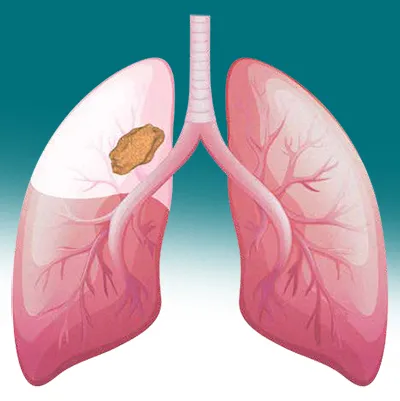
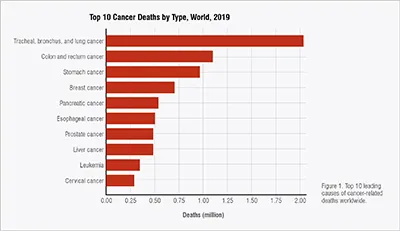
Lung cancer remains a formidable challenge in oncology, being the leading cause of cancer-related mortality worldwide (Figure 1). Surgical intervention is a cornerstone in the management of lung cancer, particularly for early-stage non-small cell lung cancer (NSCLC). Among the various surgical procedures, pneumonectomy—which involves the removal of an entire lung—plays a critical role in cases where less extensive resection is not feasible. However, pneumonectomy is associated with higher rates of postoperative morbidity and mortality compared to lobectomy and segmentectomy.
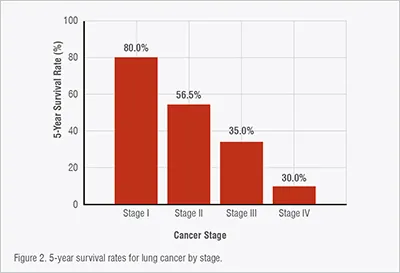
Previous studies have revealed morbidity rates ranging from 20% to 60%, including respiratory complications, cardiovascular issues, infections, and bronchopleural fistula. The early postoperative mortality rate is between 5% and 10%, while long-term survival varies widely based on cancer stage, with five-year survival rates ranging from 30% to 50% (Figure 2).
Due to the high mortality and morbidity rates associated with pneumonectomy operations, studies aimed at identifying risk factors for the development of postoperative complications are of great importance.
The study conducted by Batıhan aet al. aims to explore the prognostic significance of early postoperative complications and identify risk factors that may influence patient outcomes following pneumonectomy.
Overview of Findings
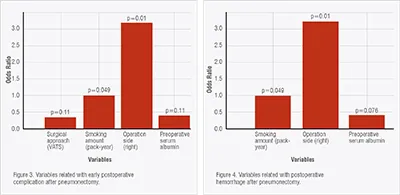
The study analysed data from 136 patients who underwent pneumonectomy for NSCLC between January 2008 and May 2021. The primary objective was to evaluate the impact of early postoperative complications on overall survival (OS) and disease-free survival (DFS), as well as to identify independent risk factors associated with these complications. The findings highlight the importance of smoking history, operation side, pericardial invasion, and patient age in predicting postoperative outcomes (Figure 3).
Key Risk Factors
Smoking Amount: The study found a significant association between the amount of cigarette smoking and the incidence of early postoperative complications. Specifically, higher smoking amounts were linked to increased rates of postoperative hemorrhage. There is probably a possible indirect cause-and-effect relationship associated with increased postoperative hemorrhage. This finding is consistent with previous research indicating that smoking adversely affects respiratory function, impairs wound healing, and increases the risk of complications. However, it should be noted that this study does not contain data regarding the amount of smoking, active/passive smoking, or a cut-off value.
Operation Side: Right-sided pneumonectomy was associated with a higher risk of complications compared to left-sided procedures. This disparity is likely due to anatomical and physiological differences between the two sides of the thoracic cavity. The right lung has a larger alveolar reserve, and the left hilum is anatomically more protected, which may contribute to the higher complication rates observed in right-sided pneumonectomies. This situation necessitates that surgeons be much more meticulous when deciding on right pneumonectomy.
Pericardial Invasion: Pericardial invasion was identified as a independent risk factor for postoperative hemorrhage. This data has been discussed by the authors as follows: In the presence of pericardial invasion, a wider dissection, including the pericardium and surrounding tissues, is necessary for the complete resection of the tumour. This situation can increase the risk of hemorrhage in the postoperative period. This finding underscores the importance of thorough preoperative assessment and surgical planning in patients with tumours involving the pericardium.
Advanced Age: Older patients were found to be more susceptible to postoperative pneumonia, the most common complication observed in the study. Age-related declines in immune function, pulmonary reserve, and overall physiological resilience likely contribute to the increased risk of pneumonia in elderly patients.
Prognostic Implications
The development of early postoperative complications was found to have a negative impact on both OS and DFS. Patients who experienced complications had significantly poorer survival outcomes compared to those without complications. This relationship highlights the critical importance of minimising postoperative complications to improve patient prognosis. The study's findings align with previous research demonstrating that postoperative complications can prolong hospital stays, delay recovery, and increase the risk of mortality.
Clinical Recommendations
Based on the findings of Batıhan aet al., several clinical recommendations can be made to enhance patient outcomes following pneumonectomy:
Preoperative Risk Assessment: Comprehensive preoperative evaluation is essential for identifying high-risk patients. This assessment should include detailed smoking history, evaluation of potential pericardial invasion, and consideration of patient age. Advanced imaging techniques and pulmonary function tests can aid in accurately assessing the patient's suitability for pneumonectomy.
Smoking Cessation Programmes: Encouraging patients to quit smoking prior to surgery is crucial. Smoking cessation programmes should be integrated into the preoperative care pathway to reduce the risk of complications. Evidence suggests that even short-term cessation can improve postoperative outcomes.
Surgical Technique: Where feasible, less invasive surgical techniques such as video-assisted thoracoscopic surgery (VATS) should be considered. VATS has been associated with lower rates of postoperative complications and faster recovery compared to open thoracotomy. However, the choice of surgical technique should be tailored to the individual patient's anatomy and tumour characteristics.
Perioperative Management: Vigilant perioperative monitoring and early intervention are critical for preventing and managing complications. Protocols for managing postoperative hemorrhage, pneumonia, and other common complications should be in place to ensure timely and effective treatment.
Postoperative Care: Ensuring optimal postoperative care is vital for enhancing patient recovery. This includes regular follow-up visits, respiratory physiotherapy, nutritional support, and vigilant monitoring for signs of complications. Early recognition and management of complications can significantly improve patient outcomes.
Conclusion
The study by Batıhan aet al. underscores the critical importance of early postoperative complications in determining the prognosis of patients undergoing pneumonectomy for NSCLC. Key risk factors such as smoking amount, operation side, pericardial invasion, and advanced age must be carefully considered in the preoperative assessment and perioperative management of these patients. By implementing comprehensive preoperative evaluations, smoking cessation programmes, meticulous surgical techniques, and vigilant postoperative care, healthcare providers can minimise the occurrence of complications and improve patient outcomes. Future research should focus on expanding these findings through multi-centre studies, exploring long-term outcomes, and developing targeted interventions for high-risk patients to further enhance the care of lung cancer patients undergoing pneumonectomy.
References
Batıhan, G., Ceylan, K. C., & Kaya, Ş. Ö. (2024). Risk factors and prognostic significance of early postoperative complications for patients who underwent pneumonectomy for lung cancer. Journal of Cardiothoracic Surgery, 19:272. https://doi.org/10.1186/s13019-024-02777-w