

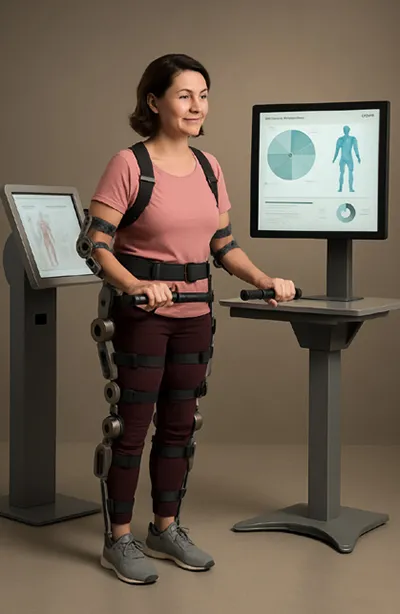
In the hushed, vulnerable moments of recovery - where every breath, step, or word reclaimed feels like a mountain scaled - technology is no longer a distant, sterile force. It has become something far more intimate: a companion that listens, adapts, and walks beside patients through the labyrinth of rehabilitation. Artificial intelligence, often dismissed as impersonal algorithms or faceless automation, is quietly redefining what it means to heal. By weaving empathy into code and intuition into data, AI is transforming physical rehab into a deeply human experience—one that meets patients not just in their clinical needs, but in their fear, frustration, and fragile hope.
Imagine a nurse who never tires, a therapist who anticipates pain before it flares, or a guide who tailors every exercise to the rhythm of a patient’s courage. AI does not replace these roles, it enhances them, blending machine precision with emotional intelligence to create a safety net of personalized care. For the stroke survivor relearning to speak, the spinal injury patient rebuilding muscle memory, or the post-surgical amputee navigating phantom pain, AI becomes both mirror and mentor: reflecting progress they cannot yet see, and lighting a path forward when resilience falters.
This is not the cold, clinical future once feared - it’s a revolution steeped in warmth. Sensors learn the cadence of a struggling breath, algorithms decode the silence of depression, and virtual coaches celebrate micro-victories with the sincerity of a trusted friend. In a field where progress is measured in millimeters and milliseconds, AI’s true power lies not in its processing speed, but in its ability to humanize the journey - to turn isolation into partnership, data into hope, and the long road to recovery into a shared act of courage.
Here, technology sheds its rigidity, becoming a bridge back to what was lost - not just mobility or speech, but agency, dignity, and the unshakable belief that healing is possible.
The Silent Struggle of Rehabilitation
Physical rehabilitation is more than just exercises and repetition. It’s a journey of resilience, requiring patients to rebuild strength, coordination, and confidence. Traditional methods rely heavily on therapists’ expertise and patients’ motivation, but limitations persist. Clinics are often overcrowded, sessions are time-bound, and progress can plateau. For many, especially those in remote areas or with limited mobility, accessing consistent care is a daily challenge.
This is where AI enters the picture - not to replace therapists, but to empower them. By merging data-driven insights with human empathy, AI is creating a new paradigm in rehabilitation, one that meets patients where they are, both physically and emotionally.
Personalized Therapy: AI as a Tailor of Recovery
Every patient’s body and needs are unique. A one-size-fits-all approach to rehabilitation can slow progress or even cause harm. AI changes this by analysing vast amounts of data - medical history, movement patterns, pain levels, and even emotional states - to design personalized recovery plans.
Take Sara, a 45-year-old stroke survivor. Her right arm was paralyzed, and traditional therapy yielded minimal improvement. Using an AI-powered system, her therapists input data from her MRI scans, real-time movement sensors, and daily activity logs. The AI identified subtle muscle activation patterns invisible to the human eye and created a customized regimen targeting her specific neural pathways. Within weeks, Sarah regained partial mobility - a breakthrough she calls “miraculous.”
Machine learning algorithms adapt in real time. If a patient struggles with an exercise, the AI adjusts the difficulty or suggests alternatives. If progress accelerates, it ramps up the challenge. This dynamic approach keeps patients engaged, a critical factor in long-term success.
Real-Time Feedback: The Virtual Coach in Your Living Room
Imagine practicing a leg lift at home, unsure if you’re doing it correctly. Without a therapist watching, improper form could delay recovery or cause injury. AI bridges this gap through wearable devices and computer vision.
Multiple companies have developed AI-driven exoskeletons and sensors that guide movements. For example, a knee brace equipped with motion sensors vibrates gently if a patient hyperextends their joint during a squat. Many apps use smartphone cameras to analyse exercises, offering instant feedback like, “Shift your weight slightly to the left,” or “Slow down—you’re rushing.”
Breaking Barriers: Accessibility and Remote Care
For rural patients, frequent clinic visits are impractical. AI-powered tele-rehabilitation platforms, bring therapy into living rooms. Patients wear motion-tracking sensors while following guided exercises on a tablet. AI monitors their form, tracks progress, and alerts therapists if interventions are needed.
During the COVID-19 pandemic, such tools became lifelines. Maria, a grandmother recovering from COPD in a small village, used an app to practice breathing exercises. Her respiratory physiotherapist in reviewed her weekly, adjusting her plan via video calls. “I never felt alone,” Maria says. “The technology connected me to someone who cared.”
AI also democratizes access to cutting-edge treatments. In India, startups use low-cost motion sensors and AI to provide affordable care for children with cerebral palsy. Meanwhile, projects collaborate with prosthetic manufacturers are making smart limbs accessible in developing regions.
The Emotional Layer: AI as a Motivational Partner
Recovery is as much psychological as it is physical. Depression, frustration, and burnout are common. AI addresses this by incorporating emotional intelligence. Chatbots use natural language processing to check in on patients’ mental health, offering encouragement or mindfulness exercises.
More advanced systems, turn exercises into video games. Patients control characters by performing correct movements, earning rewards for milestones. For kids like a 10-year-old boy, who dreads his daily physiotherapy for muscular dystrophy, gamification makes therapy feel like play. “I’m not just doing boring stretches - I’m saving a dragon!” he grins.
Challenges: Keeping the “Human” in Human-Centered Care
Despite its potential, AI in rehabilitation isn’t without risks. Privacy concerns loom large - health data is sensitive, and breaches could be devastating. Strict regulations are crucial, but ethical dilemmas persist: Who owns the data? Can algorithms unintentionally bias against certain demographics?
There’s also the fear of dehumanization. A 2023 Johns Hopkins study found that 62% of patients worry AI could make rehab feel “less personal.” Therapists echo this, stressing that technology should augment, not replace, human connection.
The Future: Collaboration, Not Competition
The most promising AI solutions are those built alongside clinicians. At MIT’s Computer Science and AI Lab (CSAIL), researchers collaborate with therapists to design robots that assist with repetitive tasks, freeing up time for personalized care.
Looking ahead, AI could predict relapses before they occur. Researchers at Stanford are training algorithms to analyse gait patterns and flag early signs of Parkinson’s deterioration. Others, like the University of Zurich, are testing “smart socks” with pressure sensors to prevent diabetic foot ulcers.
Conclusion:
A Brighter, More Inclusive Path to Recovery
AI in physical rehabilitation isn’t about machines taking over - it’s about extending the reach of human compassion. By handling data crunching and routine tasks, AI allows therapists to focus on what they do best: empathizing, innovating, and inspiring. For patients, it means therapies tailored to their bodies, support available 24/7, and hope that recovery is within reach, no matter where they are.
As we stand at this intersection of technology and humanity, one truth emerges: AI’s greatest gift to rehabilitation isn’t intelligence - its heart.
Consider the therapist who once spent hours analysing gait patterns or manually adjusting exercise regimens. Now, AI-powered motion sensors and predictive analytics do this in seconds, freeing clinicians to sit beside a patient, hold their hand, and say, “I see how hard you’re working - let’s try this together.” The machine’s precision becomes a canvas for human creativity, enabling therapists to design bold, personalized interventions - like combining music therapy with movement for a Parkinson’s patient or using VR to rebuild confidence in someone with a traumatic brain injury.
For patients, AI dissolves the walls of isolation. A grandmother recovering from a stroke in a rural town can access world-class speech therapy via a tablet, her progress tracked by algorithms that adapt exercises to her dialect and cognitive pace. A young athlete relearning to walk after a spinal injury finds solace in an AI companion that notices when they skip exercises out of despair, responding not with scolding, but with a gentle nudge: “Let’s try just five minutes today. I’m here.” These systems don’t just monitor - they witness, offering a quiet, constant presence that says, you matter.
Yet the true magic lies in how AI amplifies empathy. By detecting subtle cues - a tremor in a voice, a hesitation in a step - it alerts therapists to unspoken struggles, from depression to chronic pain flare-ups. This isn’t cold surveillance; it’s a bridge to deeper connection. When a clinician says, “I noticed you’ve been quieter this week,” its AI that helped them see beyond the surface, transforming data into a catalyst for compassion.
In the end, AI doesn’t heal - people do. But by shouldering the grind of repetition and measurement, it gives caregiver’s space to be more human, and patients the freedom to be seen as more than their diagnoses. This is rehabilitation reimagined: not a race against the clock, but a collaboration between human warmth and machine wisdom, where every algorithm pulses with the rhythm of a heartbeat.