
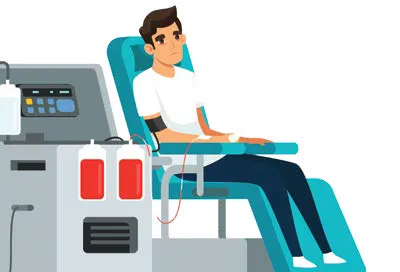
Chronic kidney disease (CKD) is rapidly emerging as one of India’s most serious public health threats. With an estimated 17% of the population affected by some form of CKD, the burden on the healthcare system is immense. Among those with end-stage renal disease (ESRD), dialysis remains the primary life-sustaining treatment in the absence of a transplant. However, access to quality and affordable dialysis continues to be out of reach for many due to structural, financial, and logistical challenges.
India's journey in dialysis care is one of paradoxes. On the one hand, we have state-of-the-art tertiary hospitals offering world-class care. On the other, a significant percentage of the population still struggles to access basic dialysis services. Innovations particularly those driven by automation and value-based models are beginning to bridge this gap. This article takes a comprehensive look at these innovations, the enduring challenges, and a strategic path forward to transform dialysis care in India.
Innovations in Dialysis Care
1. Value-Based Care in Dialysis
The traditional model of dialysis care has largely been volume-based, focusing on the number of sessions rather than patient outcomes. However, a shift toward value-based care is now gaining traction in India. This model emphasizes improved patient outcomes, better quality of life, and cost-efficiency.
• Affordable Dialysis Solutions: A growing number of Indian startups are developing low-cost dialysis machines and consumables. These indigenously produced technologies have the potential to drastically reduce the per-session cost, making dialysis more accessible for the economically weaker sections.
• Public-Private Partnerships (PPP): The Pradhan Mantri National Dialysis Programme (PMNDP) is a milestone government initiative providing free dialysis services at district hospitals. Implemented in collaboration with private partners, the program aims to offer uniform care quality and eliminate out-of-pocket expenditure for economically vulnerable patients.
• Outcome-Driven Models: A few institutions have begun integrating outcome-tracking into dialysis programs—focusing on metrics such as hospitalization rates, infection control, patient satisfaction, and quality-of-life indicators. These metrics are increasingly used to guide policy and improve clinical protocols.
2. Automation in Dialysis Operations
Technological advancement and digital transformation are redefining how dialysis services are delivered and managed in India.
• AI and Remote Patient Monitoring (RPM): Artificial intelligence-powered RPM systems help monitor patient vitals in real-time, detect early signs of complications, and reduce unnecessary emergency visits. They are especially useful for patients living in remote areas who need consistent care but cannot frequently travel.
• Telemedicine in Dialysis: Virtual nephrology consultations, digital care planning, and follow-up via telehealth platforms have reduced the need for frequent in-person visits, particularly during the COVID-19 pandemic. This model is cost-effective and patient-friendly.
• Automated Scheduling and Resource Optimization: Digital platforms now assist in optimizing dialysis slot allocations, minimizing patient wait times, and improving resource utilization at dialysis centers.
• Wearable and Implantable Dialysis Devices: Though still at the experimental stage, wearable dialysis units and implantable artificial kidneys represent a promising future for renal replacement therapy. These solutions can offer uninterrupted dialysis, dramatically improving mobility and quality of life for patients.
Challenges in Dialysis Care
Despite these innovations, several systemic and operational challenges continue to impede progress.
1. Financial and Structural Barriers
• High Treatment Costs: Dialysis treatment in India, although cheaper than in many Western countries, still remains unaffordable for a significant portion of the population. A typical hemodialysis patient requires 2-3 sessions a week, each costing ₹1,500–₹3,000 on average—an insurmountable expense for many families.
• Limited Infrastructure: Only a fraction of India’s healthcare facilities are equipped to provide dialysis services. Rural and tribal areas are especially underserved, with many patients forced to travel over 100 km for a single session. This logistical challenge often leads to missed sessions and poor outcomes.
2. Workforce and Awareness Issues
• Shortage of Trained Professionals: India has an acute shortage of nephrologists, dialysis technicians, and nurses trained in renal care. This shortage restricts the expansion of dialysis services, particularly in tier-2 and tier-3 cities.
• Poor Awareness and Late Diagnosis: Many individuals with early-stage CKD remain undiagnosed due to lack of routine screening. By the time symptoms become evident, they often require urgent dialysis initiation, missing out on early management strategies that could delay progression.
The Path Forward
To transform dialysis care in India into an inclusive, high-quality, and sustainable system, multi-pronged action is necessary.
1. Strengthening Value-Based Care
• Expand Dialysis Centers: Strategic expansion of dialysis facilities in tier-2, tier-3 cities and rural areas is critical. Mobile dialysis units and satellite centers linked to tertiary hospitals can help extend reach.
• Subsidized Models and Insurance Integration: The Ayushman Bharat scheme and other state-level insurance programs should continue to broaden dialysis coverage. Additionally, government incentives for hospitals offering low-cost dialysis can stimulate wider participation.
• Patient Education and Engagement: Nationwide campaigns to promote early CKD screening and awareness about risk factors—such as diabetes and hypertension—are essential. Educational tools like mobile apps, SMS alerts, and vernacular content can improve engagement in low-literacy populations.
2. Enhancing Automation in Hospital Operations
• AI-Driven Clinical Decision Support Systems (CDSS): Integrating AI into hospital EMRs (Electronic Medical Records) can provide predictive insights into patient deterioration, guide dosage adjustments, and recommend intervention strategies.
• Unified Digital Health Records: Creating an interoperable platform for dialysis patients that integrates lab data, medication history, and treatment response can greatly enhance coordination among healthcare teams.
• Automation in Workflow and Logistics: Robotic assistance in tasks such as setting up dialysis machines, sterilization, and inventory tracking can free up nursing staff for more patient-centric roles. Digital dashboards for scheduling and maintenance ensure smoother operations and reduce delays.
Conclusion
The transformation of dialysis care in India is not a distant dream but a tangible possibility. The convergence of technological innovation, policy support, and grassroots-level health education is creating momentum for change. Yet, for this transformation to be meaningful, it must be inclusive—reaching the remotest corners of the country and addressing the needs of the most vulnerable.
The path forward involves strengthening infrastructure, empowering healthcare providers, integrating AI-driven automation, and, above all, centering care around the patient. With committed investment and visionary leadership, India can emerge as a global model for equitable and innovative dialysis care.