
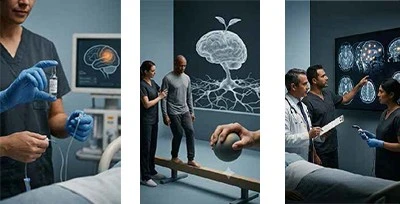
Cerebrolysin is a peptide-based neurotrophic preparation shown to mitigate secondary neuronal injury through modulation of neuroinflammation, enhancement of neuronal survival, promotion of synaptogenesis, and support of cerebral plasticity. Clinical evidence supports its use as an adjunct to rehabilitation after stroke. The CARS trial demonstrated improved upper-extremity motor recovery when Cerebrolysin was combined with standard rehabilitation, while the ESCAS study reported improved verbal recovery when paired with speech therapy. Current European Academy of Neurology guidelines recommend Cerebrolysin as an add-on therapy to standard early rehabilitation after acute ischemic stroke.
This report presents two institutional cases, one traumatic brain injury and one ischemic stroke, illustrating meaningful functional recovery after integration of Cerebrolysin into neurocritical care and rehabilitation pathways.
Case 1: Traumatic Brain Injury
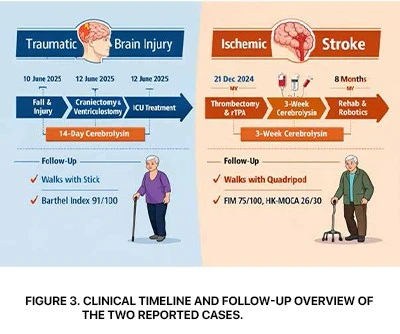
A 64-year-old woman was admitted to Queen Mary Hospital on 10 June 2025 after falling down four steps and striking her forehead. On admission, her Glasgow Coma Scale (GCS) score was 14. Cranial CT demonstrated right frontal and left temporal contusions, traumatic subarachnoid hemorrhage, subdural hematoma, and non-depressed left linear skull and middle fossa skull base fractures.
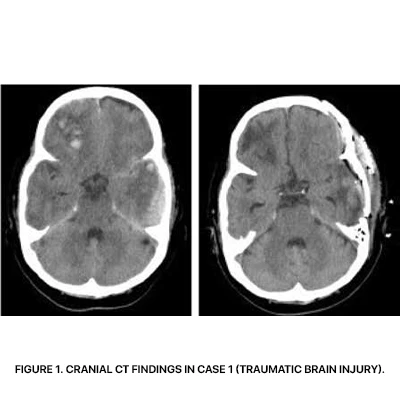
Her neurological status deteriorated over the following 48 hours, with GCS declining to E2V2M5, prompting decompressive craniectomy and ventriculostomy on 12 June 2025. She was managed in the neurosurgical intensive care unit and received a 14-day course of Cerebrolysin as adjunctive neurorecovery support.
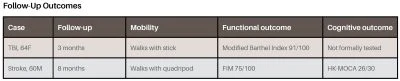
Subsequently, she underwent cranioplasty on 12 September 2025. At 3 months post-injury, the patient had achieved substantial recovery. She was able to walk with a stick, perform activities of daily living with only standby or mild assistance, and reached a Modified Barthel Index of 91/100, indicating near independence.
Case 2: Acute Ischemic Stroke
A 60-year-old man was admitted through Queen Mary Hospital’s Green Channel stroke service on 21 December 2024 after returning from Mainland China with a sudden onset left hemiplegia and hemineglect.
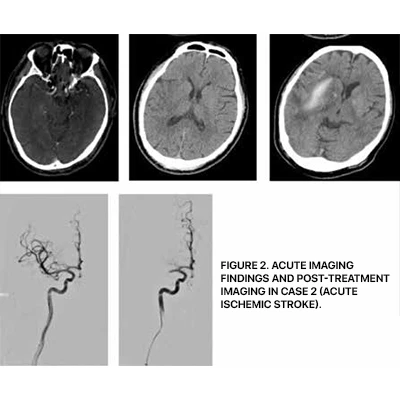
Initial imaging confirmed right M1 middle cerebral artery occlusion, with NIHSS 16 and ASPECTS 9. Intravenous thrombolysis was administered, followed by successful intra-arterial thrombectomy with complete reperfusion (TICI 3) performed 5.5 hours after symptom onset.
Post-procedural CT showed right putaminal reperfusion injury, and the patient was managed in the neurosurgical ICU. A 3-week course of Cerebrolysin was administered during the acute recovery phase.
He subsequently entered an intensive rehabilitation pathway that included conventional therapy and robotic rehabilitation for left hemiparesis.
At 8 months post-stroke, the patient was able to walk with a quadripod, with progressive improvement in left-sided motor deficits. Cognitive screening showed preserved cognition with HK-MOCA 26/30, and functional assessment demonstrated continued recovery with FIM 75/100.
Discussion
These two institutional cases demonstrate meaningful recovery trajectories after severe acute brain injury when Cerebrolysin is integrated into multidisciplinary neurocritical care and rehabilitation.
The first case is notable for the degree of functional recovery achieved after multicompartment traumatic brain injury requiring decompressive surgery. Despite initial neurological deterioration, the patient progressed to near-independent ambulation and self-care within three months.
The second case illustrates substantial recovery after large vessel occlusion stroke, despite severe initial deficits and reperfusion injury. Early reperfusion therapy restored cerebral blood flow, while adjunctive Cerebrolysin may have supported neuronal recovery during the vulnerable post-ischemic period. The favorable cognitive and motor outcomes at 8 months suggest effective integration of pharmacological neurorecovery support with advanced rehabilitation technologies, including robotic therapy.
Although causal attribution cannot be established in, a case series, both patients showed recovery trajectories exceeding what is often expected after the severity of their initial presentations. These cases support the concept that Cerebrolysin may be a valuable adjunct within structured neurorehabilitation pathways across different forms of acquired brain injury.
Conclusion
This two-patient case series demonstrates favorable long-term functional recovery after severe traumatic brain injury and large vessel ischemic stroke when Cerebrolysin was incorporated into acute neurocritical care and multidisciplinary rehabilitation. These institutional experiences support further use and study of Cerebrolysin as an adjunctive neurorecovery strategy in both traumatic and vascular brain injury.
References
1. Fiani B, Covarrubias C, Wong A, et al. Cerebrolysin for stroke, neurodegeneration, and traumatic brain injury: review of the literature and outcomes. Neurol Sci. 2021;42(4):1345–53.
2. Kang DH, Choi BY, Lee SH, et al. Effects of cerebrolysin on hippocampal neuronal death after pilocarpine-induced seizure. Front Neurosci. 2020. https:// doi.org/10.3389/fnins.2020.568813.
3. Muresanu DF, Heiss WD, Hoemberg V, et al. Cerebrolysin and recovery after stroke (CARS). Stroke. 2016;47(1):151–159.
4. Homberg V, Jianu DC, Stan A, et al. Speech therapy combined with Cerebrolysin in enhancing nonfluent aphasia recovery after acute ischemic stroke: ESCAS randomized pilot study. Stroke. 2025;56:937–947.
5. Beghi E, Binder H, Birle C, et al. European Academy of Neurology guideline on pharmacological support in early motor rehabilitation after acute ischaemic stroke. Eur J Neurol. 2021;28(9):2831–2845.
Read the full article — it's free
Register with AsianHHM to unlock expert insights, research articles and in-depth industry analysis.