
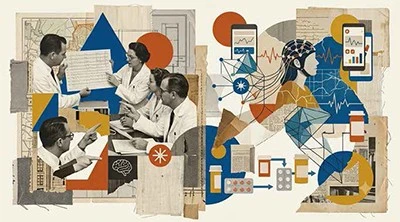
Epilepsy affects over 50 million people worldwide, making it one of the most common neurological conditions globally. While the primary clinical focus historically centred on achieving immediate seizure freedom, contemporary healthcare models recognise epilepsy as a complex chronic condition. Optimal management requires a holistic, long-term strategy. For healthcare executives and medical specialists, implementing a comprehensive chronic disease management framework is essential. This approach addresses the multifaceted clinical, psychological and social challenges faced by patients, ultimately improving clinical outcomes and reducing systemic healthcare costs.
The Interdisciplinary Care Team
A modern framework for epilepsy care shifts the medical paradigm from isolated clinical encounters to a continuous, integrated care model. This model relies on a coordinated team where every member contributes specialised expertise to optimise patient outcomes.
The Physician’s Role
Neurologists and epileptologists (physicians specialising in epilepsy) lead the clinical diagnosis, treatment formulation and pharmacological management. Their responsibilities include accurate seizure classification, structural neuroimaging evaluation and the strategic selection of anti-seizure medications (ASMs). Beyond prescription, physicians must monitor for systemic adverse effects, drug-drug interactions and long-term metabolic impacts.
The Role of Specialised Therapists
Physical, occupational and speech therapists address the functional limitations often associated with severe or refractory epilepsy.
Occupational Therapists: Assess home and workplace safety, suggesting modifications to minimise injury risks during a seizure. They also assist with cognitive rehabilitation to counteract memory impairments caused by seizures or medication side effects.
Physical Therapists: Focus on gait, balance and physical conditioning, helping patients maintain mobility and confidence.
Neuropsychologists and Speech Therapists: Address linguistic deficits, cognitive slowing and the common psychiatric comorbidities of depression and anxiety.
Patients and Caregivers as Partners
Active participation from patients and caregivers is foundational to chronic disease management. Patients must be empowered through education to recognise seizure triggers, maintain consistent medication routines and log seizure activity accurately. Caregivers provide crucial support by administering rescue medications during emergencies, documenting seizure semiology (the physical manifestations of a seizure) and offering emotional stability.
Framework for Long-Term Management
A structured approach to long-term care focuses on four pillars: adherence, safety, functional independence and quality of life.
Promoting Treatment Adherence
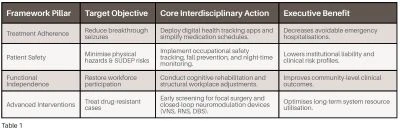
Non-adherence to medication regimens remains a primary cause of breakthrough seizures and avoidable hospitalisations. Healthcare organisations can improve adherence by utilizing digital health technologies, such as automated smartphone reminders and electronic pill dispensers. Simplifying dosing schedules to once- or twice-daily regimens whenever clinically feasible also significantly increases compliance.
Ensuring Safety and Minimising Risks
Safety protocols must address both daily physical hazards and serious medical risks, including Sudden Unexpected Death in Epilepsy (SUDEP). Clinical teams should provide clear guidance on water safety, cooking hazards and fall prevention. Mitigating SUDEP risks involves optimising nocturnal monitoring, ensuring medication adherence and discussing nocturnal supervision strategies with caregivers.
Enhancing Functional Independence
Regaining independence, particularly regarding employment and transport, is a primary goal for individuals living with epilepsy. Interdisciplinary teams work alongside vocational counselors to identify safe employment environments and secure reasonable workplace accommodations. This support helps patients remain active participants in the workforce.
Advanced Treatment Integration
For the approximately 30 per cent of patients who exhibit drug-resistant epilepsy (failing to achieve seizure control after trying two appropriately chosen and tolerated ASMs), advanced interventions must be integrated early into the care pathway.
Epilepsy Surgery
Surgical resection, such as an anterior temporal lobectomy or lesionectomy, offers a potentially curative option for patients with focal epilepsy. Advanced neuroimaging, including high-resolution structural MRI and functional neuroimaging (PET and SPECT scans), allows clinical teams to precisely locate the epileptogenic zone. When successful, surgery can lead to complete seizure freedom, allowing patients to systematically reduce or eliminate their reliance on long-term medication.
Neuromodulation Technologies
When surgical resection is not feasible due to the proximity of vital brain regions, neuromodulation devices offer an alternative innovative solution.
Vagus Nerve Stimulation (VNS): Implant a device that sends regular electrical pulses to the brain via the vagus nerve to reduce seizure frequency.
Responsive Neurostimulation (RNS): Represents a closed-loop technology that monitors brain activity continuously, detects abnormal electrical patterns and delivers targeted stimulation to disrupt a seizure before it begins.
Deep Brain Stimulation (DBS): Delivers continuous electrical stimulation to specific thalamic targets to modulate brain excitability.
Organizational Best Practices
Hospital executives can enhance institutional care delivery by establishing Comprehensive Epilepsy Centers (CECs). These centres standardise patient intake, coordinate interdisciplinary consultations and streamline the transition from standard medical management to advanced surgical evaluation.
Implementing standardised clinical pathways ensures that drug-resistant patients are referred for specialised evaluation without unnecessary delays, reducing the clinical burden and optimizing resource utilisation across the healthcare system.
Conclusion
Comprehensive chronic disease management in epilepsy requires shifting from reactive seizure treatment to proactive, coordinated care. By integrating multidisciplinary clinical teams, leveraging digital health solutions and utilising advanced surgical and neuromodulation therapies, healthcare providers can deliver superior clinical outcomes. For healthcare executives, investing in structured, interdisciplinary epilepsy pathways enhances patient safety, restores functional independence and significantly elevates the long-term quality of life for individuals living with this neurological condition.
Online Version References
1. Fisher, R.S., et al. (2014). Operational clinical definition of epilepsy. Epilepsia, 55(4), 475-482.
2. Kwan, P., & Brodie, M.J. (2000). Early identification of refractory epilepsy. New England Journal of Medicine, 342(5), 314-319.
3. Laxer, K.D., et al. (2014). The lancet neurology commission on epilepsy: website resources, data sharing, and global initiatives. The Lancet Neurology, 13(11), 1073-1074.
4. Nashef, L., et al. (2012). Unifying the definitions of sudden unexpected death in epilepsy (SUDEP).
5. Epilepsia, 53(2), 227-233.
Read the full article — it's free
Register with AsianHHM to unlock expert insights, research articles and in-depth industry analysis.