
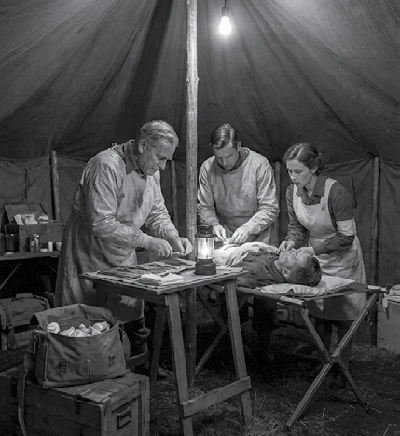
Every day, in operating rooms around the world, lives are saved using techniques so refined and routine that we rarely stop to question where they came from. A bleeding vessel is clamped within seconds. A severely injured patient is stabilised through a carefully staged operation. An infection is controlled before it spreads beyond repair.
What most people don’t realize is that many of these life-saving practices were not born in peaceful hospitals, but in the chaos of war.
War, with all its devastation, has paradoxically been one of the most powerful accelerators of surgical progress. Faced with overwhelming numbers of critically injured patients and limited resources, surgeons in wartime were forced to innovate, adapt, and make decisions under pressure unlike anything seen in civilian life. The result was a transformation of surgery from a slow, often fatal endeavor into the precise, life-saving discipline we know today.
The Urgency That Changed Everything
Before the 20th century, surgery was a very different field. Operations were often prolonged, infection rates were high, and survival was uncertain even in relatively simple cases. But war introduced a new reality: time became the most critical factor.
On the battlefield, surgeons quickly learned that hesitation cost lives. They had to operate faster, think sharper, and focus on what mattered most—saving the patient in front of them, often with minimal tools and under extreme conditions.
This urgency gave rise to one of the most fundamental principles in modern medicine: treat first what kills first. Today, this concept underpins every emergency room and trauma protocol around the world. Whether it’s a car accident in a busy city or a fall at home, the logic remains the same control bleeding, secure the airway, stabilise the patient. That mindset was forged in war.
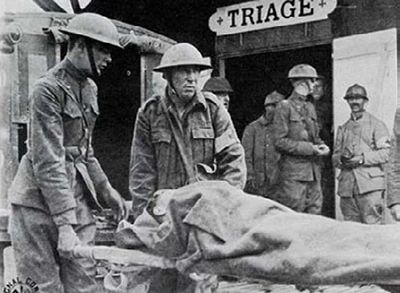
The Birth of Triage
Imagine a field hospital receiving dozens, sometimes hundreds, of wounded soldiers at once. Not everyone can be treated immediately. Someone has to decide—quickly—who gets care first.
This is where triage was born.
Developed and refined during large-scale conflicts, triage introduced a structured way of prioritising patients based on the severity of their injuries and their chances of survival. Those who needed immediate intervention were treated first. Others, whose conditions were less urgent, would wait. And in the most tragic cases, some were deemed beyond saving.
It is a system built on difficult choices, but it remains essential. Today, triage is used not only in hospitals but also in disaster zones, major accidents, and emergency responses worldwide. Every time an emergency department becomes overwhelmed, the principles of triage quietly guide the flow of care.
Fighting the Invisible Enemy: Infection
For much of history, infection was the greatest threat to surgical patients. Even when an operation itself was successful, many patients died days later from infected wounds.
War magnified this problem. Dirty, complex injuries, often contaminated with soil, debris, and foreign material, created ideal conditions for infection to spread rapidly. Surgeons had no choice but to rethink how wounds were managed.
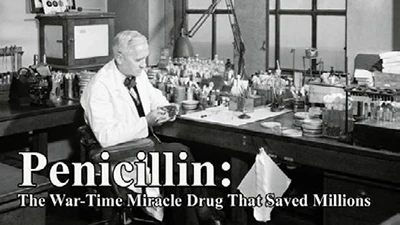
They began to emphasise aggressive cleaning of wounds, removal of damaged tissue, and stricter attention to sterility. Then came one of the most important breakthroughs in medical history: the widespread use of antibiotics like Penicillin during World War II.
For the first time, doctors had a reliable way to control bacterial infections. Mortality rates dropped dramatically, and surgery became significantly safer. Today, infection control is so embedded in surgical practice that it is often taken for granted, but its roots lie in the harsh lessons of wartime medicine.
Rebuilding the Human Body
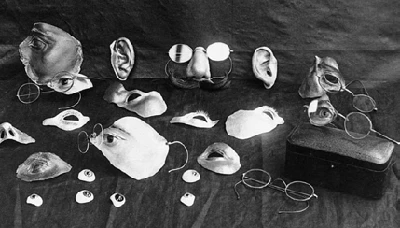
War injuries are often severe and complex. Limbs are damaged, faces are disfigured, and tissues are destroyed in ways rarely seen in everyday life. These challenges pushed surgeons to go beyond simply saving lives they had to restore function and, when possible, appearance.
This necessity led to major advances in vascular and reconstructive surgery. Techniques to repair blood vessels, salvage limbs, and reconstruct facial structures were developed and refined in response to wartime injuries.
Modern plastic and reconstructive surgery owes much of its evolution to these efforts. Today, the same principles are used to treat cancer patients, trauma victims, and individuals born with congenital conditions. What began as a response to devastation became a pathway to restoration and recovery.
A New Philosophy: Damage Control
One of the most important shifts in surgical thinking also came from the battlefield. Surgeons realised that trying to perform a complete, definitive operation on a critically injured patient could sometimes do more harm than good.
Instead, they adopted a staged approach, which is now known as damage control surgery.
The idea is simple but powerful: do only what is necessary to keep the patient alive in the moment. Stop the bleeding, control contamination, and stabilise the body. Then, once the patient is stronger, return later to complete the repair.
This approach has saved countless lives and is now a cornerstone of modern trauma care. It reflects a deeper understanding of the human body not just as something to be repaired, but as a system that must be respected and supported through its most vulnerable moments.
The Ethical Paradox
There is an uncomfortable truth at the heart of all this progress.
Many of the advances that define modern surgery were born out of suffering. Innovation was driven not by ideal conditions, but by necessity, by the need to respond to overwhelming injury and loss.
It raises a difficult question: would surgery have evolved as quickly without war?
Perhaps not. But that does not make the process any less troubling. Every advancement came at a human cost, often measured in lives lost and lives forever changed.
Lessons That Still Matter Today
Although the setting has changed, the influence of war on surgery continues to this day. Modern trauma systems, emergency preparedness, and even mobile surgical units reflect principles developed in conflict zones.
In times of crisis, whether from accidents, natural disasters, or large-scale emergencies the same lessons apply: act quickly, prioritise effectively, and adapt to the situation at hand.
But perhaps the most important lesson is this: progress in medicine should not depend on crisis. The challenge for today’s healthcare systems is to continue advancing through research, collaboration, and innovation without the catalyst of conflict.
A Quiet Legacy
The next time a life is saved in an operating room, it may seem like a routine success—a skilled surgeon, a well-equipped hospital, a practiced team.
Yet behind that moment lies a long and complex history, shaped in part by some of humanity’s darkest chapters.
Modern surgery is, in many ways, a quiet legacy of war. It stands as proof that even in the face of destruction, knowledge can emerge, systems can improve, and lives can be saved.
But it also serves as a reminder: the greatest progress in medicine should come not from necessity, but from intention.