
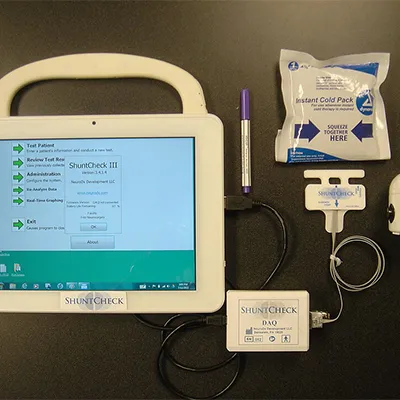
The neurosurgery devices industry is also seeing a revolution in terms of development owing to advancements in technology, population explosion and a bevy of rising demands as regards to minimally invasive surgical kits. With the increasing incidence of neurological diseases such as brain tumor, spinal injuries, and Parkinson disease, the demand is increasing at a faster pace to buy neurosurgical instruments which are highly advanced. This is a point of extreme inflection to the surgical tech inventor - a point where the brilliance in engineering and where clinical need meet.
As per recent market reports, it is estimated that the overall neurosurgery devices market will attain more than 13 billion dollars by 2030 with an expansion rate of 7-9 percent annually. Such a growth projection does not just demonstrate the magnitude of the opportunity but points at the acute need to come up with powerful instruments capable of providing accuracy, efficiency, and safety of very complicated processes.
Market Overview: Drivers and Dynamics
1. Rising Burden of Neurological Disorders
Neurological disorders are one of the main causes of disability and deaths in many parts of this world. Due to ageing populations and lifestyle habits, disorders including Alzheimer disease, traumatic brain injuries (TBIs), epilepsy and strokes are becoming more prevalent. WHO estimates that up to 1 billion people in the world develop neurological disorders. This has sharpened the demand of sophisticated neuro surgeries and devices that accompany it.
2. Technological Advancements
Neurosurgery is evolving and the advances in imaging technologies, robotic-assisted surgery, augmented reality (AR) and artificial intelligence (AI) appears to change the face of what is being done currently. Various diagnosis and intraoperative imaging system, high-definition distribution of surgeons, and stereotactic navigation give new accuracy and safety of surgeries based on artificial intelligence. These advancements are triggering market growth and creating new horizons to the developers of the gadgets.
3. Growth in Minimally Invasive Procedures
An increased tendency towards minimally invasive approaches to neurosurgery has been observed among patients and medical personnel. Such strategies decrease the length of stay in hospital, risks of complications, and postoperative recovery. Equipment used to effectuate such interventions like the neuroendoscopes, lasers, and nimble surgical equipment are in great demand.
4. Surge in Healthcare Investment
The healthcare infrastructure is one of the heavily invested sectors by governments and other stakeholders, especially in the burgeoning economies. This will cater to specialty neurosurgery centers and acquisition of advanced surgical nodes. Such investments are earning fertile grounds in the acceptance of new products.
Key Device Categories Fueling Market Growth
1. Neurostimulation Devices
Neurostimulation technology is also demonstrating impressive traction although they are mostly used in the treatment of chronic neurological diseases such as epilepsy, depression, and Parkinson disease to name but a few. Deep brain stimulators (DBS) and vagus nerve stimulators (VNS) are the most common forms of neurostimulation. The implantable devices are burgeoning and promising in terms of controlling aberrant neural activity, and are forming one of the fastest-expanding sections in the industry.
2. Neuroendoscopy Systems
The endoscopic instruments have transformed the accessibility to the deep seated brain tumours or treatment of hydrocephalus by the surgeon. The surgery systems which enables the surgeons to work through the small holes in the body help to minimize trauma associated with the surgery and chances of getting infections.
3. Ablation and Electrosurgical Systems
Radiofrequency (RF) and laser ablation paraphernalia play pivotal roles in epileptic symptoms and some brain tumor disorders. Innovations with such tools, particularly ones combined with real-time MRI, are enhancing the level of precision and success of treatment.
4. Neurosurgical Navigation and Robotics
Neurosurgery is also led to a new measurement of accuracy due to image-guided navigational systems and robotic-assisted platforms. Its systems combine 3D imaging, AI scripts and robotic arms to support surgeons in real time. The largest companies, such as Medtronic, Brainlab, and Stryker, are the first to think about this segment, but there is more than enough room where nimble startups and technology companies can disnote the segment.
5. Cranial Fixation and Spinal Devices
Spinal fusion apparatus, plates, screws, and skull implants still form the roots of a lot of neurosurgical operations. Innovation on this front is being spearheaded by a need to have lightweight, biocompatible and MRI-safe materials.
Emerging Opportunities for Surgical Tech Innovators
1. AI and Machine Learning Integration
Pre-surgical planning, decision making during surgery in real-time and prediction of outcomes using AI-enabled systems are possible. Such use of machine learning algorithms to analyze medical images and patient data is already serving a reduction in diagnostic delays and pi improvement in accuracy of surgical procedures. AI neurosurgery platform startups are in a great place to make a major difference.
2. Augmented and Virtual Reality (AR/VR)
AR and VR are transforming the ability of neurosurgeons to visualize complicated anatomy and simulate it. These technologies will be incorporated in training modules, and intraoperative assisting systems. The competitive advantage is obvious to the companies that provide mixed-reality solutions to be integrated with neurosurgical instruments.
3. Wearable Neurotechnology
Wearable non-invasive neurological activity monitoring equipment is gaining popularity. Possible pre-operative checking; post-operative monitoring; brain-computer interface (BCI) usage can be provided through such systems. Researchers can expect to see cross-discipline application in this area in medicines that cut across diagnostics, therapeutic and rehabilitation.
4. 3D Printing and Custom Implants
Additive manufacturing is allowing the designing of patient-specific implants and anatomy models. Such custom solutions lead to better planning in surgery and anatomical fit on medical procedures such as cranioplasty and spinal reconstruction. The firms combining 3D printing with bio-compatible materials are probably going to dominate this niche.
5. Remote Surgery and Tele-Neurosurgery
Remote neurosurgery, which is at concept stage today with the assistance of haptic feedback and 5G connection speed, would therefore move a notch higher in changing the perception today. Neurosurgery innovation is possibly being reinvented by innovators who are investigating robotic telesurgery platform, especially its application in underserved areas.
Challenges and Barriers to Entry
1. Regulatory Hurdles
The process of attaining FDA approval or CE certification of neurosurgical devices is time consuming and costly. They have to sail through intense clinical testing as well as monitoring after the market and this can be a challenge especially to new companies.
2. High R&D Costs
Neurosurgical equipments tend to be the ones that need lots of research and clinical trials along with the cooperation with the best neurosurgeons. This increases start-up capital and lengthens time-to-market.
3. Surgeon Training and Adoption
New technologies tend to be quite difficult to learn. The corporations need to invest in training and simulation programs and clinical support so that the use would be as wide as possible on the neurosurgeons.
4. Reimbursement and Pricing Pressures
Healthcare providers and payers usually require solid proof of cost-effectiveness prior to the cooperation on the adoption of new devices. Innovators now need not just proof of clinical superiority but also show that they are economically helpful.
Regional Trends and Growth Hotspots
1. North America
North America is the biggest market with a number of high level medical equipment firms. The U.S. is the leader because of well-developed healthcare infrastructure, high rates of neurological disorders, and technological adoption as one of the firsts. The market is however quite competitive and closely regulated too.
2. Europe
Europe is not far behind, as such countries as Germany, the UK, and France invest in smart hospitals and neurosurgical centres. The new MDR (Medical Device Regulation) of the EU presents the new difficulties as well as encourages high-performance and risk-free devices.
3. Asia-Pacific
The fastest growing region is APAC because it has a big population of patients, rising expenditure in healthcare, and more access to advanced neurosurgery. Nations such as India, China and Japan are already spending a lot of money in medical technology thus makes them the best locations to be targeted by surgical tech innovators.
4. Latin America and Middle East
These areas promise to grow despite the fact that they are still in their nascent stage because of the increasing privatization in the healthcare facilities and medical tourism. There will be high prospects of firms that have mobile and compact neurosurgical solutions at affordable prices.
Strategic Pathways for Innovators
The strategic actions that surgical tech firms in need of access to or enlargement of the neurosurgery devices market must accomplish are as follows:
• Collaborate with Neurosurgical Leaders: Collaborate with well-known hospitals and neurosurgeons in the development stage so that it can be validated and easily applied in practice.
• Focus on Interoperability: The devices can have an added competitive edge due to the seamless integration with the other available hospital IT systems and other surgical tools.
• Invest in Training and Education: Educators can make adoption faster by producing surgeon-friendly student-training tools on VR or digital twins.
• Build a Value-Based Case: Revision of improved results, fewer complications and faster recoveries can be used to yield reimbursement and acceptance.
• Adopt Agile Innovation Models: Iterative design, rapid prototyping and feedback loops with clinicians can help to get to market quicker and optimality of fit the product with the market.
Conclusion
The neurosurgery market devices is on the brink of technological revolution. Innovators operating in the field of surgical technology have a unique opportunity to develop a better future, a growing clinical need, and an era of new digital solutions and a world hungry to see outcomes improve.
Not only will the path to neurosurgical care in the future be determined by those that have the courage to innovate, but it will also involve AI-based decision systems, robotics support, and even next-generation implants.
As accuracy and customization take the center stage of the modern neurosurgery, the importance of high-tech gadgets will become even more central. Firms, which are able to negotiate regulatory environments, address clinical demands, and predict future trends will not only obtain a competitive advantage but also will be influential in the field of saving and transforming lives.