
The field of medical science has always been defined by continuous innovation. From the discovery of anesthesia to the development of antibiotics and advanced imaging technologies, each breakthrough has transformed the way diseases are diagnosed and treated. In recent decades, one of the most revolutionary advancements has been the integration of robotics into surgical practice. Robotic surgery, once considered futuristic, is now a reality in many operating rooms around the world. It has reshaped modern medicine by improving surgical precision, reducing invasiveness, and enhancing patient recovery. Among the many specialties that have benefited from this innovation, cardiac surgery stands out as one of the most impactful areas.
Heart surgery has traditionally been associated with large incisions, prolonged hospital stays, significant postoperative pain, and long recovery periods. For many patients, the thought of undergoing open-heart surgery can be intimidating and emotionally overwhelming. Robotic heart surgery has emerged as a game-changing alternative, offering a minimally invasive approach while maintaining and often improving surgical outcomes. This technology does not replace the expertise of surgeons; rather, it empowers them with tools that extend their capabilities and redefine what is surgically possible.
Understanding Robotic Heart Surgery
Robotic cardiac surgery is a specialized form of minimally invasive heart surgery in which surgeons operate through small incisions in the chest using advanced robotic systems. Instead of opening the chest by splitting the breastbone, as is done in conventional open-heart surgery, robotic procedures use several tiny keyhole incisions. Through these openings, miniature surgical instruments and a high-definition camera are inserted, allowing surgeons to perform complex cardiac procedures with exceptional accuracy.
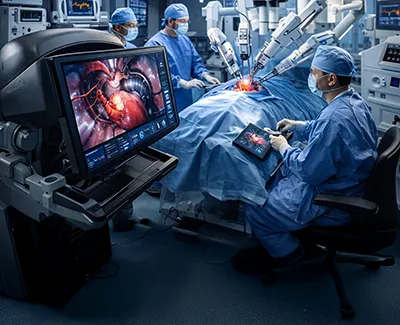
One of the most well known robotic systems used in cardiac surgery is commonly referred to as the da Vinci Surgical System, named after its manufacturer. In this approach, the surgeon does not stand directly over the patient. Instead, they sit at a computerised console a short distance away from the operating table. From this console, the surgeon views a magnified, three-dimensional, high-definition image of the patient’s heart captured by an endoscopic camera.
Using hand and foot controls, the surgeon directs robotic arms equipped with specialised surgical instruments. These robotic arms precisely replicate the surgeon’s movements in real time. Advanced software filters out even the slightest hand tremors, ensuring unmatched steadiness and control. The result is a surgical experience that combines human judgment and skill with robotic accuracy and consistency.
How Robotic Surgery Differs from Traditional Heart Surgery
Traditional heart surgery typically requires a large incision down the center of the chest and the separation of the breastbone to access the heart. While this method has saved countless lives and remains necessary in some situations, it comes with inherent challenges. Patients often experience significant pain, longer hospital stays, increased risk of infection, and extended recovery times.
In contrast, robotic heart surgery represents the least invasive way to perform many cardiac procedures. The small incisions minimise trauma to the chest wall and surrounding tissues. Because the rib cage remains intact, patients generally experience less pain and regain mobility much faster. This difference in approach dramatically changes the overall patient experience, from preoperative anxiety to postoperative recovery.
Another key distinction lies in visualisation. In open-heart surgery, surgeons rely on direct line-of-sight and standard surgical lighting. Robotic systems, however, provide a highly magnified, three-dimensional view of the heart, allowing surgeons to see fine anatomical details that may not be as visible to the naked eye. This enhanced visualisation is especially valuable when operating on delicate heart structures such as valves and blood vessels.
Applications of Robotic Heart Surgery
Robotic heart surgery has proven to be highly versatile, offering precise solutions for a wide range of cardiac conditions. As surgical teams gain experience and technology continues to advance, the list of procedures that can be performed robotically continues to grow.
One of the most common applications is mitral valve repair or replacement. The mitral valve, which regulates blood flow between the left atrium and left ventricle, is particularly well-suited for robotic intervention due to its location and anatomy. Robotic tools allow surgeons to repair damaged valve leaflets, replace chordae, or implant prosthetic valves with exceptional precision.
Tricuspid valve surgery is another area where robotic techniques have shown remarkable success. Similar to mitral valve procedures, robotic access allows surgeons to address valve dysfunction while avoiding large incisions and reducing patient recovery time.
Robotic systems are also used in coronary artery bypass surgery, particularly in selected patients who require bypassing one or two blocked arteries. Using robotic assistance, surgeons can harvest arteries and perform bypass grafting through small chest incisions without stopping the heart in some cases.
In addition, robotic cardiac surgery is increasingly applied to treat atrial fibrillation, a common heart rhythm disorder. Robotic-assisted ablation procedures help restore normal heart rhythm by targeting abnormal electrical pathways with greater accuracy.
Other procedures include the repair of atrial septal defects and patent foramen ovale, which are structural holes in the heart that can lead to complications if left untreated. Robotic surgery is also used for the removal of cardiac tumors, offering a minimally invasive option for managing these rare but serious conditions.
Key Benefits of Robotic Heart Surgery
The growing popularity of robotic cardiac surgery can be attributed to its wide range of benefits for both patients and surgeons. These advantages extend beyond cosmetic outcomes and have a meaningful impact on safety, comfort, and long-term health.
1. Enhanced Precision
Robotic systems offer a level of precision that surpasses traditional surgical techniques. The robotic instruments can move in ways that human hands cannot, including rotating and bending with extreme accuracy. This allows surgeons to perform intricate maneuvers while minimizing damage to surrounding tissues. Enhanced precision reduces the risk of surgical errors and contributes to improved outcomes.
2. Minimized Invasiveness
One of the most significant benefits of robotic heart surgery is its minimally invasive nature. Smaller incisions mean less trauma to the body, reduced blood loss, and a lower risk of infection. Patients typically experience less postoperative pain and require fewer pain medications, making the recovery process more comfortable.
3. Access to Difficult Areas
The heart is a complex organ located deep within the chest cavity. Robotic instruments have a flexible range of motion that allows surgeons to access hard-to-reach areas with ease. This capability is particularly valuable when working on delicate structures such as heart valves or coronary arteries.
4. Shorter Hospital Stays
Because robotic surgery is less invasive, patients often recover more quickly and can return home sooner. Shorter hospital stays not only improve patient satisfaction but also reduce healthcare costs and free up hospital resources.
5. Faster Recovery and Return to Daily Life
Patients who undergo robotic heart surgery typically resume normal activities much sooner than those who have traditional open-heart surgery. Many can return to work, exercise, and daily routines within weeks rather than months.
6. Improved Cosmetic Outcomes
Smaller incisions result in minimal scarring, which can be an important consideration for many patients. While cosmetic benefits are secondary to health outcomes, they contribute positively to overall patient confidence and well-being.
7. Better Ergonomics for Surgeons
Robotic surgery also benefits surgeons by improving ergonomics. Operating from a seated position at a console reduces physical strain, fatigue, and musculoskeletal injuries. This comfort allows surgeons to maintain focus and precision during lengthy and complex procedures.
Patient Experience and Safety
Patient safety is at the core of robotic cardiac surgery. Extensive training, careful patient selection, and rigorous safety protocols ensure that robotic procedures meet the highest standards of care. Before surgery, patients undergo thorough evaluations to determine whether they are suitable candidates for a robotic approach.
During the procedure, the surgical team maintains full control at all times. Contrary to common misconceptions, the robot does not act independently. Every movement is guided by the surgeon, and the system cannot make decisions on its own. If necessary, surgeons can convert to traditional surgical methods, ensuring patient safety under all circumstances.
Challenges and Considerations
Despite its many advantages, robotic heart surgery is not without challenges. The technology requires significant investment in equipment and training, which may limit availability in some healthcare settings. Additionally, not all patients are suitable candidates for robotic procedures due to factors such as complex anatomy, advanced disease, or previous surgeries.
The success of robotic cardiac surgery also depends heavily on the experience and skill of the surgical team. As with any advanced medical technique, outcomes improve as surgeons gain expertise and institutions develop standardised protocols.
The Future of Robotic Cardiac Surgery
As technology continues to evolve, the future of robotic heart surgery looks promising. Advances in artificial intelligence, imaging, and instrument design are expected to further enhance surgical precision and efficiency. Ongoing research and clinical trials continue to expand the range of procedures that can be safely performed using robotic assistance.
In the coming years, robotic cardiac surgery is likely to become more accessible and more widely adopted. As costs decrease and training programs expand, patients across diverse healthcare settings will benefit from this innovative approach.
Conclusion:
Robotic cardiac surgery signifies a monumental advancement in cardiovascular medicine. By combining human expertise with cutting-edge technology, it offers a minimally invasive, precise, and patient-centered approach to treating complex heart conditions. From reduced pain and faster recovery to improved surgical accuracy and safety, the benefits of robotic heart surgery are reshaping the landscape of cardiac care.
As technology continues to progress and surgical teams refine their techniques, robotic heart surgery holds the promise of even better patient outcomes and broader applications. It represents not just a technological achievement but a meaningful step forward in the ongoing mission to improve heart health and enhance the quality of life for patients worldwide.