
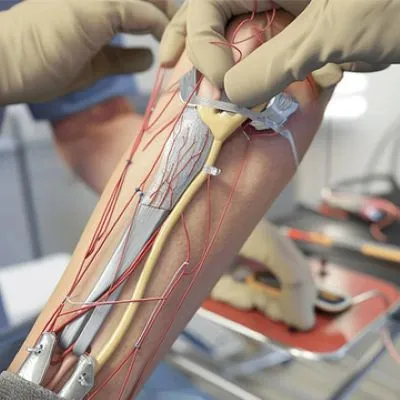
Orthopedic surgery has been the science of being precise, powerful as well being a master of biomechanics of the human body. Two trends, robotics and artificial intelligence (AI), are changing the way orthopedic procedures are planned, executed, and assessed as the field progresses into a new period of development. These very technologies were deemed as futuristic luxuries and now form part and parcel of any operating room the world over.
Not only is this combination of robotic-assisted systems with AI-driven analytics drastically increasing the capabilities of surgical impacts, but it is transforming every aspect of the orthopedic care continuum. The ability to make better patient outcomes and minimize variability in care applies all the way to the pre-operative planning by orthopedic surgeons as they become able to use the power of machine learning algorithms, real-time data, and robotic precision to optimize patient outcomes and reduce variability in care.
Covering the very positive multi-faceted influence of robotics and AI in orthopedics, this article explains why and how they make minimally invasive procedures more and safer possible, why and how they can help clinical decision-making and the path towards a more predictive and personalized form of musculoskeletal care.
The Rise of Robotics in Orthopedic Surgery
All orthopedic robotic systems aim at improving the ability of the surgeon by providing additional visualization, control and accuracy to help improve their skill and ability to make decisions. These platforms do not replace human operators as fully autonomous machines. In contrast, they rather collaborate with human operators and enable them to prepare the targeted bones, align the implants, and balance the soft tissues accurately.
Key Applications in Orthopedic Robotics:
1. Total Knee Arthroplasty (TKA): Robot aids such as Stryker Mako and Zimmer Biomet’s Rosa Knee can help in attaining the best component positioning and alignment. The use of CT- or X-ray-based planning opens the possibility to create patient-specific models based on which surgeons are able to virtually plan and subsequently perform with sub millimeter accuracy.
2. Total Hip Arthroplasty (THA): Robotics make sure it is placed in the ideal position of the acetabular cup and leg length restoration, which are important parameters that affect the implant life span and functionality.
3. Spinal Surgery: Spinal instrumentation and pedicle screw placement are being automated using systems like the Medtronic Mazor X and Globus Medical ExcelsiusGPS systems to streamline procedure times, enhance radiation safety, and allow improved accuracy during the surgical procedure.
4. Trauma and Fracture Fixation: Among them are the growth of emerging robotic technology to high precision screw and plate placements, at least in more complicated fracture patterns.
Advantages of Robotic-Assisted Orthopedic Surgery:
• Reduced surgical variability
• Minimized soft-tissue damage
• Decreased post-operative pain
• Faster rehabilitation
• Lower revision rates
• Enhanced reproducibility for high-volume centers
Robotic systems are not a substitute to the orthopedic surgeon - they are an assistant to precision that is especially useful in a high-demand-load setting or in anatomically difficult situations.
Artificial Intelligence: The Brain behind the Scalpel
Robotics adds the mechanical sophistication, whereas AI provides the processing power - making large chunks of data usable in the form of valuable knowledge that can inform decision-making during surgical planning and in the post-operative period. AI is changing the way orthopedic conditions are diagnosed and treated, ranging from diagnostic imaging to predictive models.
Major AI Applications in Orthopedics:
1. Imaging and Diagnostics: Artificial intelligence systems can detect fractures, detect early stages of osteoarthritis and read MRI/CT with the same accuracy as doctors. As an example, convolutional neural networks (CNNs) are already trained to detect bone lesions or abnormalities in soft tissue within seconds.
2. Surgical Planning: The AI-powered tools are used to study anatomical data that can generate hyper-personalized surgical plans. Such plans take into consideration biomechanics, implant wear habits and even future gait planning, and provide a kind of road map to the surgeon who can tailor them as he/she operates.
3. Post-Operative Monitoring and Rehabilitation: Wearables and mobile applications with AI surveillance measure patient recoveries, range of motions, rehabilitation adhesion. Predictive analytics will notice possible complications in advance of the intervention being able to take place.
4. Predictive Outcome Modeling: Machine learning models have the potential to predict complications, offer recovery time estimates as well as rehabilitation plans, all bracketing patient demographics, comorbidities, and intraoperative factors.
5. Training and Simulation: AI- and VR-based simulators also give young surgeons a risk-free immersive environment where they can develop proficiency handling complex procedures. The tools are performance based; they fasten the learning curve and boost competency.
The Synergy between Robotics and AI: A Paradigm Shift
The actual revolution of the orthopedic surgery is the interface between the AI and robotics. Consider a situation when AI is used to analyze joint kinematics of a patient, forecast the type of the best implant, and produce a 3D surgical plan.
The plan is then implemented in a robotic fashion, and after the surgery, AI will monitor the progress of healing and alert when something does not go according to plan.
It is an integrated approach to orthopedics that makes orthopedics no longer a reactive field but a predictive and precision specialty. This two-fold combination pumps up the confidence of the surgeon and the confidence of the patient regarding the surgery team.
Case Studies: Real-World Applications
a. Mako SmartRobotics in Knee Replacement
In one multi-center study, it was demonstrated that there was a great increase in the component alignment and early functional improvement in patients undergoing Mako-assisted TKA than undergoing manual technique. There was a higher rate of satisfaction among surgeons on soft-tissue preservation and predictability of surgery.
b. AI in Predicting Osteoarthritis Progression
The study used AI models trained on X-rays of knees and history of patients to predict the 5-year development of osteoarthritis. The predictive accuracy of the model was better than that of experienced radiologists and this affected early interventions.
c. AI-Powered Post-Surgical Monitoring at Mayo Clinic
Using the data of the wearable sensors combined with the algorithms of AI, the clinicians managed to learn about the post-op complications, including infections and reduced mobility, days earlier than the symptoms would have traditionally appeared, thus saving money and making patients safer.
Challenges and Considerations
Even though it seems promising, introductions of robotics and AI into orthopedic surgery possess severe limitations:
• Cost and Accessibility:
Robotic systems are costly, which means they will only be able to be used in high-resource environments. This is a cause of healthcare inequity.
• Data Privacy:
Lots of patient data is needed to train AI tool, which challenges ethical concern related to consent, security, and ownership of the information.
• Learning Curve and Workflow Integration:
The OR teams and surgeons have to be highly trained. Additionally, the successful integration of such technologies in the current surgical operations is a logistical challenge.
• Regulatory and Liability Concerns:
AI-based decision-making and the robots motion raise new issues: Between whose hands is a technical failure legally in case this occurs in surgery, the surgeon, the manufacturer, or the software provision?
• Dependence on Technology:
Automated systems can lead to loss of core surgical skills or ability to improvise in scenarios that turn out to be unforeseen during the surgery.
However, these barriers will reduce with time as these technologies advance and become affordable.
Future Trends: Where Orthopedics Is Headed
1. Autonomous Surgery:
Though several years away, semi-autonomous robotic procedures (i.e., automated automated bone cuts or navigation) have already been implemented. In the future, the AI-guided autonomy is expected to grow along with safety and reliability.
2. AI-Driven Implant Design:
AI-modeled and 3D-printed patient-specific implants have the potential to shake up the market of orthopedic implants, as they would fit and perform better.
3. Digital Twin Technology:
Building digital models of the joints of the patients, empowered by AI and in-time data, will enable emulating the various techniques of the surgery and forecasting the long-term outcomes long before one cut has been made.
4. AI + Genomics in Orthopedics:
As it combines genomic data, AI will take personalization of orthopedic care to a new level, not only the probability of mechanical need but the biological reaction to the implants or intervention as well.
5. Remote Surgery and Telementoring:
Robotic machines can make skilled surgeons provide or even do procedures through the distance, introducing world-level treatment to underdeveloped areas.
Conclusion:
Orthopedic surgery is on the edge of technological rebirth, with robotics and AI no longer being a means, but driving force of morphing surgical excellence. Their integration is reducing risks during surgeries, speeding them up, and personalizing them to the patient - and transforming static, decades-old systems into personalized, data-driven ones.
Nonetheless, the journey is not finished yet. The orthopedic community should be guided in the management of the enthusiasm towards new technologies with the clinical wisdom so that innovation should be available to the patient, and the innovation should support surgical artisanship, as well as ethical responsibility.
And going forward, there is one thing on which we can be certain: The future of orthopedics does not merely adopt the label of being just a smart device, but it is intelligent, connected and highly human-centric.