
Ageing Technology for Monitoring Vitals
According to World Health Organization, by 2050 the world’s population of people aged 60 years and older will double (2.1 billion). The number of persons aged 80 years or older is expected to triple between 2020 and 2050 to reach 426 million.
The global population is ageing rapidly, presenting significant challenges to healthcare systems. Digital technologies, particularly those designed for monitoring vital signs, are emerging as crucial tools in managing the health and well-being of older adults. These innovations aim to shift traditional medical practices towards remote monitoring, enabling better management of chronic conditions and promoting independent living.
As the global population ages, the need for technologies that monitor vital signs and support healthy ageing has become increasingly important. These devices help older adults manage chronic conditions, maintain independence, and improve overall well-being. Here are some examples of ageing technologies designed for monitoring vitals:
1. Wearable Devices
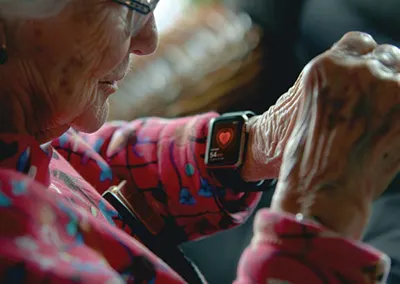
Wearable devices, such as smartwatches and fitness trackers, are popular among older adults for monitoring vital signs. These devices can track heart rate, respiratory rate, oxygen saturation, and physical activity levels. For instance, AI-powered smartwatches can monitor falls and check vital signs by providing a comprehensive overview of the wearer's health status. These devices are discreet and user-friendly, making them ideal for continuous monitoring without disrupting daily activities.
2. Remote Health Monitoring Systems
Remote health monitoring systems use wearable sensors to collect data on vital signs such as blood oxygen saturation, heart rate, and blood pressure. This data is then transmitted to healthcare providers in real-time, enabling early detection of health issues and timely interventions. For example, high-tech bio-sensor like a connected patch have been used for remote patient monitoring in adults with hematological disorders, demonstrating the feasibility of such technologies in managing chronic conditions.
3. Environmentally Embedded Sensors: « Using AI in nursing home to detect abnormal sound
Environmentally embedded (non-wearable) sensor technology is used in elder housing to monitor a new set of "vital signs" that measure the functional status of older adults. These sensors collect data continuously and can detect changes in health or functional status, alerting healthcare providers for early recognition and treatment of potential issues or abnormal sound (shouts of joy/cries of fear). This technology provides a more comprehensive picture of an individual's health and functional status than traditional vital signs, transforming the management of chronic diseases and supporting ageing in place.
4. Smart Home Technologies
Smart home technologies integrate various sensors and devices into the home infrastructure to monitor wellness and enhance the quality of life for older adults. These technologies can detect changes in daily activities, such as increased time spent on tasks, which may indicate cognitive impairment. For example, studies have shown that individuals with mild cognitive impairment (MCI) may exhibit certain behaviors that differ from those without cognitive issues. One such behavior is the "fridge sign," where individuals misplace items in the refrigerator, such as putting a remote control or cell phone inside it. This sign is more commonly found in individuals diagnosed with subjective cognitive decline or MCI, often accompanied by depressive mood, rather than in those with dementia. The "fridge sign" has been observed in about 36.4% of individuals with MCI, indicating that it is a relatively frequent occurrence in this group. It is important to note that while this behavior can be a symptom of attention deficit due to depression, it is not a definitive indicator of dementia. This information can be used to develop interventions and remote monitoring system that support cognitive health and promote independent living. Understanding these behaviors can help in the early identification of cognitive issues and in providing appropriate support and interventions for individuals with MCI.
5. Ambient Assistive Living (AAL) Technologies
AAL technologies are designed to support older adults in their homes, promoting independence and improving quality of life. These technologies include smart home systems that monitor daily activities, detect changes in health status, and alert caregivers or healthcare providers when necessary. AAL solutions can help manage chronic conditions, reduce healthcare costs, and enable older adults to age in place safely. It includes smart devices, wireless networks, software application, computer, and medical sensors. These technologies make aging in place possible. Now, let’s talks about remote monitoring and alert Systems through telehealth plateform.
These platforms can collect data from various sensors and devices, allowing healthcare providers to monitor seniors remotely. They can provide real-time alerts and interventions as needed. One major challenge in home assisted technology is related to continuous identification of the subject’s vital signs and health conditions via wearable devices. The challenge is basically related to the acceptability, durability, easiness, communication, and power requirements of these wearable devices.
6. Vital Sign Monitoring Devices
Vital sign monitoring is essential for tracking the health and well-being of seniors, especially those with chronic conditions or at risk of falls. Devices that monitor heart rate, respiratory rate, blood pressure, and oxygen saturation can detect early signs of health issues, allowing for timely interventions. This proactive approach helps seniors maintain their independence and reduces the burden on healthcare systems. According to a study entitled “Sensor-based Vital Sign Monitoring, Analysis and Visualisation for Ageing in Place”, recent developments in tactile sensing have enabled robot systems to measure human vital signs such as beats per minute (BPM), Respiratory Rate (RR) and Capillary Refill Time (CRT). Using robotic systems to measure vital sign data in the home of an elderly or disabled person would greatly assist medical and health services.
Choosing the Right Device is the key! When selecting a vital sign monitoring device for seniors, consider the following factors:
• Ease of Use: Look for devices that are intuitive and easy for seniors to operate independently. Technology with a steep learning curve may cause more problems than solutions.
• Reliability and Certification: Ensure the device is reliable and certified for medical use. Check for data sharing capabilities and compatibility with other health monitoring systems.
• Comfort and Design: Choose devices that are comfortable and discreet. Seniors are more likely to use devices that are unobtrusive and fit seamlessly into their daily lives
7. Health Data and Precision Medicine:
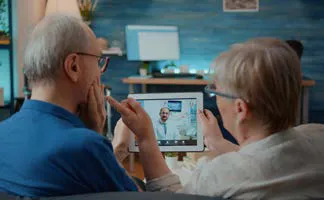
Advanced sensors and health data analytics empower healthcare professionals to develop precision diagnoses and personalized treatment plans. This approach can improve health outcomes and reduce the need for hospital visits, promoting holistic health management.
8. Technology Adoption and Accessibility:
The adoption of health monitoring technologies by older adults is increasing. These devices empower users to make informed lifestyle decisions and actively manage their health. However, it is essential to ensure that these technologies are accessible and user-friendly to maximize their benefits.
Challenges and Considerations: While technology offers significant benefits, there are also challenges to consider, such as the digital divide, privacy concerns, and the need for interoperability between different systems. Addressing these issues is crucial for the successful implementation of health monitoring technologies in aging populations. Let's reflect for a moment on Privacy and Security. AgeingTech are used by natural person what requires safety and privacy standards.
• Data Privacy: Seniors are often concerned about data privacy when using technology. Ensuring that aging technology includes robust privacy protections and transparent data usage policies can build trust and encourage adoption. In the European Union, the General Data Protection Regulation (GDPR) has significant implications for digital health services, particularly those catering to seniors. GDPR defines personal health data as information related to a person's physical or mental health, including the provision of healthcare services that reveal their health status. So make sure that your data processing is GDPR compliant!
So, make sure your data processing is GDPR compliant!
• Security Measures: Implementing strong security measures, such as encryption and secure login methods, can protect seniors from cyber threats and ensure their personal information remains safe.
Conclusion
Ageing technology for monitoring vitals offers a range of devices and systems that support healthy ageing and independent living. From wearable devices to smart home technologies, these innovations provide continuous monitoring and early detection of health issues, improving the quality of life for older adults. As the population ages, the continued development and adoption of these technologies will be crucial in managing healthcare challenges and promoting well-being. Also, ageing technology for monitoring vitals has the potential to revolutionize geriatric healthcare by improving quality of geriatric patient life and reducing healthcare costs for the elderly at the end. To conclude, the relationship between aging and technology is co-constitutive, meaning that images of aging influence the design and marketing of technologies for older people. This link between societal imaginaries and design worlds is crucial for developing effective and acceptable technologies for the aging population
References:
WHO, Ageing and health report, 1 October 2024
Suh J, Park SY, Park YH, Pyun JM, Ryoo NY, Kang MJ, Kim S. Misplacement of something inside the refrigerator is not a sign of dementia, but a probable symptom of attention deficit due to depression. Nature, Scientific Reports
Chan M, Estève D, Escriba C, Campo E. A review of smart homes—present state and future challenges.
Chan M, Campo E, Estève D, Fourniols J-Y. Smart homes—current features and future perspectives
E.P Kerr, S.A. Coleman, D. Kerr, P. Vance, B. Gardiner, Y. Zhang Sensor-based Vital Sign Monitoring, Analysis and Visualisation for Ageing in Place
Helpful Technologies to Help Older Adults Monitor their Health Written by Caroline Bodian and reviewed by Dr. Katy Brodski-Quigley
Alexander Peine, Louis Neven, The co-constitution of ageing and technology – a model and agenda. Cambridge University Press