


What is Automation?
The Institute of Electrical and Electronics Engineers - Robotic and Automation Society, commonly known as IEEE-RAS, states that automation in difference t robotics, it emphasizes efficiency, productivity, quality, and reliability, focusing on systems that operate autonomously, often in structured environments over extended periods, and on the explicit structuring of such environments. Automation is the process of using technology to perform tasks with minimal human intervention which aims to streamline processes, enhance efficiency, and reduce human error.
Medical automation is often defined as the controlled operation of a diagnostic or therapeutic process or system by mechanical or electronic means that augments human capabilities for observation, effort, and decision. Application of the science of medical automation to hospitals, clinics, and home care is believed will provide higher quality, more rapid, and more affordable healthcare services.
Automation in Healthcare
When we talk about automation, it extends to a diverse range of technological solutions from advancement in Artificial Intelligence, Machine Learning and Data Analytics. These automation solutions are to automate tasks, improve workflows and enhance decision-making.
In healthcare operation there are parts indirectly affect the patient care and another which directly plays role in patient care. Both areas can benefit from the automation solutions to create value-based healthcare operations.
Some examples of automation solutions implemented in healthcare operation to support the patient care:
1. Robotic process automation (RPA): Streamline simple administrative processes like appointment scheduling, transcribing the images/printed text into digitized file. Robotic process automation’s main function is to remove tedious, repetitive tasks from people by using robot workers to execute simple tasks. This automated system will be a significant help in appointment scheduling, send confirmation emails, notify/remind patients’ on their appointment schedules.
2. Billing and insurance processing: Automation can handle insurance claim submissions, generate invoices, and manage patient billing cycles, reducing errors and streamlining the process. In a recent study, the Council for Affordable Quality Healthcare (CAQH) found the health care industry could save $13.3 billion if eight administrative tasks in the revenue cycle such as prior authorization, claim status inquiry, eligibility and benefit verification, document attachments, claim submission, remittance advice, claim payment and coordination of benefits, were no longer processed and completed manually.
3. Data entry and reporting: Automating data entry from medical records and generating reports reduces manual work and ensures data accuracy for informed decision-making. Based on the Google Cloud’s survey in 2021 to a group of more than 300 physicians across the US country, it found that physicians spend an average of 4 hours daily each day reviewing or updating their patients’ healthcare records, with many reporting excessive scrolling, pop-ups, and manual data entry. Even 9% of them reported that they spent at least 10 hours each day updating patients’ healthcare records.
Intelligent process automation and digital process automation seen in optical character recognition (OCR) will help the document digitation of the printed medical record legacy if it is combined with the natural language processing (NLP), the system will be able to give contextual understanding, classification and data extraction from these printed paper medical records.
4. Business process automation (BPA): Which focuses on automating entire business processes that involves multiple organizational tasks and departments. Business process automation often is supported by the robotic process automation (RPA) capabilities that that will optimize workflows, reduce manual efforts, and improve efficiency. Some examples on the business process automation in healthcare is the complex and multi-departments journey of patient on-boarding, care coordination between department and specialists including the electronic health record management, patient’s treatment and monitoring until the discharge and control appointment scheduling.
Some examples of the automation which directly plays role to patient care:
1. Medication dispensing: Robotic pharmacy systems ensure accurate medication dispensing and reduce the risk of errors. Robots have reduced the cost of maintaining drug inventories in pharmacies by 48%. If robotics were used to assist in filling the 2.6 billion prescriptions issued in the United States every year, they could save $3 billion. Automated drug-dispensing devices and related technology have been installed in hundreds of hospital pharmacies. Improved drug distribution efficiency can be achieved by linking the pharmacy information system to these devices.
2. Patient monitoring: Wearable devices and telehealth platforms allow for continuous monitoring of vital signs and health metrics. When these data combined with Artificial Intelligence (AI) it enables early detection of potential issues. There are companies which developed this solution and has focused on the eldercare health monitoring market. The solution also provides somewhat portable teleconferencing system which allows real time consultation with health professionals within the home. When a vital sign has to be monitored, the system will accept a number of physiologic monitoring devices. For example, the teleconferencing unit is also a storage container for a thermometer, blood pressure monitor, stethoscope, and pulse oximeter. The unit also accepts input from an electronic scale. The integrated health platform will allow the patient and health professional to converse and examine health data together at a lower cost than an office visit.
3. Patient support: Chatbots can answer basic patient questions, schedule appointments, and provide medication reminders, freeing up healthcare staff for more complex tasks. Combination of Artificial Intelligence (AI) and Natural Language Processing (NLP) in chatbot automation for better customer service experience for patients’ inquiries in healthcare setting.
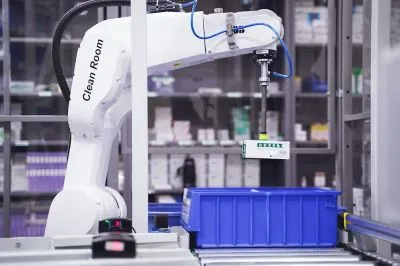
4. Lab testing: Automated laboratory systems can perform a wide range of tests faster and more efficiently, leading to quicker diagnosis and treatment decisions. The most recent trend in laboratory automation is the pre-analytical workstation. Many small to medium sized laboratories have purchased these devices to provide automated specimen accessioning, aliquoting, labelling, and sorting. Several of these devices automatically centrifuge the specimens as well.
5. Robotic-assisted surgery: Robotic surgical systems integrated with Artificial Intelligence system such as Intuitive Surgical’s da Vinci Surgical System, it offers support in enhancing the surgeon’s ability to navigate complex operations, thereby increasing the chances of successful outcomes minimally invasive procedures with greater precision and faster recovery times for patients.
6. AI-powered automated tools: analyzing medical images, identifying patterns in patient data, and even assisting with diagnoses. Artificial Intelligence (AI) shows to play a role in reducing human error, by maintaining consistent accuracy and effectively counters the challenges posed by human fatigue and oversight, ensuring reliable interpretations regardless of external factors. At time when speed and efficiency in interpreting medical images is crucial, AI may dramatically speed up the process where it is not just for the convenience of the patient but a potentially life-saving scenarios.
7. Home automation in hospital setting by integrating smart devices and systems to automate simple tasks such as lighting control As efforts have been made to invest in hospitals, turning them into more resilient, sustainable, and environmentally friendly institution without compromising medical care, one of the measures is improving energy efficiency which have been to greatly contribute to reducing the carbon footprint of hospitals. This feat can be achieved by implementing the smart home application, to control the lighting system in the hospital. Energy efficiency measures have been shown to save hospitals over USD 55,000 annually and to result in a reduction of emission of around 142 megatons of greenhouse gases. Not to mention the hospital will benefit from the saving because lighting contributed as much as 20-60% of the total consumption of electric power consumption.
The challenges of Implementing Automation in Healthcare
Despite its obvious benefits, the adoption of automation in healthcare still faces its challenges. There might be not many papers addressing automation as whole, but there are many articles which discuss about the challenge on Artificial Intelligence (AI) – one of the key system in automation system in healthcare. All the challenges faced by AI implementation also speaks true to other automation systems.
The article in 2024 by Khan and Sherani, states there are few key challenges to adopt the automation or particularly Artificial Intelligence (AI) in healthcare:
1. Data Challenge and Bias
One significant aspect of automation is its ability to leverage data. Automation gathers and analyzes large volumes of data, providing valuable insights for informed decision-making (2) However, it is a fact that health care data in different parts of the world may be financial, incomplete and often inconsistent. Not to mention, paper-based systems still dominate the healthcare data in the developing countries. It will require a huge amount of time and commitment to standardize and digitize all these data.
An intelligent automation solution is only as good as its data. The automation system will dependent to the data feed, in example particularly when Artificial Intelligence (AI) is embedded in an intelligent automation solution, it becomes clear how the characteristics of the data used to train an AI model will influence the recommendations and decisions it produces. So one of the oldest and truest sayings in the information systems world is “garbage in, garbage out” (GIGO) will be followed by BIBO: Bias in, bias out. The output of a system will never be useful if the input was fatally flawed from the start.
2. Technology limitation
Automation requires technical infrastructure. Not to mention most of the AI technologies introduction will call for higher computing ability and backup from a sound IT structure. This requirement will be a challenge where the infrastructure is not fully equipped to run the automation, example the healthcare facility in rural area where there is no sufficient imaging system and internet connection internet or even some healthcare facility management is required to invest quit a sum of capital to adopt full implementation of the technology.
3. Ethical and legal
The main concerns for ethical and legal aspect in implementing the automation system includes the transparency of decision-making, accountability, and the impact of these technologies on the privacy and fundamental rights of citizens. There is another critical issue of the so-called "Automation Bias" – the tendency to trust machine-generated decisions more than human judgment. This can lead to human decision-makers uncritically adopting AI suggestions, even if they are flawed. In the other hand, the proposed solution of combining human role in review and decision approval may potentially dilute human accountability and limit the effectiveness of the technology. Legal scholars proposes frameworks and principles of “responsible automation.” i.e. to avoid causing reckless or heedless damage, solutions will have to be unbiased, transparent, controllable, and protected.
4. Professionals and Staff Acceptance
Implementing a successful automation does not rely only at the technological part. All the “human” stakeholders must understand how the automation can improve their workflow and patient outcomes. Comprehensive training programs, clear communications to address the cultural changes, the fear of disruption on their works that comes with automation will ensure that staff are comfortable with the new systems and can use them effectively. Change management strategies goes hand in hand with the change leadership to overcome the challenges during the transition to automated processes.
Further note on training, one of the biggest absence is observed among professional healthcare organization, including the medical school, to be involved in implementation of automation of their professional training and/or their education. There is argument that current challenges include the uncertainty about how to deliver automation (read: Artificial Intelligence – AI) curriculum effectively with limitations in available curricular hours and lack of faculty expertise. This condition, the lack of content on the technological systems in the health care setting, will inhibit prospective physicians from understanding the benefits of using these technologies, the ethical issues that can arise with their use, and future innovations, along with the wider implications of automation. Hence, there will be more physicians that do not feeling well equipped to work with AI in the clinical setting.
Embracing Automation and Its Benefits in Healthcare
Thimbleby, Harold on his article Technology and the future of healthcare, published to Journal of Public Health Research in 2013, stated that “We should not plan the future by being technology-driven (e.g., implementing cloud, Nano health, etc.) but by improving along criteria behind principles (such as improving patient care or staff support).”
Automation with its merit shows the promising future for a better healthcare operation. This fact is shown by a survey conducted in US on year 2020 that nearly 90% of healthcare organizations has incorporated the automation and Artificial Intelligence (AI) into their strategy, whilst in comparison, in 2019, the figure was only 54%. In recent survey on 2022 among US hospitals, about one-fifth (18.70%) of them, i.e. nearly 0ne thousands (1000) hospitals have adopted at least one form of Artificial Intelligence (AI) by 2022.
So challenges aside, automation is the future of the healthcare operation. From automating repetitive tasks to utilizing AI-powered diagnostics, the benefits of automation in healthcare are:
1. Increased Efficiency and Productivity: Automating tasks like appointment scheduling, billing, and reporting, frees up valuable time for providers to focus on patient care, improves administrative processes and reduces the workload on healthcare staff.
2. Improved Data Management and Accuracy: Automation ensures accurate data entry and reduces the risk of record errors, leading to better-informed clinical decisions. The healthcare professionals can free up valuable time and resources to focus on delivering high-quality patient care.
3. Enhanced Patient Satisfaction and Engagement: Automated appointment reminders, medication refill prompts, and online communication tools improve patient satisfaction.
4. Reduced Costs: By streamlining processes and reducing errors, automation can lower costs for both healthcare organizations and patients.
5. Enhanced Quality of Care: By improving efficiency and reducing medical errors, automation can contribute to a higher overall quality of patient care.
6. Better Accessibility of Care: Automated healthcare solutions like telehealth and remote monitoring can increase access to healthcare services, particularly in underserved areas.
7. Reduced Staff Burnout: By alleviating administrative burdens, automation can help combat staff burnout and create a more positive work environment.
The Future of Healthcare Automation
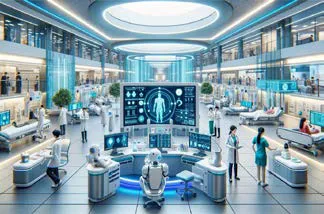
The future of Healthcare has already started to manifest. An example is the world’s first AI hospital developed by Tsinghua University in Beijing, China which started operations in 2024.
It consists of AI-powered doctors of multiple clinical disciplines, capable of treating as many as 3,000 patients a day, a capacity that far exceeds that of human doctors. Operating 24/7, the fully automated system including AI-powered doctors, trained in sophisticated simulated environments, have demonstrated the ability to diagnose and treat 10,000 patients within several days. A similar volume of diagnosing and treating patients would take human doctors approximately two years to complete.
The AI hospital leverages language model-powered agents for autonomous interactions with patients. These agents have achieved an impressive 93.06% accuracy rate on the US medical licensing exams (USMLE), with the AI doctors scored an astounding 9,306 out of 10,000 on the exam outperforming the average human doctor, proving their proficiency and reliability in medical diagnostics and treatment.
As the world observes the progress of Tsinghua University’s AI hospital, we too are observing and assessing the profound implications for the future of medical treatment and healthcare delivery.
Conclusion
Amidst the complex and demanding nature of healthcare operation including challenges, automation is a breath of fresh-air. Automation has been transforming healthcare operations, redefining patient care and it has become a pivotal shift towards greater efficiency and optimization in many healthcare sectors.
In a traditionally high human touch profession with its core focus on the human emotion, empathy and healing, the advent of AI-powered healthcare is the start of a paradigm shift in diagnostics and treatment, heralding a new age of clinical services delivery including its associated operations, leading to many interesting questions on its development, implications and its potential for widespread adoption.