

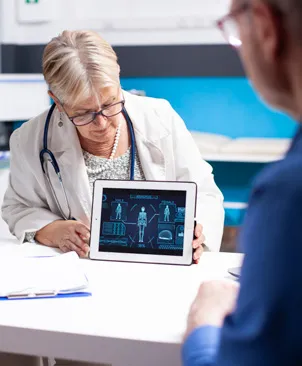
Now, Artificial Intelligence is transforming the EMR user experience and freeing clinicians from the constraints of the past. With user workflows augmented by AI, ambient services, and data summarization, patients and care providers can interact with each other rather than with a computer.
To explore the opportunities offered by AI, Asian Hospital & Healthcare Management speaks with Dr. Emeline Ramos, Physician Executive at InterSystems, and Dr. Bella Desra Andae, Head of Medical Informatics at EMC Healthcare, who led a pilot of the new AI-powered InterSystems IntelliCare™ EMR system at the EMC Group of hospitals in Indonesia.
1. What does Artificial Intelligence (AI) mean to EMC Healthcare?
Dr. Bella Desra Andae. AI means different things to different people. When we first asked our doctors about using AI, many thought it would be like ChatGPT. They thought that AI would be giving a patient’s diagnosis or recommending what medication to prescribe. Some of them even asked, “Will AI replace doctors?”!
That is not what AI means to EMC Healthcare. AI will not replace doctors. To begin with, it will support our clinicians and make their workflow more efficient. It can assist with data entry and the summarization of health records so our physicians can concentrate on higher-order decision making instead of typing, clicking, or performing a redundant task. Doctors can focus on listening to and maintaining eye contact with their patients, instead of interacting with an information system.
Dr. Emeline Ramos. That is very similar to our vision. With AI at its core, InterSystems IntelliCare is designed to reduce administrative burdens, automate routine tasks, and optimize workflows, allowing healthcare professionals to focus more on patient care. AI-driven analytics will also enhance clinical decision-making by providing predictive insights, detecting anomalies, and personalizing treatment plans.
2. EMC Healthcare recently deployed a centralized EMR system, InterSystems TrakCare®. What made you decide to adopt InterSystems newly released AI-based system?
Dr. Bella Desra Andae. EMC Healthcare implemented the InterSystems TrakCare EMR system across all eight of our hospitals in just 18 months, finishing in June 2024. This was an important milestone for us in medical record standardization and accessibility. More importantly, in May 2025, EMC Grha Kedoya Hospital was validated for Stage 6 of the HIMSS Electronic Medical Record Adoption Model, which assesses an organisation’s maturity in EMR capabilities.
The TrakCare EMR system is central to EMC Healthcare’s digital transformation and has given us many benefits. It is easier for patients to make appointments, and wait times have been reduced, which has helped to boost our patient satisfaction ratings. We have better data security, and our clinical patient data completeness has improved from 68% to 98%. With automatic vital sign recording and barcodes, we have reduced the potential for medical errors.
The transition to InterSystems IntelliCare, with AI-powered capabilities, will give us further benefits and is the next phase of our EMR journey.
Dr. Emeline Ramos. Although the AI-based IntelliCare system is a new product, it is based on InterSystems TrakCare. For healthcare organizations like EMC Healthcare, which are using a recent version of TrakCare, IntelliCare is a simple upgrade. They can go into their software management console and turn on IntelliCare if they have the right software license. So, they are able to deploy a new AI-based system without a lengthy implementation.
However, because IntelliCare integrates AI at every level, it represents a fundamental shift in how users interact with the EMR system. Therefore, before organizations flick the switch to AI, they need to test it and plan for a transition.
Dr. Bella Desra Andae. Going back to why we are adopting AI so quickly, one of the biggest challenges we faced with the new EMR system was clinician burnout from documentation overload.
Because our clinicians were previously able to input patient information on paper, it was very flexible. They were able to use their own words to describe the patient’s symptoms and diagnosis. With an EMR system, on the other hand, the objective is to store health data in a structured way by entering information in the right format and in the right place.
For example, one of the reasons we implemented TrakCare was to comply with new government regulations, including the requirement to input a patient diagnosis with ICD-10 codes. That meant that, on top of learning how to use the new EMR system, doctors had to learn about the new codes and ensure that data was entered correctly.
The new EMR system is a big improvement, but our clinicians say that they spend too much time typing and looking at screens. And, while it is easier to find patient information, which helps clinicians to treat their patients, it can take more mouse clicks than they would like. Sometimes we even get comments from patients that the doctor is more focused on the computer, rather than maintaining eye contact and listening to the patient or their family.
3. Why did EMC Healthcare think an AI-based EMR system would be a good solution?
Dr. Bella Desra Andae. It started in a meeting with InterSystems where we shared our doctors’ feedback. We said that the doctors felt they were spending more time on documentation and that it took too many clicks to navigate the screens on the EMR system.
InterSystems listened to our feedback and said they were developing an AI-based system designed to address these challenges. They also said that we could become an early tester of the new system. It was then that we realised that we could use AI to fix the gap between clinicians’ expectations of the EMR system and the reality.
4. How did you test the new AI technology?
Dr. Bella Desra Andae. To begin with, InterSystems visited us and introduced us to the AI technology. We could see from a prototype AI tool that it could help fix the gap that we had. Then, we developed a two-stage AI Usability Testing process. Firstly, in the On-Site Observation stage, we would observe and evaluate clinician interactions with the prototype AI tool. Secondly, we would plan and prepare for a pilot phase with the release version of the new software.
We introduced the AI prototype in one of the hospitals, and recruited doctors to test it – including an intern, two emergency doctors, a neurologist, a paediatrician, a general surgeon, and four GPs. Early on, they told us that the AI helped them input data into the right chart in the EMR and summarize the patient history. It also reduced the number of clicks to retrieve specific information.
Based on that experience, we decided that the second stage would focus on making our users’ workload easier and more efficient. Using AI for data entry and summarization, we would free our physicians to spend more time with patients rather than screens. We focused on AI features such as speech-to-text and intelligent charting to automate routine documentation tasks.
5. How important was the On-Site Observation stage in shaping the pilot?
Dr. Bella Desra Andae. The On-Site Observation stage was really helpful in seeing how our busy clinicians interacted with the AI. It was obvious that the AI needed to be prompted clearly, and that we would have to address this through training the users.
We also made some unexpected discoveries. During the usability testing, we discovered that the AI accurately described the patient’s complaint using SNOMED CT clinical terminology. That was interesting because most doctors working at EMC Healthcare, and probably most hospitals in Indonesia, are not very familiar with SNOMED CT. At the same time, the Ministry of Health has embraced SNOMED CT to support Indonesia’s digital health transformation, so it will become increasingly important.
With support for SNOMED CT, the AI gave us a jump in EMR functionality. The doctors currently document the patient’s complaint in their clinical notes with free text, not structured clinical terminology. With SNOMED CT, clinical information is recorded consistently in any language. It can enable real-time decision support, precision medicine, data analytics, and research across different systems and locations. So, we can use AI to address the gap between our future needs and the current hospital workflows. That is a benefit to EMC and our patients.
6. Were your clinicians able to contribute to the design of AI-enabled workflows?
Dr. Bella Desra Andae. Yes, let me give you an example. The first time we saw the AI technology, it was being used to help doctors transcribe speech to text. After we saw how that worked in practice, our doctors said that if the technology is just going to transcribe, it might not be helpful enough to improve their workflow. The bigger pain point was that they had to input all of the information into the right charts.
We were able to talk to the InterSystems product team and share the doctors’ insights. The released software comes with AI navigation features to help doctors go to the right chart, so we were able to integrate the ambient audio recording and transcription into their workflows. This would be difficult to achieve using a third-party solution for ambient recording and transcription.
7. What about the ambient audio services? What did you find out about that?
Dr. Bella Desra Andae. One thing we discovered was that the productivity boost from ambient audio varies between clinicians. We found that younger doctors don’t always want to interact with speech-to-text. Many of them still choose to type. At the other end of the scale, many senior doctors type with one finger, which takes a lot of time. With ambient audio, they can focus on the patient and interact more effectively with them. They still have to review the AI transcriptions, but they don’t have to type them in the first place.
We also found that there was terminology that was not initially captured by the ambient services, particularly when patients spoke in non-standard versions of Indonesian. However, we also found that the AI could be trained to learn more medical terminology, even when it is not standard. We have continued training the AI, and it is getting better and better at capturing the local terminology.
8. What are the benefits of the IntelliCare ambient technology versus an AI scribe?
Dr. Emeline Ramos. The features of the released InterSystems IntelliCare ambient app go well beyond the functionality offered by a traditional AI scribe. It can generate structured notes and documents, and, because it is integrated within the EMR system, it can simplify navigation and many common tasks.
For example, IntelliCare can prepopulate draft diagnoses, lab orders, and planned follow-up actions in a patient’s care plan based on verbal communications. It also supports multi-lingual transcriptions, which is very valuable in Asian hospitals where multiple languages are often spoken.
9. How do clinicians report that AI makes it easier to access patient information?
Dr. Bella Desra Andae. The clinicians involved in the testing told us that the AI helps them get the important information about the patient they are treating more quickly. The AI supports doctors in accessing a comprehensive patient summary, for example. It can provide an intelligent patient overview that consolidates data from different sources into a single, structured summary, highlighting key clinical findings, observation trends, imaging reports, allergies, and recent diagnoses. This gives doctors a full picture of the patient’s condition at a glance, helping them make faster, safer, and more informed decisions.
Doctors also told us that AI reduces their documentation burden through speech-to-text and smart charting. When doctors and patients are talking, the AI can transcribe the conversation and intelligently place the right information into the corresponding EMR sections, whether it’s the chief complaint, allergy, diagnosis, or plan.
10. Can you give us an example of how AI saved doctors’ time?
Dr. Bella Desra Andae. Previously, there were a number of reasons why accessing patient information could take longer. In a non-AI-based EMR system, you traditionally have to navigate across multiple charts and screens. This is not only time-consuming but also risks missing critical context.
Sometimes, the doctor would have to ask for the information again. The specialist would have to ask the GP, the GP would ask the nurse, and the GP or the nurse would ask the patient. The AI, on the other hand, acts like the doctor’s assistant. Through the AI chat box, they can ask about the patient’s current information or test results, for example. This is faster and supports a better experience for the patient.
Our testing showed that AI was dramatically faster than even a best-case scenario, where a doctor knows exactly where to find the relevant information. For example, we found that when doctors retrieved laboratory test results from the EMR system without AI, they needed to make eight clicks to get the information. With the AI Assistant, they need just two clicks to get the lab result data. They are very happy with that improvement.
11. How important is systems interoperability in taking full advantage of AI?
Dr. Bella Desra Andae. Interoperability between different healthcare systems is fundamental to the success of AI at EMC Healthcare. For example, we use a third-party laboratory system, which we have integrated with our TrakCare EMR system. That means lab orders can be placed in TrakCare and automatically relayed back and forth with the laboratory system.
When we transition to InterSystems IntelliCare, AI will assist the clinicians in placing orders. If the systems weren’t interoperable, that would create a redundant task for our users. The doctors would order it in the EMR system, and the lab staff would have to duplicate the data entry in their system.
In the future, we will see if AI can help further streamline our workflows and reduce the number of redundant processes in our healthcare systems, making them more similar and easier to use.
Dr. Emeline Ramos. Not only is interoperability important in taking full advantage of AI, but AI will be important in taking full advantage of interoperability. For example, the AI technology embedded in InterSystems IntelliCare facilitates interoperability between systems. Not only does this help to reduce operational inefficiencies, but it also enhances the coordination of care, which improves both the patient experience and medical outcomes.
AI and interoperability also have complementary roles in the digital transformation of healthcare beyond one hospital or group of hospitals. Look at the Ministry of Health’s national SATUSEHAT health data platform, for example. SATUSEHAT aims to remove the burden of patients taking their records to appointments, reduce duplicate testing and other wasted efforts, streamline service delivery, and improve Indonesia’s population health and genomics capabilities through large-scale data analytics.
If the Indonesian government needs to receive clinical information from hospitals using SNOMED CT clinical terminology or ICD-10 patient diagnosis codes to achieve these objectives, then we have seen how AI technology can assist clinicians and make it easier to provide that information. And if healthcare providers can achieve interoperability with SATUSEHAT and get AI assistance to comply with the government’s health data requirements in the same system – as EMC Healthcare is doing with TrakCare and IntelliCare – that makes the job even easier and the process more efficient.
12. What will the rest of EMC Healthcare’s AI journey look like?
Dr. Bella Desra Andae. To begin with, there will be many more opportunities to optimize workflows and improve overall efficiency as we roll out AI to more clinical departments and hospitals. This will reduce the burden of using information systems on our 700 specialist physicians and increase their job satisfaction.
We have already seen in our pilot how AI elevated the experience of patients, with doctors able to spend more time with them rather than typing or looking at screens. With the broader deployment of AI technology, we expect further patient benefits, including reduced wait times and enhanced continuity of care.
Secondly, with AI fully enabled in our EMR, we can deliver enhanced clinical decision support at the bedside. This will include AI-powered risk-stratification analytics and personalized treatment suggestions that extend beyond the simple rule-based alerts that you typically get with EMR systems.
Thirdly, AI will unlock new opportunities in medical research, making it easier to identify cohorts, track outcomes, and generate insights from real-world data. We have a Medical Research Committee that could be much more active with the help of AI. Both the transition to electronic medical records and the automatic categorization of data with AI tagging will make retrospective and prospective research far more efficient.
Dr. Emeline Ramos. I think we have really only scratched the surface of the benefits achievable with AI. If you look at InterSystems IntelliCare, AI is integrated at every level of the system. Over time, this will totally redefine how healthcare providers like EMC Healthcare interact with their EMR system and other healthcare systems it is integrated with.
AI will not only elevate the clinical experience but also, for example, enhance patient engagement by exchanging up-to-date information with them to boost patient satisfaction and medical outcomes. In fact, I think that the more we apply AI to support healthcare provision, the more central it will become to the digital transformation of the entire healthcare industry.
--Issue 69--