Asia’s Healthcare Revolution: 7 Trends Transforming the Future of Care

Asia has been facing a significant transformation in the healthcare sector that is being fueled by digital innovation, changing models of care, and the increasing healthcare needs. The future of care in Asia is being defined by many trends in telemedicine and AI-driven diagnostics, personalized medicine, and preventive care that make the healthcare sector more accessible, efficient, and better roots, and redefine the future of the industry in Asia.
Introduction:
Asia is widely undergoing one of the most dynamic changes in healthcare in the world. The accelerating urbanization, ageing, growing chronic disease burden, and the growing quality care demands are challenging governments, healthcare providers and technology innovators to reconsider how to provide healthcare. Simultaneously, the digital technologies, sophisticated analytics, and the changing care models are helping healthcare systems in the region in their modernization at an unprecedented rate.
India, China, Singapore, South Korea, and Japan are all key healthcare innovators, with the emerging economies in the Southeast Asia spending heavily on infrastructure, digital platforms and preventive healthcare. The developments not only are transforming the healthcare systems but are also providing new opportunities to the industry stakeholders, such as hospitals, pharmaceutical companies, medtech firms and healthcare policymakers.
Asia is changing its healthcare ecosystem toward a more connected, patient-centric, and data-driven future, through the influence of artificial intelligence-based diagnostics to telemedicine and personalized medicine. There are seven key trends, which transform the revolution in healthcare in the Asian region and the future of healthcare in the region.
1. Rapid Expansion of Telemedicine and Virtual Care
The revolution of telemedicine has become one of the most significant occurrences in the Asian healthcare sector. What first started as a means of curbing the inadequate healthcare in rural settings has now been redefined as a normal healthcare provision model.
The internet connectivity progress, smart phone penetration and digital health Web sites have made it possible to engage millions of patients with doctors remotely. Through telemedicine, patients get to be diagnosed, prescription and follow up without having to travel long distances or spending time in human trafficked hospitals.
The dynamics of telehealth development in the Asia-Pacific region is quite remarkable in particular. The regional market in telemedicine is projected to expand to about 40.64 billion by the year 2025 to 80.37 billion by the year 2030, thus showing a high demand of virtual care services.
In other countries such as China, there are already large digital healthcare networks that have been established. As of 2023, China had built over 3000 internet hospitals, providing millions of telemedicine appointments each year.
Asia is the area that is particularly affected by telemedicine due to the lack of health specialists and the unequal distribution of medical facilities. This is where virtual care comes in, because it can connect patients and specialists irrespective of the geographical location. Telemedicine will not be replaced in the healthcare delivery model in all of Asia as the regulatory structures evolve and more digital health ecosystems are developed.
2. Artificial Intelligence Transforming Diagnostics and Clinical Decision-Making
Application of artificial intelligence (AI) is transforming healthcare system in Asia, quite fast. AI technologies are transforming healthcare services by making them faster, more precise, and efficient through diagnostic imaging and predictive analytics, as well as, hospital operations and clinical decision support.
The use of AI-based tools in hospitals to analyze large amounts of medical data, predict patterns of different diseases, and support clinicians in evidence-based decision-making is becoming more common in the region. Radiology, pathology, oncology, and cardiology, in particular, are the most useful fields of AI-powered diagnostics.
AI has a huge potential to grow in healthcare. The AI healthcare market in Asia-Pacific is projected to expand with a compound annual growth rate of over 42 percent to over $100 billion in the year 2033.
AI is also being used to enhance the efficiency of hospitals by healthcare providers. The administrative tasks that AI can automate include medical documentation, scheduling appointments, and discharges to meaning that doctors will have more time to attend to patients.
With the ever-advancing AI algorithms and the healthcare data becoming more transparent, AI will have a more significant role in the detection of the disease, treatment planning, and population health management.
3. Rise of Personalized and Precision Medicine
Personalized medicine is another big trend that is altering the healthcare industry in Asia. Individual health data, lifestyle, and genetic profiles have been emerging as a replacement of traditional patterns of one-size-fit-all treatment.
The modern developments in the field of genomics, bioinformatics, and data analytics allow healthcare providers to create a treatment addressing each patient on a case-by-case basis. Complex diseases like cancer, rare genetic disorders, and chronic conditions are some of the complex diseases that personalized medicine can be useful.
Clinicians are using genomics-based diagnostics to detect the risk of diseases sooner and formulate a personalized approach to treatment. Indicatively, cancer drugs can now be tailored to attack certain genetic faults thereby improving treatment but reducing side effects.
This is also facilitated by the fact that there is a significant investment in biotechnology research in Asia. Governments and health bodies in a bid to achieve medical innovation are establishing genomics research centers, national biobanks and high-level laboratory facilities.
The precision medicine will impact positively on the patient outcomes and the cost of healthcare in the area as it will continue to be more accessible and affordable.
4. Integration of Digital Health Ecosystems
Asian healthcare systems are now turning digital with the emergence of digital health ecosystems. These healthcare ecosystems combine multiple healthcare technologies, including electronic health records (EHRs), mobile health app, telemedicine site, wearable devices, and hospital information system.
Digital health ecosystems aim to establish a smooth data transfer between healthcare providers to improve clinical decision-making and care coordination.
The integrated health data systems enable healthcare providers to obtain detailed data of patients such as past medical history, diagnostic findings, prescriptions, and real-time surveillance records. Such a patient-centered perspective on health allows making more precise diagnoses and developing treatment strategies.
Digital health infrastructure is also actively promoted by governments in Asia by introducing national healthcare digitization across Asia. Other programs like the National Digital Health Mission in India are meant to establish interoperable health data systems that will help to interlink hospitals, labs, pharmacies and patients to the same digital platform.
Also being developed are interoperability requirements and structures of data-sharing to ensure safe and efficient healthcare information transfer. Such digital health eco systems will be critical towards the support of population health analytics and predictive healthcare models and value-based care systems.
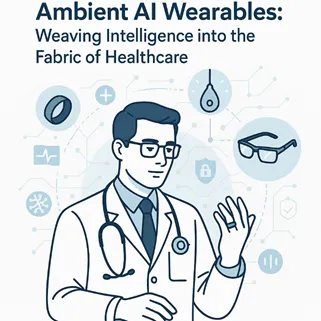
5. Growth of Remote Patient Monitoring and Wearable Technologies
The remote patient monitoring (RPM) technologies concept is also booming its presence in Asia as the healthcare systems follow the trend of preventive and home care.
Smartwatches, fitness trackers, and medical sensors represent wearable computing devices that make it possible to monitor all essential health numbers in real time: heartbeat rate, blood pressure, glucose levels, and physical activity. These gadgets produce real-time health information, which could be distributed to healthcare providers.
Remote monitoring also allows doctors to check on the patients even when they are not in the hospitals and this helps the doctor to diagnose any potential problems with the health of the patients in time and act before the situation deteriorates.
This is particularly useful when it comes to treating such chronic diseases as diabetes, cardiovascular, and respiratory diseases.
Patients are also gaining control over their health as mobile health technology is being implemented. It seems that with the help of smartphone apps, users can follow their health parameters and make appointments, as well as contact healthcare professionals on-site.
As wearable technologies become more advanced and affordable, the process of remote monitoring will have an even stronger presence in reducing the hospitalization rate and increasing the effectiveness of the disease management process outside of the hospital.
6. Robotics and Advanced Medical Technologies
Asia is witnessing a revolution in surgical operations and hospital operations through robot technologies. Surgeries involving robots are more precise, have fewer complications, and quicker recovery times than the conventional surgeries.
China, Japan, and South Korea are some of the countries that invest a lot in the development of surgical robots. Over 100 companies are busy with robotic surgery technologies in China alone with several products having been approved to be used in clinics.
Robotics particularly works in complex procedures within the field of orthopedics, neurology, urology and minimally invasive surgery. Robotic systems enable the surgeon to choose the delicate operations with improved images and accuracy.
In addition to surgical operation, robotics is applied in logistics, rehab and elderly care management of hospitals. As an illustration, robotic rehabilitation systems help stroke or spinal injury patients in recent recovery by helping them through the process of controlled physical therapy.
Robotics will be more significant in improving clinical outcomes and minimizing shortages in the healthcare workforce with the technological evolvement.
7. Shift toward Preventive and Value-Based Healthcare
The increased emphasis on preventive health care and value based health care models is one of the most critical structural changes in the medical systems across Asia.
There is a fast rate of chronic diseases in Asia like diabetes, heart diseases and cancer. Simultaneously, the population of the region is ageing at a high rate. It is projected that by 2025, there will be approximately 456 million aged 65 years and older people in Asia, which will put a lot of strain on the demand of the healthcare services.
Such demographic and epidemiological patterns are compelling healthcare systems to lean more towards prevention as opposed to treatment only. Governments and medical workers are encouraging such initiatives as:
- Early disease screening programs
- Vaccination campaigns
- Lifestyle and wellness initiatives
- Chronic disease management programs
Value-based healthcare models are also picking up. Value-based care also prioritizes patient outcomes, cost-effectiveness, and quality of care as opposed to simply the quantity of services that the company provides.
The use of digital health tools, predictive analytics, and population health data are assisting healthcare systems to determine populations at risk and provide preventive measures at an earlier stage before diseases escalate to severe levels.
Conclusion
The medical industry in Asia is experiencing a radical change due to the technological revolution, demographic changes, and the changing expectations of patients. The convergence of digital health technologies, personalized medicine, telemedicine, robotics, and preventive care plans are the characteristics of the healthcare revolution in the region.
The combination of these trends is transforming the healthcare delivery in the region to make healthcare more accessible, efficient, and patient-centered. Simultaneously, they are transforming big opportunities to healthcare providers, pharmaceutical firms, medtech firms, and digital health startups.
However, challenges remain. The health systems face challenges that are to be solved to include the integration of regulations, privacy of information, cybersecurity, workforce shortages, and balanced use of healthcare technologies.
Healthcare has potential in Asia. As governments are putting an increasing number of resources into healthcare infrastructure and innovation, the region will lead in healthcare change on the global stage.
The next ten years will probably see even more incorporation of technology, data, and personalized care model, which will eventually enhance health outcomes of billions of individuals in Asia.
.webp)