Emerging Trends in Therapeutic Device Development: From Prototype to Patient

Kate Williamson
Editorial Team, Asian Hospital & Healthcare Management
Technological advancements, changing regulations and the heightened need of clinical outcome have introduced a transformation in the development of therapeutic devices that is taking a paradigm shift. In the very early-stage prototyping (and even in the real-life application of the device in patients) manufacturers are reconsidering the design, testing, approval, and scaling of the devices in question. This article discusses the most important trends that are influencing the development of modern therapeutic devices and the ways companies can successfully make the transition between prototype and patient taking
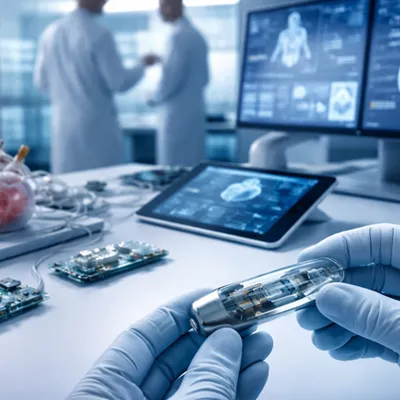
Introduction: Redefining the Therapeutic Device Development Lifecycle
Therapeutic devices have an important role to play in the current healthcare system and they are used to solve any unmet clinical needs, in the cardiology, neurology, orthopaedics, oncology, and chronic diseases management system. Conventionally, the development cycle of devices took a linear approach that entailed design, testing, regulatory approval and commercialization. A more integrated, data-driven and patient-centric model of development is replacing this approach today.
The current digital engineering, materials science, regulatory science, and clinical assessment innovations are improving the development schedules and increasing safety, performance, and post-market responsibility expectations. To medical machine manufacturers, the contract development organizations and healthcare providers, it is important to know these emerging trends so as to be competitive in a therapeutic environment that is becoming a complex one.
Early-Stage Innovation: Digital-First Prototyping and Design Optimization
Among the most significant transformations in the creation of therapeutic devices, there is digital-first prototyping. The use of advanced computer-aided design tools, digital twins and simulation-based testing is also allowing manufacturers to develop the design of devices refinement way before physical testing is actually done.
Digital prototyping enables the developer to test mechanical performance, biocompatibility, and usability in a variety of conditions. This strategy lowers the cost of development, minimizes the errors in design, and lessens the period of iterations. Early detection of problems with the potential performance of the company can increase the percentage of the first-pass during bench testing and preclinical trials.
Predictive modeling is getting increasingly improved with the introduction of artificial intelligence into the design workflows. Large volumes of data can be manipulated through the AI to find the best geometry of the devices, optimality of materials and functional performance to enable quicker and more dependable innovation.
Advanced Materials and Manufacturing Technologies
With material innovation, it is still redefining the capabilities of therapeutic devices. Alloys and advanced alloys, biocompatible polymers and bioresorbable materials are all making it possible to create safer devices of greater durability and more capable of long-term implantation.
Additive manufacturing or 3D printing is a new technology that is finding itself a potent force in the development of therapeutic devices. It makes possible rapid prototyping, customization and low-volume production of complex device geometries that are hard or impossible to produce using conventional manufacturing techniques. This is especially useful in the therapeutic field in terms of patient-specific implants and custom-made treatment options.
In the B2B context, the technologies are transforming supply chains and manufacturing relationships. Manufacturers of devices are becoming more and more innovative with their specialty material suppliers and high-tech manufacturing service providers to enable them to fast-track innovation and maintain quality and scalability.
Human-Centered Design and Clinical Usability
The human-centered design is emerging as a central need and not as an optional factor in the development of therapeutic devices. Regulators, clinicians, and healthcare systems have been laying more emphasis on usability, ergonomics, and integration of workflow.
Devices that are not easy to use or those which are not congruent with clinical workflow can serve as barriers to patient safety and usage. Consequently, producers are taking into account clinician and patient feedback at the front end of the design process using usability studies and simulated clinical settings.
This tendency is part of a larger trend toward value-based healthcare, in which therapeutic devices should not only prove to be clinically effective, but also to be operationally efficient and to have a better patient experience. In the case of manufacturers, the investment in usability engineering minimizes the downstream risk in terms of user error, training and post market complaints.
Evolving Regulatory Pathways and Early Engagement
Therapeutic device regulatory regimes are responding to innovation by changing. The FDA and European regulators are promoting the early involvement and frequent communication to facilitate safer and quicker approvals.
Breakthrough device and adaptive regulation programs enable companies to develop plans of action in line with regulatory anticipations at the very beginning. The early involvement assists in identifying the clarity of clinical evidence requirements, risk classification and post-market requirements, which can decrease delays in the development lifecycle.
To international manufacturers, the differences in regional regulations are still a challenge. The harmonization efforts and electronic submission toys are enhancing efficiency, but regulatory approach is becoming a constituent element to the therapeutic equipment development process and is no longer a bowling point.
Clinical Evaluation: Data-Driven and Real-World Evidence
Clinical evaluation is moving away in favor of standalone trials which are less flexible and towards more data-driven models. Even though clinical trials are still imperative, real-world evidence is getting a lot of dependence to aid in facilitating device safety, effectiveness, and long-term performance.
The therapeutic devices are also connected and provide continuous streams of usage and outputs data, allowing the manufacturers to monitor the performance outside of the controlled clinical environments. The information can be used in addition to regulatory submissions as well as product improvement and lifecycle management.
In the B2B perspective, the ability to analyze data is emerging as a competitive edge. Firms that are able to capture, analyze and interpret real-life information are in a better position to prove value to providers of health care, payers and regulators.
Integration of Digital Health and Software-Driven Therapies
Hardware-based solutions are not necessarily therapeutic devices anymore. Modern therapeutic systems now have such components as software, connectivity, and data intelligence.
Programmable therapies can provide remote management, adaptive therapy plans and individualized treatment plans. These functions improve the clinical outcomes and relieve the healthcare infrastructure. Yet, cybersecurity, software validation, and lifecycle updates are other development challenges that come with them.
To the device manufacturers, this overlapping of hardware and software necessitates cross-functional cooperation between engineering, IT, regulatory and clinical teams. The integration requires strong development models that improve physical device performance as well as digital reliability.
Manufacturing Scalability and Supply Chain Resilience
The transfer of a therapeutic device prototype to the patient takes the ability to manufacture in bulk and the strength of supply chains. The global turmoil recently has brought about the weaknesses of traditional sourcing and production systems.
In order to reduce risks, manufacturers are now moving towards modular manufacturing systems, dual sourcing as well as localized production. Digital production systems and automation are enhancing quality consistency and also allowing quick scale up as demand increases.
In the case of B2B stakeholders, supply chain resilience is no longer a cost factor in itself but a strategic concern, which directly influences the time-to-market and competitiveness over time.
Post-Market Surveillance and Lifecycle Management
Regulatory approval is not the last step in the development process. Regulatory demands, and expectations on the part of stakeholders are leading to the increased proactivity and data-intensive character of post-market surveillance.
High-tech systems of monitoring allow manufacturers to monitor the work of devices, define possible safety indicators, and take corrective measures within a system. The management of the lifecycle now incorporates the updates of the software, improvement of the design and the constant improvement in accordance with the real-world feedback.
Such continuous communication leads to increased confidence between the regulators, healthcare, and patients and viable product portfolios.
Conclusion: Aligning Innovation with Impact
The development of therapeutic apparatus in the latter trend is an indication of a more expansive novelty in the healthcare sector. The journey between prototype and patient is becoming more collaborative, more data oriented, more patient-centered, and the traditional development models need to be re-evaluated by the manufacturers.
The ability to succeed in this shifting world is based on the combination of digital solutions, new materials, regulatory vision, and practical evidence into a unified development strategy. To B2B stakeholders within the healthcare ecosystem, creating a therapeutic device is no longer an innovation matter - it is a matter of producing clinical and operational value at scale.

.webp "From AI Tools to Workflow Transformation in Healthcare")