Ambient Ai Wearables: Weaving Intelligence into the Fabric of Healthcare

Harvey Castro
Chief Medical AI Officer, Helpp.ai
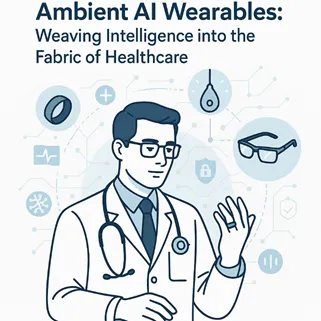
Ambient AI wearables, such as rings, pendants, and glasses, transform clinical data gathering and real-time patient health management. Discreetly blending into daily life, they offer continuous insights, streamline documentation, enable proactive care, and prioritize privacy. This article explores their clinical potential, risks, and ethical implications.
Introduction
The healthcare landscape is on the cusp of a profound transformation, driven by the relentless advancement of Artificial Intelligence (AI) and its integration into increasingly personal and pervasive hardware. Beyond the familiar smartwatch, a new generation of "ambient AI wearables" - discreet devices like rings, AI-powered pendants, and intelligent glasses - is emerging. These are not just gadgets; they represent a paradigm shift toward always-on, minimally intrusive computing experiences designed to seamlessly integrate into the fabric of daily life. For clinicians, they promise a revolution in data acquisition and workflow efficiency. For patients, they offer unprecedented tools for real-time health management and proactive engagement. This article will delve into the burgeoning world of ambient AI wearables, exploring their immense clinical potential, the underlying technological trends, the inherent risks and challenges, and the crucial ethical considerations that must be navigated to realize their promise responsibly.
The Rise of Ambient Intelligence: Beyond the Screen.
The current AI wearable market is rapidly pivoting away from screen-dependent interfaces. As highlighted in "Trends in AI Hardware Startups (2025)," there is a distinct shift from Screen-Dependent to Ambient Computing. This reflects a growing consumer fatigue with constant screen interaction and a desire for more natural, intuitive human-computer engagement. Sure, AI pendants and similar devices exemplify this new paradigm, where AI is constantly present but minimally obtrusive, designed for continuous audio capture and AI-driven personal assistance.
Several key innovations support this shift:
- Miniaturization and All-Day Wearability: Success in this space hinges on achieving both comfort and extended wearability. Bright rings and lightweight pendants are designed for continuous use, enabling persistent data collection and always available AI assistance without causing user fatigue.
- Convergence of Fashion and Technology: To overcome adoption barriers, companies are prioritizing aesthetics and design. Some smart glasses and rings are designed primarily as fashion accessories, with technology as a secondary consideration. This makes advanced technology socially acceptable and stylish, encouraging broader uptake.
- Discreet Form Factors: Inconspicuous devices that resemble conventional accessories (such as rings or glasses) are preferred. This allows AI to enhance capabilities without drawing undue attention or altering social dynamics – a crucial factor for both patient comfort and clinician professionalism.
Clinical Potential: A New Era of Data-Driven Healthcare
The application of ambient AI wearables in healthcare is one of the most dynamic and potentially transformative areas of development. The ability to gather continuous, real-world physiological data and deliver personalized, proactive insights is poised to revolutionize diagnostics, chronic disease management, and even acute care.
1. Continuous Physiological Insights & Early Detection: The "Healthcare-Specific Trends" section highlights a significant shift from Fitness to Clinical Relevance. Devices are moving beyond basic step counting to provide continuous, non-invasive tracking of a wide array of physiological parameters.
- Vital Signs Monitoring: Smart rings and other wearables are designed to track heart rate, heart rate variability (HRV), blood oxygen saturation (SpO2), body temperature, sleep stages, and respiratory patterns. Some platforms, for instance, aim to enable cuff-level accuracy in blood pressure monitoring through flexible ultrasound transducers integrated into wearable devices.
- Early Warning Systems: This continuous stream of data provides a longitudinal view of a patient's health, which is invaluable for detecting subtle changes or early signs of deterioration. Some wearable ring technologies include features aiming to predict illnesses based on deviations from a user's baseline vitals. Some bright rings highlight their AI models for detecting sleep apnea. This proactive capability can prompt individuals to seek timely medical attention, potentially before conditions become acute. For an ER physician, as noted in "Deep Dive: AI Hardware in Healthcare," access to such pre-hospitalization data could provide crucial context and aid in more rapid assessment.
2. Streamlining Clinical Workflows and Reducing Burnout: The administrative burden on clinicians is a significant contributor to burnout. Ambient AI tools offer the potential for "Cognitive Offloading."
- Automated Documentation: Certain devices designed for capturing conversations can be adapted for use in clinical settings with robust HIPAA compliance. They can assist in transcribing patient interactions, summarizing key points, generating notes, or even pre-populating Electronic Medical Record (EMR) fields. This frees up physicians to dedicate more time to direct patient care and complex decision-making.
- Enhanced Information Access: AI can process and categorize vast amounts of unstructured audio (and potentially visual data from smart glasses in the future), transforming it into easily searchable, actionable knowledge.
3. Enabling Proactive and Personalized Care: AI's ability to learn from extended user interaction is key to "Personalization Through Continuous Learning."
- Personalized Health Coaching: Some smart rings feature AI-powered nutrition coaches that provide tailored dietary advice. Some wearable technologies personalize therapeutic vibrations based on user health data, including integration with other health-tracking devices, to manage stress and improve sleep quality.
- Preventative Health Focus: By continuously monitoring health metrics, AI wearables can identify potential issues before they become serious, enabling a shift from reactive to preventative healthcare, as exemplified by the sleep and recovery tracking features found in some wearables.
- Specialized AI for Specific Use Cases: Startups are developing specialized AI hardware. Some startups, for example, focus on healthcare diagnostics (including FDA-cleared blood diagnostics) and demonstrate integration with numerous Electronic Health Record (EHR) systems, showing how AI hardware is becoming part of the formal healthcare ecosystem.
4. Applications in Emergency Medicine and Remote Care:
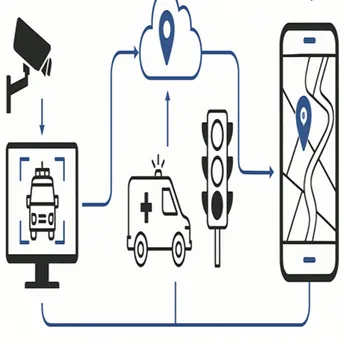
- AI-Driven Remote Triage: Wearables monitoring at-risk patients at home can transmit alerts to emergency services if vital signs cross critical thresholds, facilitating earlier intervention.
- Enhanced In-ER Patient Data: Patients arriving at the ER with their wearables can provide a rich log of recent physiological data, aiding in quicker and more informed diagnostic and treatment decisions, especially when a patient's history is unobtainable.
Underlying AI Capability Trends
Significant advancements in AI capabilities power the clinical potential of these devices:
- Multimodal Understanding: Advanced AI wearables combine multiple input types – including audio, visual (e.g., from smart glasses), and biometric – to create a more contextual understanding. This is a significant advancement over audio-only or single-sensor devices.
- Personalization Through Continuous Learning: Many such devices emphasize AI that learns from extended user interaction, creating increasingly personalized experiences and insights over time.
- Real-Time Processing with Edge AI: To reduce latency and address privacy concerns, companies are implementing more advanced edge AI solutions. This involves processing sensitive data locally on the device before sending aggregated, often anonymized, insights to the cloud. This is crucial for health data.
Risks, Challenges, and Ethical Imperatives
While the potential is immense, the path to widespread, safe, and equitable adoption of ambient AI wearables in healthcare is fraught with challenges and ethical considerations.
1. Data Privacy, Security, and Trust: This is paramount. "Emphasis on Privacy and User Control" is a key market trend.
- Sensitive Data: These devices collect highly personal and sensitive data, including private conversations, detailed health metrics, and visual information. Robust data security measures, including encryption at rest and in transit, as well as transparent privacy policies, are non-negotiable.
- HIPAA and Regulatory Compliance: Wearables used in clinical contexts or handling Patient Health Information (PHI) must adhere to stringent regulations, such as HIPAA in the U.S. and similar data protection laws globally (e.g., GDPR in Europe and evolving frameworks in Asia).
- User Control: Startups are responding; some device manufacturers emphasize privacy-first architectures (e.g., not storing audio recordings), others offer user-controlled data features, and some include "consent modes." Edge AI processing is a key strategy in this regard.
2. Accuracy, Reliability, and Clinical Validation: Claims of "clinical-grade" or "medical-grade" accuracy (e.g., for EEG or PPG sensors) must be substantiated by rigorous, independent clinical validation.
- Consumer vs. Medical Grade: A substantial gap exists between consumer wellness devices and tools that clinicians can confidently rely on for critical medical decision-making.
- Regulatory Oversight: As wearables offer more advanced diagnostic support or therapeutic interventions, they increasingly fall under the purview of regulatory bodies, such as the U.S. Food and Drug Administration (FDA). Startups must navigate complex and lengthy approval processes. The discontinuation of some AI hardware projects, partly due to performance issues, underscores the challenge of achieving hardware sustainability while meeting user expectations.
3. Algorithmic Bias: AI models are trained on data. If these datasets are not diverse and representative of the broader population, the resulting algorithms may exhibit biases, leading to disparities in diagnostic accuracy or the efficacy of personalized recommendations across different demographic groups.
4. Information Overload vs. Actionable Intelligence: The sheer volume of data collected can be overwhelming. The success of these devices will depend on their ability to transform raw data into concise, actionable intelligence rather than simply flooding clinicians or patients with information. Sophisticated AI filtering and prioritization will be key.
5. Informed Consent: Users must be provided with clear and transparent information about what data is being collected, how it will be used by AI algorithms, with whom it may be shared, and what control they have over their data. This is especially critical for vulnerable populations.
6. Subscription Fatigue and Hardware Sustainability: Many AI wearables require ongoing subscriptions for full functionality, which can lead to user resistance and dissatisfaction. Furthermore, high production costs, supply chain complexities, and the need for continuous software updates make it challenging for hardware-based AI startups to establish sustainable business models, as exemplified by challenges faced by some hardware-based AI startups.
7. The Smartphone Dilemma: New AI hardware must either offer a compelling standalone value proposition or integrate seamlessly as a genuinely valuable companion to the smartphone. The "companion approach" currently faces a lower barrier to adoption.
The Future Outlook: Integrating Intelligence, Ethically.
The trajectory of AI hardware points towards a future where intelligence is more pervasively and personally embedded in our lives. For healthcare, this means:
- AI Wearable Ecosystem Development: Greater integration between complementary AI wearables, creating ecosystems of devices that work together rather than as standalone products.
- Increased Healthcare Provider Adoption: As clinical validation strengthens and regulatory pathways become clearer, formal adoption by healthcare providers will likely increase, potentially including prescription or reimbursement models.
- Specialized AI Agents: Future devices are likely to feature more specialized AI agents for specific health domains, offering more profound expertise than general-purpose assistants.
- Biometric Authentication: AI wearables are also positioned to become secure, persistent authentication methods, which could have implications for accessing health records.
The emphasis on healthcare and productivity in the emerging AI hardware space aligns directly with the needs of both clinicians and patients. The innovations promise to augment human capabilities, foster greater well-being, and enhance efficiency.
Conclusion: Navigating the Future with Wisdom
Ambient AI wearables stand at the intersection of unprecedented opportunity and significant responsibility. Their potential to revolutionize healthcare by providing continuous, personalized, and proactive insights is undeniable. From early disease detection and chronic condition management to streamlining clinical workflows and reducing physician burnout, the applications are vast and compelling.
However, realizing this future requires more than technological prowess. It demands a steadfast commitment to ethical principles, robust data privacy and security, rigorous clinical validation, and a user-centric design philosophy that empowers users rather than overwhelms them. The journey from a promising concept to mainstream clinical application will require collaboration between innovators, clinicians, regulators, and patients.
For professionals at the intersection of medicine and AI futurism, particularly within dynamic healthcare environments such as those across Asia, continuous monitoring of this rapidly evolving field is crucial. By understanding the capabilities, embracing the potential, and proactively addressing the challenges, we can collectively steer the development of ambient AI wearables toward a future where technology genuinely serves to enhance human health and well-being for all.