Transforming Patient Care with Automation in Medical Technology
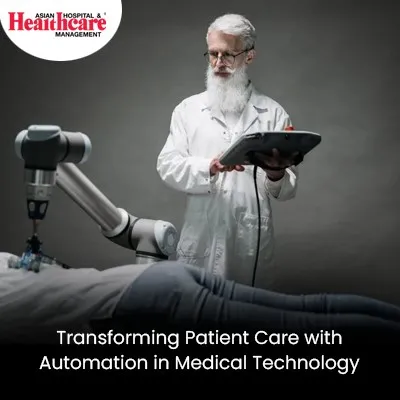
Automation in medical technology has been changing the whole patient experience, courtesy of improved accuracy as well as efficiency and wider reach. The varying AI tools, robotic surgeries, wearables and predictive analytics allows for both patients and providers to be engaged in the provision of care where such tools have solved the healthcare problem’s barriers. There is an expectation that as automation continues to mature, healthcare will increasingly become more personal, anticipatory and fluid.
Introduction:
The last few years have seen a radical change in the business of healthcare owing to technological growth. Out of these new ways to do things in the medical practices, automation of medical systems is arguably the most promising of them all. There are only three sides to this phenomenon, care automation allows the provider to increase the efficiency of the given processes while ensuring the accuracy and exceptional crafting of the care provided to each individual patient. The topic of this article is the role of automation in improving patient care, including its scope, advantages, disadvantages and the future it carries.
The Need for Automation in Healthcare
The healthcare industry has its own numerous pain points, right from low manpower levels, and the cost of operations, to the patient constant rising demand. The main bottlenecks during this process are looking for flimsy manual processes that have only promoted slowness, negligence, and blunders that only compromise both the patient’s and providers well-being. By increasing accuracy, efficiency, and the ease with which things get done, it can help in solving such problems.
Automated systems eliminate human errors in the processes of diagnosis, treatment, and any administrative work. They streamline patient record management along with billing and conducting lab tests. Also, automated systems help the patients to stay in touch with the health care systems and get the required services on time.
The COVID-19 pandemic made the role of automation even greater. The introduction of automated systems reduced the burden on the global healthcare system when resources were exhausted. This allowed care of patients to continue, allowed monitoring of the use of resources, contactless interaction to limit the transmission of the virus. This moment consolidated the ability of the automated systems to be useful in the most unfavorable conditions.
Applications of Automation in Medical Technology
Automation is changing the way healthcare is managed including, but not limited, to diagnosis, the follow-up of patients after they have undergone procedures, and more.
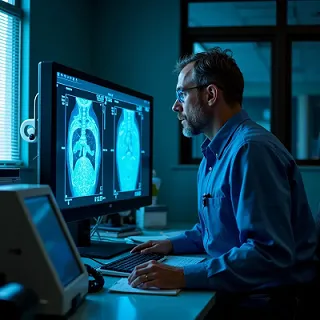
AI and machine learning have a big impact on medical diagnosis. Doctors now use these tools to look at medical pictures, lab tests, and patient records. This new tech helps radiologist’s spot problems in X-rays, CT scans, and MRIs faster. As a result, they can find diseases like cancer more. The same goes for blood and tissue samples. Automated systems speed up the analysis leading to quicker diagnoses.
The da Vinci Surgical System helps to make surgery more accurate and grants doctors better control. These robots allow for smaller cuts, which means patients recover faster. They also offer 3D images that let surgeons see well. The robots' steady exact movements help lower the risks during surgery.
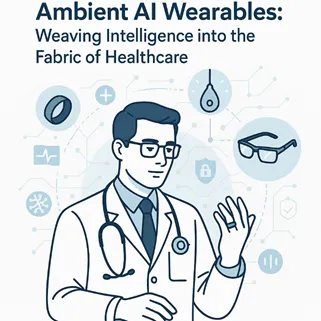
Automation is also revolutionizing patient monitoring. Smartwatches and fitness trackers monitor key health indicators alerting patients and doctors to possible health issues. ICU systems that run on their own keep an eye on very sick patients around the clock, which helps take some pressure off medical teams. Also automated pharmacy systems make it easier to hand out meds and manage stock leading to more accurate and effective inventory control. Telemedicine platforms greatly benefit from automation, utilizing chatbots for initial patient interactions and AI systems to prioritize cases based on symptom descriptions. Automated tools also improve follow-up reminders and medication adherence tracking, enhancing the efficiency of remote care.
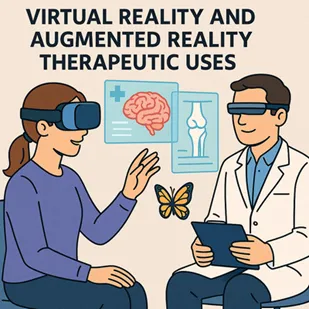
In the realm of mental health care, automation plays a significant role as well. Virtual therapy assistants offer guided sessions, track progress, and provide resources to patients, ensuring that mental health support is both consistent and accessible. When these systems use natural language processing (NLP), they can talk to patients in a caring human-like way. This helps patients feel more at ease.
Benefits of Automation in Patient Care
The integration of automation in medical technology brings a host of advantages. It has an impact on diagnostic accuracy personalized treatment strategies, and continuous patient monitoring, all of which help improve patient health. Quick disease detection and swift action boost chances of recovery. Automation of routine jobs allows healthcare staff to spend more time with patients. This leads to smoother operations faster service, and reduced wait times.
Another major benefit is cost reduction. By cutting down on mistakes making the best use of resources, and automating office work medical providers can lower their running costs. Patients also benefit from cheaper and more accessible care. Automated systems create vast amounts of data, which experts can study to find patterns and possible disease outbreaks. This data helps to tailor treatment plans to each patient's specific needs.
Automation gives patients more control through apps and portals. With such tools they can be able to view their health information, schedule for an appointment, and monitor their health status. They come out as more proactive hence are more likely to follow through on instructions given a doctor by other members of the team. Also, automation makes clinical trials more accurate and efficient. Using automated systems to gather data, keep watch, and crunch numbers speeds up trial work. This helps get new treatments and drugs out faster. In the end, this helps both patients and drug companies bring fresh solutions to the market more quickly.
Challenges and Ethical Considerations
Automation is a great advancement in the society, but together with its many advantages it does have some issues. The high initial costs of automated systems can put off smaller healthcare centers from using them. As more things go digital, we need strong online security to keep patient information safe and private. Another concern is workforce adaptation, as there may be apprehensions about job loss due to automation. To fix this, we need good training programs to help healthcare workers learn how to use and manage automated systems well.
AI systems also raise ethical questions about whose responsible when mistakes happen. We need clear rules and laws to deal with these issues. Finding the right mix of new technology and ethical thinking is crucial to make sure automation helps everyone in healthcare.
Moreover, interoperability presents a challenge. For automation to function smoothly across various healthcare systems and providers, standardized protocols and integrations are essential. If we do not do these things we are not going to be rewarded with all that is positive about automation.
The Role of Automation in Preventive Healthcare
The subject of preventive healthcare is well developed in today’s world and automation has its role here as well. Users of smart watches and health applications are constantly monitored and can receive feedback and an alert on the health issues they may likely develop. These tools help people live healthier lives and catch issues, which takes some of the load off healthcare systems.
Computer-based decision support system analyzes patient histories to find out vulnerable patient for chronic diseases. For instance, COVID-19 risk prediction, diabetic risk prediction, cardio vascular diseases, hypertension and so on can be predicted by using the data available and the lifestyle of individuals. This enable a healthcare provider to recommend measures in terms of prevention to the various individuals.
Vaccination campaigns greatly benefit from automation. Automated scheduling, reminders, and data tracking help achieve higher vaccination rates and improve overall population health. These systems are particularly vital for managing large-scale immunization efforts during pandemics.
The Future of Automation in Healthcare
Automation in medical technology has very bright prospects that shape the constant expansions leading to new inventions. The idea of a tailored approach to the condition is in the air already – as the robots will take genetic, environmental, and lifestyle into account for treatment plans. AI will play an important role in helping doctors with necessary clinical judgments, increase the probability of correct diagnosis and relevant treatment outcome.
Virtual health assistants are likely to assume round-the-clock weathering of patients, coupled with counselling, timely prompts and slight motivation. The connected integration will with the Internet of Thing will connect automatic devices in order to create a system in the care of patients. In smart bedding, patients’ movement will be recorded while smart inhalers for asthmatic patients will track usage and other symptoms.
Another innovation to remark is the field of rehabilitation that is now involving robotics and artificial intelligence. Physical therapy exercise applications that range from being fully automated to semi-automated often enable patients be assisted in performing the exercises on their own and record the degree of performance on a machine that can also tweak the exercise regime depending on the results obtained. This makes the rehabilitation process in most of the places normal and efficient in spite of the geographical location.
Other advanced technologies that are not automations yet but certain to be working hand in hand with automation will also come to existence soon such as 3D printing, nanotechnology etc. Biomedical systems are already being developed that are personalized for the patient’s requirements these include prosthetics, implants, drug delivery systems. These progress have the potential to redesign patient care, they are also individualized and more accurate.
Conclusion:
Automations within medical technology are changing the face of patient practice with unmatched precision, speed and convenience. About now, healthcare faces the option of addressing the current problems or assume a new identity as the innovators of the future build a system through which every one may receive competent care.
With the growing role of automation within healthcare, it becomes possible to build a healthcare system that more closely addresses the needs of the patient than it currently does. It is important to note that clients have to make adjustments with regard to the mentioned change in order to have a healthier future. When, deploying automation with appropriate ethical concerns, it is possible to overcome the deficiencies in the delivery of health care, engage patients, and support health care workers. It really is only the beginning of this process of change; the development potential here is boundless.
.webp)





.webp)