AI and Digital Health Solutions Transforming Patient Care and Clinical Outcomes
.webp)
Kate Williamson
Editorial Team, Asian Hospital & Healthcare Management
The patient care and clinical outcomes are changing with the use of digital health solutions and artificial intelligence. These technologies allow improving patient engagement, clinical workflow optimization, predictive analytics, and remote monitoring, which are non-revolutionary steps that will make healthcare delivery smarter, more proactive, and patient-centered.
Introduction:
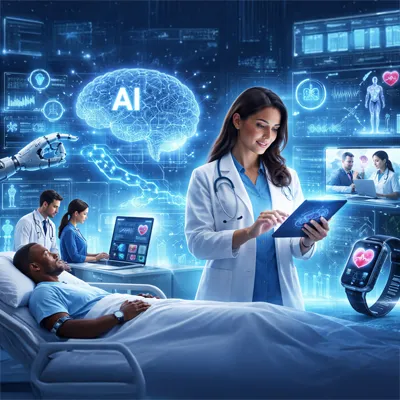
The field of digital health technologies is reinventing the modern healthcare landscape due to the convergence of artificial intelligence (AI). These technologies are improving patient care, clinical decision-making, and healthcare outcomes in general with greater precision than ever before, with the power of advanced algorithms, as well as their connectedness. With the ability to offer precision medicine, simplify operational effectiveness, and improve patient communication, AI and digital health solutions will re-establish new criteria of medical practice.
The Rise of AI in Healthcare
Machine learning, natural language processing, and computer vision, referred to as artificial intelligence, are not the techno-futuristic concept anymore; they are a part of healthcare delivery. Computer programs based on AI are capable of processing large amounts of data, identifying patterns, and forecasting the results with high precision. Clinically, this is an ability to have a quick and accurate diagnosis, treatment plans, and risk stratification of patients.
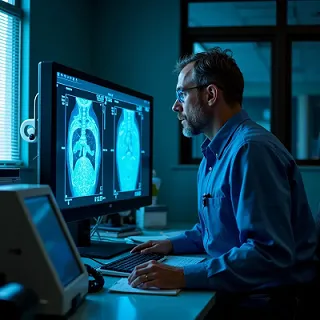
Some of the areas where AI has penetrated are radiology, pathology and oncology. As an illustration, AI-based imaging technologies have the potential to identify cancer at its early stage, and a human eye might not see it, which would allow taking more timely measures and improve the prognosis. Correspondingly, histopathological slides analyzed by AI-powered pathology technologies will be particularly accurate and can be used to speed up the treatment choice.
Digital Health Solutions and Connected Care
Digital health is quite a broad group of technologies, and it comprises electronic health records (EHRs), telemedicine, wearables, remote patient monitoring, and mobile health apps. Health data can be collected, stored and analyzed with these applications to give a better ecosystem where patients and providers can collaborate.
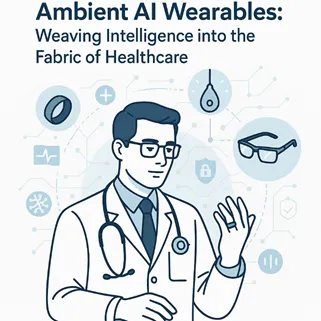
Fitness trackers and smartwatches are wearable computers that monitor the vital signs and activity and sleep patterns. This data in combination with AI analytics can be useful to uncover the warning signs and symptoms of a chronic condition like high blood pressure, diabetes, or heart diseases in their early stages. These technologies provide the opportunity to intervene in time and minimize hospitalization and improve long-term outcomes by informing healthcare providers and patients in real-time.
The access to medical care has been changed by telemedicine platforms, which have been enhanced during the global pandemic, especially by the patients in the remote or underserved areas. The triage systems, designed by AI, can refer the patients to the most suitable tier of care, and the digital platforms will make the medical history, laboratory tests, and imaging studies easily accessible in virtual meetings. This continuity of care and patient satisfaction is supported by smooth incorporation of digital tools.
AI-Enabled Clinical Decision Support
The use of artificial intelligence-based clinical decision support systems (CDSS) is changing the decision-making process of medical workers. They are systems which combine patient data, medical knowledge and predictive analytics to offer evidence-based recommendations. As an example, AI algorithms can recommend individualized treatment plans depending on the genetic profile of a patient, comorbidities, and previous response to treatment.
AI-based decision support systems can be used in critical care to analyze real-time physiological information to identify the onset of physiological deterioration, including sepsis or acute respiratory distress. These systems can help to save lives by alerting the clinicians before a condition deteriorates and improve the productivity of the intensive care units.
Besides, AI can help in managing medications by detecting possible drug interactions, dosage optimization, and adverse effects forecasting. This eliminates the chances of medication errors that have remained a major issue in health care systems across the globe.
Enhancing Patient Engagement and Self-Management
Digital health solutions enable patients to be active participants in the management of their health. The health education is personalized by mobile health applications that monitor medication adherence as well as lifestyle modifications. Since AI-based chatbots are capable of responding to patient inquiries and providing advice on managing their symptoms, as well as delivering mental support, it will limit the number of visits to healthcare providers.
In the case of chronic patients, AI analytics can be used to monitor patients remotely, which requires constant monitoring and interventions in a timely manner. As an example, the diabetes patients can have glucose monitoring systems to predict the hypoglycemic events and other corrective actions. This is a proactive management strategy that is better in managing disease and creating less complications and better living standards to patients.
Predictive Analytics and Population Health
The predictive power of AI is not limited to the individual care but also on the population health. AI can determine the fashion, the epidemics of the disease, and the allocation of resources better because it analyzes big data of a wide range of populations. These findings would allow hospitals and other healthcare facilities to create preventive strategies, create particular interventions, and improve the overall health of the general population.
The population health analytics also make stratification of risks possible in order to prioritize healthcare providers to high-risk patients that require a more intensive monitoring. This data-based strategy minimizes unneeded hospital stays, decreases the cost of healthcare and makes sure that the resources are allocated where they are in the most significant demand.
AI in Drug Discovery and Personalized Medicine
The digital health solutions and AI are revolutionizing the pharmaceutical industry. The algorithm of AI is capable of studying large chemical libraries, predicting the efficacy of drugs, and detecting possible side effects, and it can greatly accelerate the process of drug discovery. This saves time and money spent on the delivery of new therapies to the market.
Individualized medicine AI is a type of personalized medicine where a treatment is tailored to a specific patient based on their genetic composition and lifestyle and their environment. This method does not only enhance the chances of successful therapy, but also reduces the side-effects to increase clinical outcome and patient satisfaction.
Challenges and Considerations
Although AI and digital health have the potential to transform the healthcare sector, there are a number of issues to consider to guarantee their successful implementation into healthcare systems. The privacy and safety of data also stay on the list of priorities because all the sensitive health data is becoming more and more digitalized and exchanged across platforms. The regulatory structures should be changed to provide safety to the patients and adherence to ethical principles.
The interoperability of digital health systems is also another challenge. There are numerous healthcare institutions using disjointed EHRs and old systems that do not permit easy flow of data. Good quality and diverse datasets are also essential to the operation of AI algorithms and biased data may result in erroneous predictions or unequal care.
Furthermore, digital health implementation which will require the implementation of AI and solutions will require a significant investment in infrastructure, training, and change management. The medical workers are to be educated on how to convert AI-generated information and apply it to clinical practice.
The Future of AI and Digital Health in Patient Care
Successful implementation of AI, digital health solutions, and human knowledge is the future of the healthcare field. With the constant development of technology, we may expect even more advanced predictive models, diagnostic automation, and a tailored treatment program. Active care in real-time with devices being connected will reduce the workload on medical institutions and improve patient outcomes.
Virtual assistants that are powered by AI, as well as remote monitoring systems, will increase access to care, especially in poorly served areas. These technologies can make sure that all the quality healthcare is accessible at any place or location because geographical and logistical barriers can be reduced.
In addition, AI together with genomics, proteomics, and the rest of the omics technologies will ensure the future of the precision medicine offered on an unparalleled level. The customization of the treatment to the molecular portrait of every patient will not only enhance outcomes but also decrease healthcare expenses by decreasing ineffective interventions.
Conclusion
Digital health solutions and artificial intelligence are revolutionizing the process of treating patients and improving clinical outcomes through the ability to determine the diagnosis and treatment, as well as to prevent illness. These technologies are also transforming the face of healthcare, whether in making clinical decisions or in patient empowerment to care about themselves. Even though the problems with data privacy, interoperability, and workforce preparedness are still present, the possible rewards are significant. With the ongoing use of AI and digital health solutions in healthcare systems, patients are likely to find many opportunities to access high-quality and improved care, and get previously unattainable results. These technologies have brought together a not only a technological breakthrough but also a paradigm shift of smarter, patient-centered healthcare.