The Role of Artificial Intelligence in Medical Image Analysis
.webp)
Dr. Meghraj V. Suryawanshi
Associate Professor and Co-Founder, Sandip Institute of Pharmaceutical Sciences

Akshata Yashwant Patne
Research Assistant, University of South Florida
Artificial intelligence (AI) is transforming medical imaging by enhancing diagnostic accuracy, efficiency, and personalised care. Techniques like deep learning, reinforcement learning, and traditional machine learning are being applied across radiology, pathology, and ophthalmology to detect diseases such as cancer, pneumonia, and diabetic retinopathy. AI addresses limitations of human interpretation, reduces diagnostic errors, and streamlines clinical workflows. Innovations such as federated learning, quantum computing, and multi-modal imaging are driving the future of AI integration. Despite challenges like interpretability, biased datasets, and regulatory barriers, AI is poised to augment clinical expertise and revolutionise medical diagnostics, making healthcare more precise and accessible globally.
Introduction
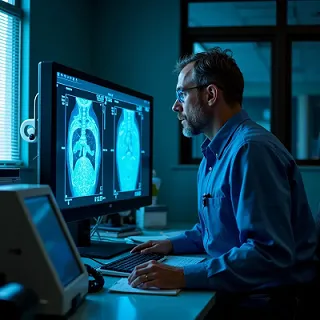
Medical imaging is a cornerstone of modern healthcare, enabling the visualization of internal organs and tissues to support accurate diagnosis, treatment planning, and patient follow-up. Modalities such as X-rays, MRI, CT, ultrasound, and PET scans are crucial in identifying and managing a wide range of medical conditions. Traditionally, image interpretation has been performed by radiologists and clinicians; however, this process can be subjective and is influenced by fatigue, experience, and cognitive biases, potentially leading to diagnostic inaccuracies [1]. The World Health Organization (WHO) reported in 2020 that diagnostic errors contribute to nearly 10% of global patient deaths, underscoring the urgent need for technological solutions that enhance diagnostic precision and reliability [2].
The integration of artificial intelligence (AI), particularly deep learning, has significantly advanced the field of medical image analysis. AI algorithms can efficiently and accurately analyse vast volumes of imaging data, identifying subtle features that may be missed by human observers [3]. Leveraging large datasets and advanced computational techniques, AI boosts diagnostic efficiency, enables earlier disease identification, and improves patient outcomes. Notably, AI-based diagnostic tools have shown increased detection rates, such as reducing false negatives in breast cancer screenings and improving the accuracy of lung nodule detection [4].
The evolution of medical imaging from manual interpretation of X-ray films to digital imaging and now AI-assisted systems reflects a pivotal shift toward precision medicine, offering greater accuracy and consistency in diagnostics [5].
Paradigm of AI in Medical Imaging
Table 1 describes the vital milestones of artificial intelligence for the medical imaging.
Table 1: Key Milestones in AI for Medical Imaging
| Year | Milestone |
| 1990s | Early rule-based CAD systems introduced |
| 2012 | Deep learning breakthrough with AlexNet (ImageNet competition) |
| 2015 | Google’s DeepMind develops AI for diabetic retinopathy detection |
| 2018 | First FDA-approved AI software for detecting strokes in CT scans (Viz.ai) |
| 2021 | AI outperforms radiologists in lung cancer detection (Nature Medicine) |
| 2023 | AI-based whole-body imaging solutions become commercially viable |
The Need for AI in Medical Imaging
- Overwhelming Imaging Data Volume: Rising imaging data from high-resolution scans and screenings overwhelms radiologists, increasing burnout and requiring AI for efficiency.
- Reducing Diagnostic Errors: AI improves accuracy in detecting conditions like breast cancer and pneumonia, reducing false positives and human error.
- Economic and Workflow Benefits: AI optimizes workflows, reduces redundant tests, and cuts healthcare costs—potentially saving $100 billion annually.
- Early Detection & Personalised Medicine: AI identifies subtle abnormalities, aiding early diagnosis. Tools like DeepMind detect over 50 eye diseases and enhance lung cancer detection, enabling personalised treatment and better patient outcomes [6-8].
AI Techniques in Medical Image Analysis
Traditional Machine Learning (ML): Traditional machine learning has been extensively used in medical image analysis for classification, feature extraction, and anomaly detection. Models such as support vector machines (SVMs), random forests, and k-nearest neighbors (kNN) rely on handcrafted features like texture, shape, and intensity, requiring domain expertise. For instance, in breast cancer detection, ML algorithms identify textural patterns in mammograms, while SVMs are effective in classifying brain tumors using MRI data. Despite these applications, ML struggles with complex tasks like segmentation due to limited feature generalization, making deep learning more favorable [9, 10].
Deep Learning (DL): Deep learning, especially convolutional neural networks (CNNs), enables end-to-end learning directly from raw images. Unlike traditional ML, DL models autonomously extract hierarchical features, making them effective for segmentation, classification, and histopathology analysis. The U-Net architecture has proven highly effective in biomedical segmentation tasks due to its encoder-decoder structure with skip connections. Generative Adversarial Networks (GANs) further enhance medical imaging by generating synthetic images for data augmentation and super-resolution. Real-world success includes DeepMind’s system detecting over 50 eye diseases and CNN-based lung cancer screening surpassing human radiologists. However, DL demands large datasets, high computational resources (e.g., GPUs), and poses interpretability challenges due to its black-box nature. Ongoing research focuses on model generalization, computational efficiency, and explainable AI to increase clinical trust [11, 12].
Reinforcement Learning (RL): Reinforcement Learning (RL) is gaining traction in medical imaging for tasks like adaptive imaging and interactive segmentation. RL agents learn optimal actions through reward mechanisms rather than labeled data. Applications include adjusting imaging parameters or refining lesion boundaries with radiologist feedback. However, RL’s extensive training requirements and stability issues in complex medical data remain key research challenges [12].
Applications of AI in Medical Imaging
AI has significantly advanced medical imaging in radiology, pathology, and ophthalmology, improving diagnostic accuracy, efficiency, and accessibility.
AI in Radiology: Radiology has widely adopted AI across X-ray, MRI, CT, and ultrasound imaging. AI models like CheXNet have shown up to 92% accuracy in detecting pulmonary conditions such as pneumonia, tuberculosis, and COVID-19, aiding rapid diagnosis, especially in low-resource settings. AI also enhances brain MRI interpretation, identifying tumors and strokes with high precision, and supports musculoskeletal imaging by improving fracture detection and osteoporosis screening. Challenges include false positives, scan quality variability, and model generalizability across populations [13].
AI in Pathology: AI improves pathology by enabling accurate, automated analysis of histological slides. In breast cancer detection, AI systems exceed 95% accuracy in distinguishing malignant from benign tissues. It also aids in biomarker identification (e.g., HER2), supporting precision medicine. Digital pathology with AI standardizes tumor measurements and morphological assessments. However, variations in slide preparation and the need for large labeled datasets remain challenges [14].
AI in Ophthalmology: AI is revolutionising ophthalmology through early detection of retinal diseases. Tools like DeepMind's diabetic retinopathy screening achieve 97% sensitivity, expanding access to eye care in remote areas. AI also assists in diagnosing glaucoma and AMD by analysing optic nerve and retinal changes. Emerging uses include cataract and retinal vein occlusion detection. Yet, reliability depends on image quality, consistent imaging protocols, and clinical validation [15].
Challenges and Limitations
Despite its benefits, AI in medical imaging faces challenges such as biased datasets, limited interpretability, regulatory hurdles, infrastructure constraints, and integration issues. Underrepresentation in training data can reduce model accuracy across populations. AI’s “black box” nature affects clinician trust, while regulatory and ethical concerns complicate deployment. High computational demands and lack of resources in low-income settings hinder adoption. Integration into clinical workflows requires clinician training and system alignment. Solutions include explainable AI, federated learning, edge computing, and tailored regulations. Addressing these issues through collaboration will ensure safe, equitable, and effective AI implementation in medical imaging.
Future Directions and Conclusion
AI in medical imaging is evolving rapidly, with innovations like federated learning, quantum computing, and multi-modal analysis enhancing diagnostic precision and personalised care. These technologies enable secure, collaborative model training, faster imaging analysis, and integration of diverse data for individualised treatment planning. Clinical decision support systems and explainable AI will further aid clinicians, while interdisciplinary collaboration and ethical governance will ensure responsible AI deployment. Despite challenges, ongoing advancements promise to reduce disparities, boost efficiency, and improve outcomes. In the coming decade, AI will augment not replace medical expertise, transforming diagnostics into more accessible, accurate, and patient-centered care worldwide.
References
- Degnan AJ, Ghobadi EH, Hardy P, Krupinski E, Scali EP, Stratchko L, et al. Perceptual and interpretive error in diagnostic radiology—causes and potential solutions. Academic radiology. 2019;26(6):833-45.
- Alhasan M, Hasaneen M. Digital imaging, technologies and artificial intelligence applications during COVID-19 pandemic. Computerised Medical Imaging and Graphics. 2021;91:101933.
- Oyeniyi J, Oluwaseyi P. Emerging trends in AI-powered medical imaging: enhancing diagnostic accuracy and treatment decisions. International Journal of Enhanced Research In Science Technology & Engineering. 2024;13:2319-7463.
- Mia MT. Enhancing Lung and Breast Cancer Screening with Advanced AI and Image Processing Techniques. Journal of Medical and Health Studies. 2024;4(5):81-96.
- Najjar R. Redefining Radiology: A Review of Artificial Intelligence Integration in Medical Imaging. Diagnostics (Basel). 2023;13(17).
- Pinto-Coelho L. How Artificial Intelligence Is Shaping Medical Imaging Technology: A Survey of Innovations and Applications. Bioengineering (Basel). 2023;10(12).
- Tripathy A, Patne AY, Mohapatra S, Mohapatra SS. Convergence of Nanotechnology and Machine Learning: The State of the Art, Challenges, and Perspectives. International Journal of Molecular Sciences. 2024;25(22):12368.
- Chetlen AL, Chan TL, Ballard DH, Frigini LA, Hildebrand A, Kim S, et al. Addressing Burnout in Radiologists. Acad Radiol. 2019;26(4):526-33.
- Sarvestani ZM, Jamali J, Taghizadeh M, Dindarloo MHF. A novel machine learning approach on texture analysis for automatic breast microcalcification diagnosis classification of mammogram images. Journal of Cancer Research and Clinical Oncology. 2023;149(9):6151-70.
- Deepak S, Ameer P. Automated categorization of brain tumor from mri using cnn features and svm. Journal of Ambient Intelligence and Humanized Computing. 2021;12(8):8357-69.
- Li Z, Wang L, Wu X, Jiang J, Qiang W, Xie H, et al. Artificial intelligence in ophthalmology: The path to the real-world clinic. Cell Rep Med. 2023;4(7):101095.
- Grenier PA, Brun AL, Mellot F. The Potential Role of Artificial Intelligence in Lung Cancer Screening Using Low-Dose Computed Tomography. Diagnostics (Basel). 2022;12(10).
- Patne AY, Dhulipala SM, Lawless W, Prakash S, Mohapatra SS, Mohapatra S. Drug Discovery in the Age of Artificial Intelligence: Transformative Target-Based Approaches. International Journal of Molecular Sciences. 2024;25(22):12233.
- Kim I, Kang K, Song Y, Kim TJ. Application of Artificial Intelligence in Pathology: Trends and Challenges. Diagnostics (Basel). 2022;12(11).
- aylor CR, Monga N, Johnson C, Hawley JR, Patel M. Artificial Intelligence Applications in Breast Imaging: Current Status and Future Directions. Diagnostics (Basel). 2023;13(12).
.webp "From AI Tools to Workflow Transformation in Healthcare")