AI-Driven Smart Ambulance Traffic Management System for Urban Environments

Shravan Somashekara Rai
Software Engineer, Teladoc Health
This paper presents an AI and IoT framework for emergency traffic management. It uses computer vision for ambulance detection, IoT signal overrides, and dynamic route optimization. Edge computing reduces latency, while the cloud provides coordination. The system enables sub-second signal overrides and real-time route adjustments for efficient emergency responses.
I. Introduction:
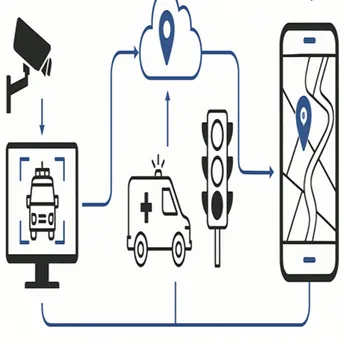
Emergency Medical Services (EMS) are pivotal in providing critical care during life-threatening situations, where rapid response is essential. Delays in ambulance response times have been associated with increased mortality rates, particularly in high-acuity patients. For instance, a 2019 study in Alberta reported that 65% of high-acuity patients experienced delays of 30 minutes or more upon hospital arrival, underscoring persistent concerns regarding EMS response efficiency [1]. Urban traffic congestion significantly impedes the swift movement of ambulances, exacerbating these delays. Traditional traffic management systems often lack the capability to dynamically prioritize emergency vehicles, leading to prolonged response times. A comprehensive review highlighted that current Emergency Vehicle Management (EVM) systems face challenges such as congestion, infrastructure limitations, and communication problems, which hinder the timely movement of emergency vehicles [2]. To address these challenges, we propose an innovative AI- and IoT-assisted emergency traffic management system designed to enhance ambulance prioritization in urban settings. This system comprises three core components:
- IoT-Enabled Traffic Camera System for Ambulance Detection: Traffic cameras equipped with object detection models (e.g., Convolutional Neural Networks, Vision Transformers, etc.) automatically identify ambulances approaching intersections. These cameras are part of an IoT system that continuously updates a centralized platform with detection events. The decision to employ edge or cloud processing is an implementation detail dependent on factors such as network infrastructure and latency requirements, and is beyond the scope of this paper.
- IoT-Enabled Traffic Signal Override System: Ambulances are equipped with IoT-based GPS transmitters that continuously transmit their location to a cloud-based control system. IoT-enabled traffic lights provide real-time status updates and allow for remote signal control based on ambulance movement. Upon detecting an ambulance in emergency mode, the system dynamically optimizes traffic lights along its route to ensure expedited passage.
- Integration with Map Services for Public Awareness and Route Optimization: The real-time GPS location of the ambulance is shared with services like Google Maps and Apple Maps, appearing as a live emergency marker. This integration alerts nearby drivers to safely yield and provides the system with real-time traffic data to determine and dynamically update the optimal route for the ambulance.
By integrating computer vision, IoT, and real-time cloud processing, this approach aims to facilitate smarter ambulance prioritization, reduce delays, and enhance coordination among emergency services, traffic infrastructure, and the public.
The remainder of this paper is structured as follows: Section II provides a review of state-of-the-art methods in ambulance detection, IoT-based traffic management, and smart navigation systems. Section III details the proposed system architecture, including key components, network communication, and data flow. Section IV addresses key design challenges, such as processing decisions and security concerns. Finally, Section V concludes with key takeaways and research directions for real-world deployment
II. LITERATURE REVIEW
In this section, we review recent advancements in technologies pertinent to AI-based ambulance detection, IoT-enabled traffic management, routing algorithms, and real-time map integration.
A. AI-Based Ambulance Detection
The integration of artificial intelligence (AI) in traffic monitoring has led to significant improvements in emergency vehicle detection. A notable study introduced a Real-Time Ambulance in an Emergency Detector (RTAIAED) that employs both video and audio data to identify approaching ambulances. This system utilizes specialized Lookout Stations equipped with custom YOLOv8 models for video analysis and neural networks for audio classification, achieving real-time detection even under challenging conditions [3].
B. IoT-Enabled Traffic Management
The Internet of Things (IoT) has been pivotal in advancing traffic signal control systems. An innovative approach [4] proposes an IoT-based intelligent traffic navigation system designed to predict and manage accidents within congested traffic scenarios. This system leverages machine learning algorithms to analyze real-time data, facilitating efficient emergency response by dynamically adjusting traffic signals to prioritize emergency vehicles. Another study [5] introduces an Artificial Intelligence of Things (AIoT) based distributed emergency vehicle transit system. Developed on Raspberry Pi, this rule-based system employs infrared sensors and directional microphones to detect emergency vehicles, sharing departure directions with adjacent intersections to minimize transit time.
C. Routing Algorithms for Emergency Vehicles
Optimizing routes for emergency vehicles is crucial for minimizing response times. Recent studies [6] have introduced a machine learning-based method to dynamically adjust ambulance routes and traffic signal timings. By incorporating real-time data from multiple sources, the system adapts to evolving traffic conditions, ensuring swift and efficient navigation for emergency responders. Additionally, it was demonstrated by a study on smart route optimization for emergency vehicles [7], that response times and overall operational efficiency are significantly improved by integrating AI and IoT into ambulance routing. The robustness of the proposed system in dynamic urban environments is ensured by its adaptability.
D. Real-Time Map Integration
Real-time traffic data is integrated into navigation systems to enhance route planning for emergency vehicles. An Unmanned Aerial Vehicle (UAV) guided priority-based incident management system was proposed in [8]. Better clearance times at intersections are obtained by emergency vehicles with the help of this system. The limitations of static travel paths are addressed by considering dynamic traffic parameters. Response times are thereby reduced. Furthermore, the development of smart traffic lights [9] that communicate with emergency vehicles has shown promise. AI and IoT technologies are utilized by these systems to adjust traffic signals in real-time. Clear routes for emergency responders are provided, improving response times.
Collectively, these studies underscore the potential of integrating AI, IoT, and real-time data analytics to enhance emergency response systems. The advancements in ambulance detection, traffic signal control, routing algorithms, and map integration contribute to more efficient and effective emergency vehicle navigation in urban environments.
III. PROPOSED SYSTEM
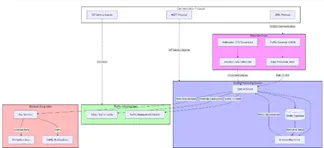
Fig. 1. Proposed system architecture
The increasing complexity of urban traffic management, coupled with the critical nature of emergency response times, necessitates an innovative approach to ambulance prioritization. The system architecture proposed here is built upon three fundamental pillars: intelligent detection, smart traffic control, and public awareness integration, as illustrated in Fig. 1.
At its core, the system employs a sophisticated network of IoT-enabled traffic cameras enhanced with artificial intelligence capabilities. These cameras leverage state-of-the-art computer vision models, including Convolutional Neural Net-works (CNNs) [10] or Vision Transformers, to achieve highly accurate ambulance detection in real-time [11]. To address the crucial factor of latency in emergency situations, the system implements edge computing architecture, where processing units are strategically positioned alongside the cameras (see Fig-1 for system workflow). This edge-first approach ensures that critical detection and decision-making processes occur as close to the data source as possible, significantly reducing the system’s response time compared to traditional cloud-based solutions [12].
The traffic signal override system forms the second crucial component of the architecture. Emergency vehicles are equipped with specialized GPS transmitters that continuously broadcast their location and operational status through secure channels (see Fig. 1 for a schematic overview of the communication infrastructure). These transmitters work in concert with smart traffic signals that have been upgraded with IoT modules, enabling dynamic control and monitoring capabilities [13]. The integration between these components allows for intelligent traffic flow manipulation, creating clear paths for emergency vehicles while minimizing disruption to regular traffic patterns.
A distinctive feature of this system is its integration with popular mapping services such as Google Maps and Apple Maps. This integration serves a dual purpose: it enables real-time public awareness of emergency vehicle movements and facilitates dynamic route optimization. By incorporating current traffic conditions, historical data, and real-time incident information, the system can continuously calculate and suggest optimal routes for emergency vehicles. This capability is particularly valuable in urban environments where traffic conditions can change rapidly and unpredictably.
The system’s communication infrastructure is built on a sophisticated network of protocols and data flows designed to ensure reliable and secure information exchange. When an ambulance approaches an intersection, the traffic cameras initiate the response chain by detecting the vehicle and processing the visual data through edge computing units. Simultaneously, the ambulance’s GPS transmitter provides precise location data to the central control system via encrypted cellular networks. This dual-detection approach enhances the system’s reliability and provides redundancy in critical situations.
Data transmission throughout the system utilizes cutting-edge communication protocols, including Dedicated Short Range Communications (DSRC) and Cellular Vehicle to Everything (C-V2X) technology [14]. These protocols ensure rapid and reliable communication between various system components. The central control system serves as the brain of the operation, aggregating and analyzing data from multiple sources to make informed decisions about traffic signal adjustments and route optimization.
The system employs sophisticated Vehicle-to-Infrastructure (V2I) communication protocols to facilitate direct interaction between emergency vehicles and traffic infrastructure. This is complemented by standard IoT protocols such as MQTT (Message Queuing Telemetry Transport) and CoAP (Constrained Application Protocol), which provide efficient and reliable data transmission between system components. These protocols were carefully selected based on their proven reliability in mission-critical applications and their ability to handle the high-frequency, low-latency requirements of emergency response systems.
The command dissemination process is equally sophisticated, with the central system issuing precisely timed override commands to affected traffic signals, creating a ”green corridor” for approaching emergency vehicles (as depicted in Fig. 1). This corridor is dynamically adjusted based on the ambulance’s speed, direction, and real-time traffic conditions, ensuring optimal traffic flow management. The system also provides updated routing information directly to emergency vehicle operators through an integrated navigation interface, allowing them to make informed decisions based on current conditions.
Public awareness is enhanced through real-time updates to mapping services, which display emergency vehicle locations and anticipated routes. This feature promotes proactive yielding behavior among other drivers, potentially reducing response times and improving safety for all road users. The integration with popular mapping platforms ensures wide accessibility and familiar user interfaces for the general public. Through this comprehensive integration of advanced technologies, communication protocols, and public awareness features, the proposed system represents a significant advancement in urban emergency response management. Its architecture is designed to be both robust and scalable, capable of adapting to growing urban environments while maintaining optimal performance in critical situations.
IV. KEY DESIGN CHALLENGES AND PROPOSED SOLUTIONS
In this section, a comprehensive analysis of the fundamental design challenges inherent in implementing an AI- and IoT-assisted emergency traffic management system is presented. Four critical aspects are examined: computational architecture decisions, security protocol design, multi-agent priority orchestration, and latency optimization requirements. For each challenge, theoretical solutions are proposed, and their potential trade-offs are analyzed.
A. Computational Architecture: Edge-Cloud Paradigm Analysis
The architectural decision regarding computation placement presents a critical trade-off between latency and computational capacity [16]. Similar to recent implementations in smart traffic systems [17], we analyze three potential approaches: edge-centric, cloud-centric, and hybrid architectures.
Edge computing offers sub-millisecond latency for real-time ambulance detection through localized processing [18]. This approach significantly reduces bandwidth requirements by transmitting only processed events rather than continuous video streams. However, it introduces substantial hardware costs and computational limitations, particularly for sophisticated deep learning models [19]. Conversely, cloud-based processing enables the deployment of computationally intensive models and facilitates centralized system management. This architecture supports sophisticated deep learning approaches like transformer-based object detection models. Nevertheless, it introduces network-dependent latency and raises privacy concerns regarding continuous video transmission.
A hybrid architecture similar to [20] that leverages the strengths of both paradigms would be the ideal solution. Edge nodes handle time-critical operations such as ambulance detection and traffic signal control, while cloud infrastructure manages system-wide optimstion and model updates. This architecture can be enhanced through federated learning techniques [21], enabling distributed model training while preserving data privacy.
B. Security Protocol Design for Emergency Vehicle Authentication
The system’s security architecture must prevent unauthorized traffic signal manipulation while ensuring rapid response for legitimate emergency vehicles. Recent attacks on traffic systems demonstrate the critical nature of this requirement [21]. A multi-layered security framework incorporating the three key components below could solve the problems arising:
1) Cryptographic Protocol Stack: The framework employs end-to-end encryption using AES-256 for data transmission and establishes a Public Key Infrastructure (PKI) for vehicle authentication [22]. This ensures that only authorized emergency vehicles can initiate traffic signal override requests following established protocols in vehicular networks [23].
2) Anti-Spoofing Mechanisms: To prevent replay attacks, we propose a challenge-response protocol [24] where traffic signals issue one-time cryptographic challenges before executing override commands, similar to recent implementations in smart transportation systems [25]. Each request must include a valid timestamp and meet temporal validity constraints.
3) Multi-Factor Authentication System: The authentication system combines GPS coordinates, RFID validation, and unique vehicle cryptographic identifiers. This creates a robust verification chain that requires multiple independent confirmations before granting traffic signal override authority.
C. Multi-Agent Priority Orchestration
The coordination of multiple emergency vehicles presents a complex multi-agent optimization problem [26]. Building on recent advances in multi-agent systems, one of the potential solutions could be a dynamic priority assignment system based on three key metrics:
- Emergency severity classification using a weighted scoring system
- Hospital proximity and estimated time of arrival
- Route congestion analysis and alternative path availability [27].
The system employs Vehicle-to-Infrastructure (V2I) communication protocols for intersection-level negotiation. A cloud-based arbitration system provides real-time priority ranking based on medical urgency metrics while maintaining system-wide traffic flow optimization.
D. Latency Optimization and System Reliability
For effective emergency response, the system must maintain strict latency constraints while ensuring reliability. Potential optimization strategies based on recent advances in real-time systems [28] are listed as follows:
1) Signal Override Optimization: The system targets a sub-500ms response time from detection to signal override. This is achieved through:
- Deployment of quantized deep learning models (e.g., YOLO-Tiny, MobileViT) [29]• Edge-based inference optimization [30]
- Ultra-low latency communication protocols (DSRC, C-V2X, 5G)
2) Location Services Enhancement: To address urban GPS challenges, we propose a multisensor fusion approach that combines GPS, LiDAR, and IMU data. This is supplemented by 5G edge computing for real-time route optimization.
3) System Redundancy: The framework incorporates multiple communication channels and manual override capabilities to ensure system reliability during potential failures.
V. CONCLUSION
This paper presented a comprehensive AI- and IoT-based framework for enhancing emergency vehicle prioritization in urban traffic settings. By combining edge-assisted ambulance detection, secure traffic signal overrides, and real-time map integration, the proposed system demonstrates a viable pathway to expedite emergency response times and improve overall traffic flow resilience. The hybrid edge–cloud architecture strategically balances ultra-low-latency detection with the scalability of centralized data analysis, while the multi-layered security protocols address critical concerns of unauthorized signal manipulation.
Key design challenges—including edge–cloud trade-offs, multi-agent priority coordination, and latency optimization— were analyzed alongside proposed solutions. Addressing these facets ensures the system remains robust under diverse urban conditions and varying network infrastructures. Future work will focus on prototyping the framework through controlled field tests and simulation-based performance evaluations, with particular emphasis on metrics such as detection accuracy, communication latency, and the impact of signal overrides on general traffic flow. By establishing a secure, adaptable, and real-time emergency traffic system, this work contributes to more reliable EMS operations and paves the way for broader adoption of AI- and IoT-driven solutions in intelligent transportation networks.
REFERENCES
- J. Newton, T. Carpenter, and J. Zwicker, ”Exploring paramedic perspectives on emergency medical service (EMS) delivery in Alberta: a qualitative study,” in BMC Emergency Medicine, vol. 24, no. 1, p. 66, Apr. 2024, doi: 10.1186/s12873-024-00986-z.
- M. Shall Peelam, N. Naren, M. Gera, V. Chamola, and S. Zeadally, ”A Review on Emergency Vehicle Management for Intelligent Transportation Systems,” IEEE Transactions on Intelligent Transportation Systems, vol. PP, no. 08, pp. xx-xx, Aug. 2024, doi: 10.1109/TITS.2024.3440474.
- A. Mecocci and C. Grassi, ”RTAIAED: A Real-Time Ambulance in an Emergency Detector with a Pyramidal Part-Based Model Composed of MFCCs and YOLOv8,” in Sensors (Basel), vol. 24, no. 7, p. 2321, Apr. 2024, doi: 10.3390/s24072321.
- S. Bhavana and P. Praveen, ”IoT-Enabled Intelligent Traffic Navigation with Accident Management for Critical Emergency Response in Heavy Congestion Using Machine Learning,” in Advance, July 29, 2024, doi: 10.22541/au.172226311.10647393/v1.
- Mahmud, U., Hussain, S., Sarwar, A., and Toure, I. K. (2022b). A distributed emergency vehicle transit system using artificial intelligence of things (DEVeTS-AIoT). Wirel. Commun. Mobile Comput. 2022, 1–12. doi: 10.1155/2022/9654858
- A. K. Abhay Sreenath, A. B. Ramkumar, A. R. Rao, and N. V. Venkata Prabhanjan, ”Research On Ambulance Congestion Based On Machine Learning And Real-Time Adaptive Methods,” International Journal of Creative Research Thoughts (IJCRT), vol. 13, issue 1, January 2025, ISSN: 2320-2882.
- Parmar, V., Kushwaha, V., and Gangwar, M., ”Smart Route Optimization for Emergency Vehicles: Enhancing Ambulance Efficiency through Advanced Algorithms,” in PhilArchive, 2024.
- Chowdhury, A., Kaisar, S., Khoda, M. E., Naha, R., Khoshkholghi, M. A., & Aiash, M. (2023). IoT-Based Emergency Vehicle Services in Intelligent Transportation Systems. Sensors, 23(11), 5324. https://doi.org/10.3390/s23115324
- A. Herranz, ”The algorithm that clears the way for emergency vehicles,” Tomorrow.City, Aug. 2024. Available: https://www.tomorrow.city/ algorithms-improve-emergency-vehicle-response.
- Alif, Mujadded Al Rabbani. ”Yolov11 for vehicle detection: Advancements, performance, and applications in intelligent transportation systems.” arXiv preprint arXiv:2410.22898 (2024).
- Sizhuo Liu, ”Vehicle detection in different traffic scenarios based on YOLOv5,” Proc. SPIE 13521, International Conference on Computer Vision and Image Processing (CVIP 2024), 135210V (17 January 2025); https://doi.org/10.1117/12.3057990
- E. Badidi,”Edge AI and Blockchain for Smart Sustainable Cities: Promise and Potential,” in Sustainability, vol. 14, no. 13, p. 7609, June 2022, doi: 10.3390/su14137609.
- N. G. P. and A. C. Miniyadan, ” Priority-based Intelligent Traffic Control for Emergency Vehicles at Intersections using IoT,” in International Research Journal of Engineering and Technology (IR-JET), vol. 8, no. 3, pp. 293-298, Mar. 2021. [Online]. Available: https://www.irjet.net/archives/V8/i3/IRJET-V8I3293.pdf.
- H. Nguyen and Y. L. Guan, ”DSRC Performance Under the Adjacent Channel Interference of Cellular-Based V2X at 5.9GHz Band,” 2024 IEEE 99th Vehicular Technology Conference (VTC2024- Spring), Singapore, Singapore, 2024, pp. 1-5, doi: 10.1109/VTC2024- Spring62846.2024.10683448.
- S. Humagain and R. Sinha, ”Routing Autonomous Emergency Vehicles in Smart Cities Using Real Time Systems Analogy: A Conceptual Model,” 2019 IEEE 17th International Conference on Industrial Informatics (INDIN), Helsinki, Finland, 2019, pp. 1097-1102, doi: 10.1109/INDIN41052.2019.8972218.
- Ali-Eldin, A., Wang, B., & Shenoy, P. (2021). The Hidden Cost of the Edge: A Performance Comparison of Edge and Cloud Latencies. Proceedings of the International Conference for High Performance Computing, Networking, Storage and Analysis. doi:10.1145/3458817.3476142.
- Bhardwaj, V., Anooja, A., Vermani, L.S. et al. Smart cities and the IoT: an in-depth analysis of global research trends and future directions. Discov Internet Things 4, 19 (2024). https://doi.org/10.1007/s43926-
- 024-00076-3
- Excel DS. Edge Computing: Opportunities and Challenges. World Journal of Advanced Research and Reviews. 2024;23(3):585-96.
- Barthe´lemy, J., Verstaevel, N., Forehead, H. and Perez, P., 2019. Edge-computing video analytics for real-time traffic monitoring in a smart city. Sensors, 19(9), p.2048.
- Zhang, W., Li, S., Liu, L., Jia, Z., Zhang, Y. and Raychaudhuri, D., 2019, April. Hetero-edge: Orchestration of real-time vision applications on heterogeneous edge clouds. In IEEE INFOCOM 2019-IEEE Conference on Computer Communications (pp. 1270-1278). IEEE.
- Yuan, X., Chen, J., Yang, J., Zhang, N., Yang, T., Han, T. and Taherkordi, A., 2022. Fedstn: Graph representation driven federated learning for edge computing enabled urban traffic flow prediction. IEEE Transactions on Intelligent Transportation Systems, 24(8), pp.8738-8748.
- Isaac, J.T., Zeadally, S. and Camara, J.S., 2010. Security attacks and solutions for vehicular ad hoc networks. IET communications, 4(7), pp.894-903.
- S. Khan, F. Luo, Z. Zhang, M.A. Rahim, M. Ahmad, and K. Wu, ”Survey on issues and recent advances in vehicular public-key infrastructure (VPKI),” IEEE Communications Surveys & Tutorials, vol. 24, no. 3,
- pp. 1574-1601, 2022.
- Tornell, S.M., Calafate, C.T., Cano, J.C. and Manzoni, P., 2014. DTN protocols for vehicular networks: An application-oriented overview. IEEE communications surveys & tutorials, 17(2), pp.868-887.
- Mollah, M.B., Zhao, J., Niyato, D., Guan, Y.L., Yuen, C., Sun, S., Lam, K.Y. and Koh, L.H., 2020. Blockchain for the internet of vehicles towards intelligent transportation systems: A survey. IEEE Internet of Things Journal, 8(6), pp.4157-4185.
- Gonza´lez-Briones, A., De La Prieta, F., Mohamad, M.S., Omatu, S. and Corchado, J.M., 2018. Multi-agent systems applications in energy optimization problems: A state-of-the-art review. Energies, 11(8), p.1928.
- Martin, S., Magnouche, Y., Medagliani, P. and Leguay, J., 2024. Alter- native paths computation for congestion mitigation in segment-routing networks. arXiv preprint arXiv:2404.19314.
- Narsina, D., Richardson, N., Kamisetty, A., Gummadi, J.C.S. and Devarapu, K., 2022. Neural Network Architectures for Real-Time Image and Video Processing Applications. Engineering International, 10(2), pp.131-144.
- da Luz, G.P., Sato, G.M., Gonzalez, L.F.G. and Borin, J.F., 2024. Smart Parking with Pixel-Wise ROI Selection for Vehicle Detection Using YOLOv8, YOLOv9, YOLOv10, and YOLOv11. arXiv preprint arXiv:2412.01983.
- Go´ez, D., Soto, P., Latre´, S., Gaviria, N., & Camelo, M. (2022). Methodology to Design Quantized Deep Neural Networks for Automatic Modulation Recognition. Algorithms, 15(12), 441. https://doi.org/10. 3390/a15120441








-(1).webp)