Artificial Intelligence at the Heart of Care

Chris Khang
<p><strong> </strong>President, AKA (ASEAN, Korea, Australia & New Zealand) GE HealthCare</p>
As cardiac care evolves, personalised medicine has emerged as a transformative force, reducing reliance on invasive procedures and tailoring treatments to individual needs. Multimodal imaging, empowered by AI, enables precise predictions of disease progression and treatment outcomes, promising a future of less invasive and more effective care.

Introduction
In an era where personalised medicine is no longer just a promise but an emerging reality, nowhere is the transformation more evident than in the realm of cardiac care. Just a few short years ago, the prospect of undergoing heart surgery was a daunting one, fraught with risks and necessitating lengthy hospital stays. Today, we stand on the cusp of a new frontier in medicine and cardiology: one where invasive procedures are increasingly replaced by minimally invasive alternatives, and treatments are tailored to the unique needs of each patient.
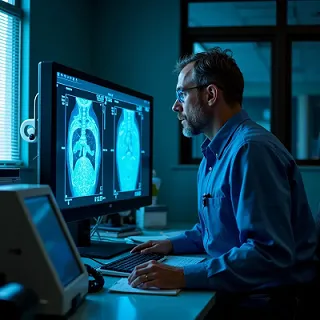
Multimodal imaging, an approach that synthesises data from a variety of sources including electrocardiography, echocardiography, and Magnetic Resonance Imaging (MRI), to name a few, has ushered in an era of precision medicine that seemed impossible just a decade ago.
The integration of multimodal data and AI is dismantling old biases and helping clinicians to make better predictions for patients, paving the way for more informed treatment decisions. In a study , AI software recorded the results of cardiac MRI scans and blood tests of more than 200 heart disease patients, measuring the movement of 30,000 points that are marked on the heart structures in each heartbeat. By combining these data with the patients' eight-year health records, AI could predict the abnormal conditions that will lead to patient death. Additionally, AI was able to predict the survival rates of patients for the next five years, and the prediction accuracy of the next year survival of patients could easily reach 80% - a rate that is higher than clinicians’ prediction accuracy of 60%.
Through the combination of imaging machines and flow evaluation, clinicians can now pre-emptively determine the most effective treatment course, be it medical therapy, coronary intervention, or bypass graft surgery, based on the patient's anatomy and a calculated score. This approach not only enhances patient outcomes but also significantly reduces the risks associated with traditional surgery.
The benefits of this technology extend beyond the operating room. Routine imaging allows for the continuous monitoring of disease progression and the effectiveness of treatment, enabling timely adjustments that can prevent complications and improve the patient's quality of life. Perhaps most promising is the potential of multimodal imaging to serve as a prognostic tool, identifying patients at risk of developing heart disease before symptoms appear. This proactive approach could dramatically alter the direction of cardiac care, making early intervention and prevention cornerstones of treatment.
There are some promising results. For example, asymptomatic left ventricular dysfunction (ALVD) is a treatable condition present in 3-6% of the general population and can result in a reduced quality of life However, an inexpensive non-invasive screening tool for ALVD is not available. A study explored how the application of AI to the electrocardiogram (ECG), a routine method of measuring the heart's electrical activity, could identify ALVD. When tested on more than 52,000 patients, the AI model yielded an accuracy rate of 85.7%, thus enabling the ECG to serve as a powerful screening tool in asymptomatic individuals with ALVD.
Technology and healthcare has become more intertwined; it is clear that AI-enabled multimodal imaging is not just a tool but a paradigm shift in how we approach cardiac care. By providing a more nuanced understanding of heart disease and enabling personalised treatment plans, this technology promises to usher in a new era of healthcare. An era where treatments are not just effective but tailored to the individual, where the risk of surgery is minimised, and where the focus shifts from treating disease to preserving health. In this new frontier, the promise of personalised medicine is realised, promising a future where cardiac care is more precise, less invasive, and ultimately, more humane.