Data Privacy and Security Challenges in Health Information Exchange

Kate Williamson
Editorial Team, Asian Hospital & Healthcare Management
Health Information Exchange (HIE) contributes to healthcare operational efficiency even though it deals with major privacy risks to patient information. The preservation of patient data faces dangers from cybercriminals as well as internal staff and operations that require connection between healthcare providers and regulatory requirements. Healthcare security risks can be reduced through current innovative technologies that include blockchain and AI and zero-trust security principles. Patient information requires protection from cybersecurity threats because high-quality cybersecurity systems and regulatory frameworks must be developed.

Introduction:
Healthcare organizations are transforming the industry through digital methods which both optimize clinical operations and improve patient services and enable more fluid exchange of health data. Health Information Exchange (HIE) provides essential security which enables safe patient record exchanges between different healthcare providers while creating better patient results and lower operational expenses and better provider collaboration. Has your curiosity ever risen about the level of protection of your medical records within this networked system? The healthcare benefits obtained from HIE might lose their value due to potential risks associated with security breaches and privacy violations. This article examines the extensive problems faced in Health Information Exchange regarding data privacy and security.
The Importance of Health Information Exchange
Health Information Exchange functions as a central healthcare element which provides authorized clinical personnel the capability to share and access medical documents as well as diagnostic results and imaging data and prescriptions. Healthcare information exchange creates interoperability that cuts down duplication testing and administrative functions and protects patient safety through streamlined information sharing between separate healthcare providers. Modern medical data systems that link information face heightened dangers from unauthorized access and cyberattacks and data exposure incidents. People need to find methods supporting the protection and preservation of health data secrecy alongside system reliability without compromising performance.

Major Security and Privacy Challenges in HIE
1. Data Breaches: The Silent Threat
Medical records serve as valuable targets when it comes to cybercriminal activities. A breach resulting from a single data incident allows hackers to reveal sensitive patient records which leads to problems with identity theft and insurance fraud alongside financial damage. The healthcare sector faces millions of data breaches throughout 2023 which makes it one of the primary targets hackers choose to attack. Organizations sustaining a breach encounter financial expenses that extend to substantial damage of both patient trust and reputation.
Healthcare cyberattacks became widely known through the Anthem Inc. breach of 2015 which exposed 78.8 million patient records containing names together with birth dates and Social Security numbers.
2. Unauthorized Access and Insider Threats
Healthcare organizations should be aware that the major threat to patient data stems from inside health facility personnel instead of external cyber attackers. Members of healthcare staff through deliberate or unintentional means can make sensitive information available which results in privacy breaches. Healthcare data security becomes at risk when there are no access limitations in health record systems.
The records of more than 1000 patients from a medical center fell victim to unauthorized access by a previous staff member in 2018. The sufficient monitoring of healthcare organizations who restrict patient data access remains a crucial organizational concern.
3. Data Interoperability vs. Security Dilemma
The enhancement of data interoperability through use of HIE creates implementation challenges. The complete data exchange mechanism between multiple healthcare providers and healthcare systems establishes numerous potential entry points that remain susceptible. The process of standardizing data formats together with protecting encryption and security protocols poses major issues for organization systems.
The main question becomes how to establish proper equilibrium between system accessibility and security protocols. The implementation of rigorous encryption and access controls demands assessment since it could possibly affect the speed of data transfer.
4. Compliance with Regulations: A Constant Struggle
Healthcare organizations must comply with various data protection laws such as:
- HIPAA (Health Insurance Portability and Accountability Act) – USA
- GDPR (General Data Protection Regulation) – Europe
- DPA (Data Protection Act) – UK
- PDPA (Personal Data Protection Act) – Singapore & other countries
Healthcare organizations must adhere to all guidelines since non-compliance generates substantial financial penalties and legal consequences. The majority of organizations face challenges with compliance through changing regulations and poor cyber security resource distribution and general staff unawareness.
The ongoing development of healthcare-related regulatory guidelines needs assessment regarding their rate of adaptation to escalating cyber threats within medical environments.
5. Data Ownership and Patient Consent Issues
Who truly owns patient data? The hospital? The physician? The patient? As HIE advances the dispute about data ownership ownership becomes more prominent. The right of patients to maintain control of their medical data remains uncertain because present consent tracking structures are fragmented and existing data-sharing protocols are difficult to understand.
The scenario emerges when a patient asks for medical data deletion yet another healthcare authority retains copies of the information so which organization should maintain control?
Solutions and Best Practices for Securing HIE
| Challenge | Solution |
| Data Breaches | Implement end-to-end encryption, multi-factor authentication, and regular security audits. |
| Insider Threats | Enforce role-based access controls, employee training, and real-time activity monitoring. |
| Interoperability vs. Security | Utilize blockchain technology for secure, tamper-proof transactions. |
| Compliance Challenges | Invest in AI-driven compliance tracking and periodic risk assessments. |
| Data Ownership Issues | Develop transparent policies on data consent and patient control mechanisms. |
Emerging Technologies to Enhance HIE Security

1. Blockchain for Data Integrity
- Provides a decentralized, tamper-proof ledger for health records.
- Enhances transparency and security in data transactions.
2. Artificial Intelligence (AI) for Threat Detection
- The combination of artificial intelligence algorithms allows for finding suspicious access behavior alongside possible security breakages.
- Automates compliance checks and risk assessments.
3. Zero-Trust Security Framework
- The system functions by default with absolute distrust against all users and systems.
- Continuous user and device verification becomes necessary for granting system entry.
4. Homomorphic Encryption
- System applications function on secured data without requiring its decryption.
- The system allows analytic studies and health data research through privacy protection measures.
The Future of HIE Security: Where Are We Headed?
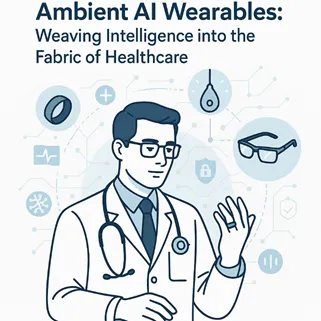
As telemedicine grows while wearable health devices adopt cloud-based healthcare solutions more frequently the area available for cyber threats becomes broader. Healthcare institutions need to answer whether they can maintain sufficient cybersecurity against cyber attackers. Healthcare Information Exchange security depends on continuous infrastructure investment together with joint policymaker-technology provider collaboration along with public and professional healthcare education.
Final Thought: Can We Ever Achieve 100% Security?
Data protection in HIE becomes more effective through thorough vulnerability reduction and active risk management practices even though complete security is virtually unattainable. Healthcare organizations share the responsibility for HIE security with technology developers and regulatory bodies as well as patients themselves.
Call to Action
The process of medical data sharing and protection has crossed your mind before. People need to call for better visibility about data management together with advanced protective measures and strict compliance with security regulations. Healthcare providers need to establish vigorous cybersecurity measures now that trust from patients stands as the foundation of healthcare operations.






-(1).webp)
-(1).webp)