Changing the Face of Digital Pathology using an AI-Based Tool for Prostate Cancer
-(1).webp)
Saeed Amal
Professor, Northeastern University
This study addresses challenges in prostate cancer diagnosis by integrating AI models with human expertise via a novel web application. Through usability tests with pathologists, the application's effectiveness, emphasizing ease of understanding, use, and acceptability were assessed. Findings suggest high potential for clinical integration, with insights informing future enhancements and emphasizing the need for clear AI result representation.
Introduction
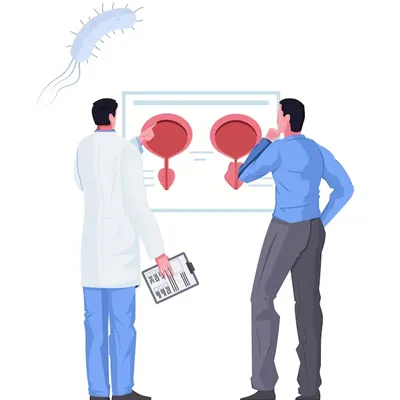
Prostate cancer stands as a formidable challenge in the realm of oncology, asserting itself as the most prevalent cancer among men in the United States and second globally. The year 2022 witnessed a staggering 268,490 new cases and 34,500 unfortunate deaths attributed to this insidious disease. Amidst this bleak landscape, the scarcity of pathologists and the inherent variability in diagnostic grading pose formidable hurdles. However, a glimmer of hope emerges from recent advancements in deep learning, demonstrating remarkable efficacy in diagnosing prostate cancer from biopsy samples with accuracy akin to seasoned experts.
The Genesis of Innovation
Fueled by the potential of these cutting-edge AI algorithms, a novel web application has been meticulously crafted. This innovative tool not only caters to the exigencies of pathologists but also endeavors to seamlessly integrate AI into the clinical milieu. By amalgamating AI predictions with electronic health record (EHR) data, this application expedites diagnosis and streamlines the convoluted labyrinth of clinical workflows.
Path to Usability: Bridging AI and Human Expertise
The crux of our study lies in the convergence of AI models with human proficiency, accentuating the imperative of explicability to foster trust. A scalable web application has been painstakingly engineered for prostate cancer detection, underscoring the pivotal role of visualizations and surveys in deciphering labyrinthine healthcare data and soliciting invaluable user feedback.
A Glimpse into the Application
Our web application boasts a user-friendly interface, poised to augment the diagnostic workflow of pathologists. Anchored by a donut chart facilitating ISUP grade prediction, the interface exudes simplicity and intuitiveness. Comprising four distinct tabs—"Biopsy," "Demographics," "NLP Summary," and "Detailed Summary"—this design engenders a seamless and enriching user experience.
Survey Insights: A Tapestry of User Experience
A meticulously crafted survey, spanning six sections and encompassing 39 questions, served as the linchpin for our usability analysis. Harnessing the robustness of NASA's TLX test, we delved into the nuanced realm of workload metrics, unraveling both qualitative anecdotes and quantitative assessments. The findings paint a portrait of resounding acclaim, underscored by the application's intuitive design and the palpable enthusiasm of users.
Clinical Implications: A Paradigm Shift in Diagnosis
The resplendent tapestry of our study unveils the transformative potential of AI-aided tools in the clinical crucible. Emboldened by the resounding affirmation of five seasoned medical practitioners, our healthcare web application emerges as a beacon of hope, poised to catalyze a seismic shift in diagnostic paradigms. Its seamless integration into clinical workflows portends a future brimming with efficiency and efficacy in the battle against prostate cancer.
The Quintessence of Innovation
At the heart of our endeavor lies an unparalleled commitment to innovation, epitomized by the symbiotic fusion of AI prowess with diverse modalities for prostate cancer diagnosis. This pioneering effort not only bridges existing chasms but also charts unexplored territories, heralding a new dawn in the realm of oncology. As the first of its kind, our study paves the way for future endeavors, imbued with the potential to revolutionize the landscape of cancer diagnosis.
Unveiling Open Horizons
Yet, amidst the euphoria of our achievements, cavernous realms of possibility beckon. The need for refined representations of charts and the imperative of clarity in AI results stand as beacons guiding our path forward. As we chart a course toward broader horizons, a diverse participant pool and an expanded data warehouse emerge as imperatives, propelling us toward the pinnacle of excellence.
Conclusion: A Journey Unfolds
In the crucible of healthcare innovation, our web application emerges as a paragon of excellence, poised to redefine the contours of prostate cancer diagnosis. Buoyed by the fervent acclaim of medical luminaries and the resounding validation of user feedback, we embark on a journey fraught with promise and potential. As we traverse uncharted territories and scale dizzying heights, the beacon of innovation illuminates our path, guiding us toward a future imbued with hope and healing.
.webp "From AI Tools to Workflow Transformation in Healthcare")




.webp)