Nanomedicine and Cancer: Targeted Therapies for Improved Outcomes

Kate Williamson
Editorial Team, Asian Hospital & Healthcare Management
Cancer treatment through nanomedicine focuses on the use of nanocarriers which would be used to carry drugs to the cancer cell thus increasing the efficiency of the cancer treatment while at the same time having minimal side effects to other cells in the body. Such therapies are implemented to have greater effectiveness of drug in treatment, better diagnostic imaging, and versatility. Nanotechnology combined with cancer treatments is all the potential it has to enhance efficiency and at the same time it is capable of reducing the invasiveness of the treatment.
Introduction:
Even today, cancer is one of the toughest diseases to treat, yet advancement in technology has offered the required intervention. Of all of them there is nanomedicine, which is nanotechnology based and focuses on development of better and targeted treatments against the cancer. Nanomedicine can therefore be referred to as a branch of medicine that applies particles with dimensions of less than 100nm in terms of drug delivery, imaging and therapeutic procedures. These have the possibilities of enhancing better treatments of cancer with improved results and decreased side effects than those seen earlier.
What is Nanomedicine?
Nanomedicine is the practice of involving the medical applications derived from nanotechnology, which is a branch that deals with material that is very tiny. Nanomedicine is, therefore, regarded as an intervention technology in cancer treatments which seeks to enhance the precision of treatments. Chemotherapy and radiation are some of the conventional treatments that are known to affect both the healthy cells and the affected cells and therefore have side effects such as fatigue, nausea, hair loss among others. This problem is managed by nanomedicine in which the drugs are directly administered to the tumor cells hence such impacts on the healthy tissues are eliminated while the efficiency of the treatment is enhanced.
How Does Nanomedicine Work in Cancer Treatment?
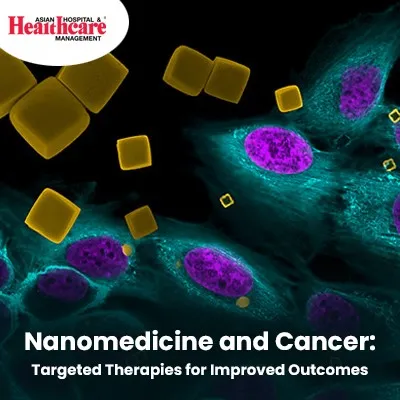
That may well be one of the most amazing advancements in nanomedicine: the nanoparticles can be designed to deliver anticancer medications. Some of these nanoparticles are created in a way that make them attach to cancer cells in particular. Once administered into the body, they move within the blood stream in search of cancerous tissues on which they deposit their drug. Such a delivery system ensures that the drug accumulates more in the tumor thus amplifying its effects, and at the same time sparing the unaffected body tissues.
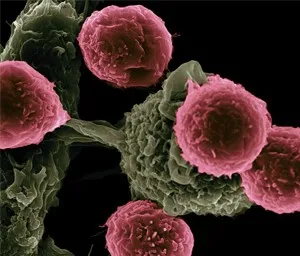
Besides drug delivery, other application for nanoparticles includes diagnostic uses. Some nanoparticles are targeted to stick to the cancer cells and in the process enhance visibility in the imaging scans.
This makes it easy for doctors to identify the diseases at an early stage and with a lot of precision to enable them to treat the diseases.
Types of Nanoparticles in Cancer Therapy
There are various kinds of nanoparticles employed in cancer treatment, and every kind exhibits characteristics that qualify it for a particular role.
1. Lipid-based nanoparticles: These are nanocarriers with a lipid layering, thus bio-compatible when used in the delivery of drugs in the human system. They are employed most frequently in the targeted application of anti-cancer agents for example chemotherapy.
2. Polymeric nanoparticles: These nanoparticles are made from biodegradable polymers and have the capabilities of drug and genetic material carrying to cancerous cells. They are quite helpful in gene therapy especially where abnormal genes present in the cancer cells are repaired.
3. Metallic nanoparticles: Nanoparticles of gold and silver are currently under analysis for their potential of improving imaging methods in order to locate cancer cells within the body. These particles can also be in used in thermal therapies where the particle gets heat to be able to kill cancer cells.
4. Carbon-based nanoparticles: Graphene and carbon nanotubes are current with specific focuses being made on drug delivery and imaging capability.
Advantages of Targeted Therapies in Nanomedicine
Targeted therapies using nanomedicine offer several key benefits over traditional cancer treatments:
a. Higher precision: Cancer cells can also be targeted through the process of functionalizing nanoparticles to identify particular markers on the cellular surfaces. This means that they can bring drugs straight to cancer cells and spare healthy cells therefore lowering the side effects.
b. Improved drug efficacy: This is the case because nanoparticles enable the delivery of higher concentrations of drugs to the tumor site hence increasing the efficacy of treatment. This means that lesser concentrations of toxic drugs can be administered meaning that the general toxicity of the cancer treatments is low.
c. Enhanced imaging: There can be an enhancement in uploading contrast in imaging scans, and therefore the medical practitioner can easily identify tumors at an early stage. This means that early intervention is a key factor that would help in enhancing the prospects of the preferred treatment outcomes.
d. Multifunctional applications: The treatment and diagnosis in some cases can be incorporated in one nanoparticle. Such nanoparticles are called theranostic nanoparticles as they deliver drugs and can assist in tracking the effectiveness of the treatment.
Overcoming Challenges in Cancer Treatment with Nanomedicine
It is however important to note that nanomedicine has it own drawbacks. As is true with many other diseases, there is the primary problem that not all cancer cells are equal and can be present in one and the same tumour.
It has become challenging to develop nanoparticles that can attack all the cancer cells with the same efficiency. In addition, the immune cells in the body may also have the tendency to regard nanoparticles as foreign bodies and attack them; thereby diminishing the nanoparticles’ efficacy.
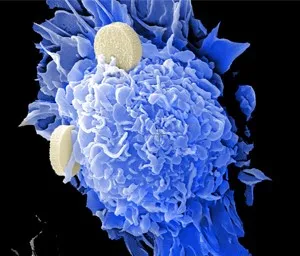
Scientists are currently trying to address these challenges whereby there are improved designs of nanoparticles and enhanced mechanisms of avoiding the immune systems. Another area of interest is pharmacogenomics where nanomedicine therapies target the specific genes of the patient’s cancer making the treatment to be more effective.
The Future of Nanomedicine in Cancer Treatment
Nanomedicine is relatively a new field, but research into its potentials exhibits brighter days ahead of cancer treatment. Present research is aimed at improving the existing nanoparticles to be more intelligent with better identification of cancer cells, increased drug delivery capacity of the nanoparticles, and the ability to deliver different forms of therapy all at once. For instance, while some nanoparticles are being developed to deliver both chemotherapy and gene therapy eventually destroying the cancerous cells.
It is believed that in the future, nanomedicine will be a way to provide the better treatment for the patients because it is going to be less invasive and take less efforts from the patient. For instance, the exact location of cancerous cells can mean that useful treatments such as chemotherapy lose their brutal side effects as seen in patients today.
Conclusion
The emerging field of nanomedicine is opening up the opportunities to deliver cancer treatments which are more accurate and efficient. Thus, nanoparticle drug delivery system provides a means to enhance the effectiveness of treatments and at the same time, circumventing side effects by delivering drugs to cancer cells specifically. Despite these difficulties, nanomedicine has been described as having a ‘larger potential in oncology than in any other therapeutic area.’ In the future, as we continue to improve our understanding of cancer, nanotechnology based treatment’s should become available which will revolutionize cancer treatment and give patients the best chance for recovery with minimal side effects.