The New Blueprint for Healthcare: Data, Decisions, and Delivery at Scale

Kate Williamson
Editorial Team, Asian Hospital & Healthcare Management

Introduction: A System under Transformation
The global healthcare systems are in structural change. What has been an industry which was traditionally reactive, facility-based, and volume-based is currently having a turn towards an industry with a focus on data knowledge, evidence-based practice, and provision of care at a scale. The increasing demands of patients, financial pressures, employee deficiencies, technological discontinuity and regulatory complexity are forcing healthcare executives to rethink traditional operating models.
The new healthcare roadmap is not based on infrastructures. It is based on the effectiveness with which organizations gather, process and respond to information; the decisiveness with which leadership transforms insight into strategy and the efficiency with which care delivery scales with populations. Under this new paradigm, competitive edge lies with organizations that have been able to combine technology, governance, and operations into one ecosystem.
This change does not exist in theory. It is presently occurring in hospitals, health systems, specialty networks, and integrated care providers.
Data as the Core Strategic Asset
Data has ceased being a back-office procedure or compliance mandate. It has already turned into a strategic resource of the contemporary healthcare business.
Electronic Health Records, interrelated medical devices, imaging, laboratory platforms, revenue cycle applications, and patient engagement applications produce enormous amounts of structured and unstructured data. This data can be used in a predictive model, operational optimization, and clinical excellence when leveraged.
Nonetheless, the actual change is the transition between data collection and data orchestration. Top organizations are developing centralized data platforms which combine clinical, operational and financial data. These converged environments remove siloes and enable the decision-makers to have real-time accessibility to performance metrics.
The role of data is also being increased further by advanced analytics using artificial intelligence and machine learning. It is now possible to predict patient deterioration, predictive volumes, schedule staff, and identify revenue leakage through predictive tools. The concept of data-driven healthcare is not a dream anymore, but a reality.
In the health IT infrastructure, cybersecurity solutions, analytics platforms, and interoperability frameworks, this transition brings big opportunities to B2B stakeholders. The vendors, which help in secure and scalable data environments, are becoming strategic partners and not transactional suppliers.
From Intuition to Evidence-Based Decision Making
Leadership in healthcare has traditionally been based on experience, past standards and disjointed reports. The new blue print requires abandonment of a management approach that is intuitive in favor of an evidenced-based governance approach.
The contemporary executive dashboards supply close-to-real time information on the occupancy levels of the beds, patient throughput, and surgical utilization, the readmission rates, the supply chain performance and the financial margins. This openness allows leaders to work in front of things as opposed to behind.
Data simulation models are increasingly used to support strategic decisions on expansion, investments on service lines, acquisition of capital equipment and allocation of workforce. Scenario planning tools enable the administrators to evaluate the financial and operational impacts of the new programs prior to their implementation.
Moreover, accountability is being strengthened by value-based care models. Outcome-based, quality-based, and patient satisfaction score-based reimbursement systems demand specific performance monitoring. Organizations with weak data infrastructure are not able to compete in these changing models of payment.
Board governance is also enhanced by the change to data-driven decision-making. The healthcare boards are currently insisting on quantifiable KPIs that resonate with long term strategic objectives. This resigning augments the stability of the institution and investor trust.
Scaling Care Delivery in a Hybrid Ecosystem
Healthcare delivery has ceased to be a walled in area of hospitals. The new blueprint adopts a hybrid ecosystem that incorporates both physical facilities as well as the digital and community-based touchpoints.
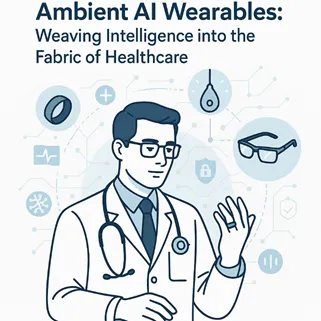
Telehealth systems, remote patient monitoring and mobile health apps have opened access and relieved acute care environments. Wearable devices and AI-based alerts are now utilized in the chronic disease management programs to ensure continuous care delivery beyond the conventional setting.
This model of the scalable delivery model minimizes unnecessary admissions and enhances population health. It also increases patient interactions through providing convenience and customization.
Mega health systems are spending in command centers which are centralized and which control the system of more than one facility. These facilities oversee the capacity management, emergency operations and patient transfers, which are the optimisation of resource usage.
The other important aspect of scalable delivery is supply chain resilience. The global medical supply chains were vulnerable due to the disruptions observed in the last few years. Top companies are also adopting predictive inventory systems, sourcing diversification plans and adopting electronic tracking platforms to maintain continuity.
Among industry partners, this transformation generates the need of telehealth systems, internet of things-based medical equipment, logistics automation systems, and cloud-based teamwork framework.
Interoperability and Integration as Growth Enablers
The barrier to healthcare transformation still is one of the largest in the fragmented systems. The new blue print gives interoperability more focus as a pre-requisite to scalability of operations.
The smooth flow of data between the pharmacies, primary care providers, imaging centers, and specialty hospitals, as well as the laboratories, enhances the coordination of care and minimizes duplication. Billings and compliance reporting are also done more accurately through the use of integrated systems.
Cloud computing is essential in such integration. Cloud-native systems encourage scaling, distance access, and safe information exchange among geographies. Mergers and acquisitions of health systems are big on the interoperable platforms to integrate operations within a short time.
Interoperability is a technical requirement, but also a strategic distinguishing factor. When well integrated organizations, they can grow at a faster rate, cooperate more, and provide a coherent patient experience throughout the networks.
Workforce Optimization in a Digitally Enabled Era
The problem of workforce is still one of the most acute in the global healthcare. Scheduling a small number of employees, fatigue and an increase in labour prices threaten the sustainability of operations.
The new blueprint is making workforce management data-driven. Predictive analytics can be used to predict patient counts and match them with staffing. Automated scheduling systems ease the administration load and also maintain labor laws.
Clinical decision support system improves the efficiency of physicians by offering evidence based recommendations at point of care. Administrative workflow automation minimizes manual labor, by enabling employees to deal with high-value tasks.
There is also the evolution of upskilling programs. Organizations in the healthcare are also investing in training staff on digital literacy so that they can be able to utilize advanced technologies. The interpretation of data and strategic agility take more and more focus in leadership development programs.
As a B2B provider, workforce optimization tools can be viewed as a fast-growing market, in this case, the providers of AI, robotic process, and virtual training platforms.
Financial Sustainability and Value-Based Models
The cost of health care has been on the increase all over the world and financial sustainability will be a key component of the new blueprint.
Analytics-based revenue cycle management systems assist in minimizing claims denials, quickening reimbursements, and enhancing the visibility of cash flows. Predictive tools detect the anomalies in billing prior to submission minimizing the risk of compliance.
Outcome-based financial models are also required in value-based care models. The providers should monitor quality indicators, patient satisfaction, and effectiveness of treatment in the long term. Transparency of data will be the key to negotiating contracts with payers and proving quantifiable value.
Capital allocation decision is also becoming more tactical.
Technology and infrastructure investments as well as joint ventures are determined on the basis of the long-term ROI and the ability to scale.
Banking institutions that pursue financial strategy and data-driven performance management have competitive resilience in turbulent markets.
Cybersecurity and Trust as Strategic Imperatives
With the increase in the pace of healthcare digitalization, cybersecurity threats increase. Healthcare organizations are the best targets of cyberattacks because patient information is very sensitive.
The new blueprint takes into consideration cybersecurity at all levels of digital infrastructure. Multi-factor authentication, zero-trust constructions, encryption protocols, and continuous monitoring systems are becoming the norm.
Other than regulatory compliance, cybersecurity has a direct effect on the reputation of the institutions. Breach of data destroys the trust of patients, and may lead to serious penalties.
Healthcare cybersecurity technology partners have become part of enterprise strategy and no longer peripheral vendors.
Patient-Centricity at Scale
Healthcare cybersecurity technology partners have become part of enterprise strategy and no longer peripheral vendors.
Data and technology will be the central focus of the transformation; however, improved patient outcomes and experiences are the final result.
The digital engagement channels allow the patients to make appointments, access their medical records, communicate with the provider, and receive information about their health depending on their requirements. These are the devices that enhance transparency and create a long term loyalty.
Population health analytics can also be used to identify vulnerable populations and take specific actions. Predictive modeling-based preventive care programs lower hospital care and enhance well-being in the community.
The system of patient feedback that is built into analytics dashboards enables organizations to continuously optimize the quality of services they offer.
No longer an option, scalable patient-centricity is a competitive necessity.
Building the Blueprint: Strategic Priorities for Healthcare Leaders
There are a number of strategic priorities that healthcare leaders who intend to implement this new blueprint ought to consider.
To start with, invest in integrated digital infrastructure which does away with silos and facilitates real time visibility. Second, establish a data-fluent culture at the leadership and front line. Third, establish financial and operational KPIs in accordance with the long-term value-based objectives. Fourth, regulatory compliance and cybersecurity are to be among the primary factors, but not peripheral ones.
Ecosystems of partnership are important as well. Partnership with technology vendors, analytics companies, device vendors, and consultants serves to speed up the process of transformation and mitigate the risk of implementation.
Conclusion: A Blueprint for Sustainable Growth
The field of healthcare is going through a new period when smart scaling is more likely to define it than pure physical growth. Evidence based decision making, digitally enabled delivery models and data based understanding are transforming the way care is planned, financed and delivered.
Those companies which adopt this blueprint are placed in a path of sustainable expansion, operation robustness and better patient results. The ones that are reluctant would find themselves left behind in an increasingly competitive and technology-driven environment.
The future of healthcare is in those institutions that are able to turn information into intelligence, intelligence into strategy and to policy strategy into scalable impact.
Data. Decisions. Delivery. They are not autonomous pillars any longer. The two constitute the modern healthcare excellence architecture.