Remote Diagnostics at Home: The Next Evolution of Telemedicine and Healthcare Delivery

Saar Danon
Vice President of Marketing and Business Development, Tradis Gat
Remote diagnostics is transforming healthcare delivery by bringing advanced diagnostic services directly to patients’ homes. This model reduces hospital workload, lowers patient costs, improves compliance, enables multi-test assessments during a single visit, creates new opportunities for healthcare providers, enhances accountability, and promotes equitable access to innovative diagnostic technologies.
Introduction
Healthcare systems worldwide are facing a convergence of challenges: growing patient demand, aging populations, workforce shortages, rising operational costs, and increasing expectations for accessible, patient-centered care. While telemedicine has successfully expanded access to clinical consultations, diagnostic services have largely remained tied to hospitals, imaging centers, and outpatient clinics.
This facility-centric model has served healthcare well for decades, but it is increasingly strained. Patients often travel considerable distances for routine assessments, diagnostic facilities face growing waiting lists, and healthcare organisations continue to invest heavily in expanding physical capacity.
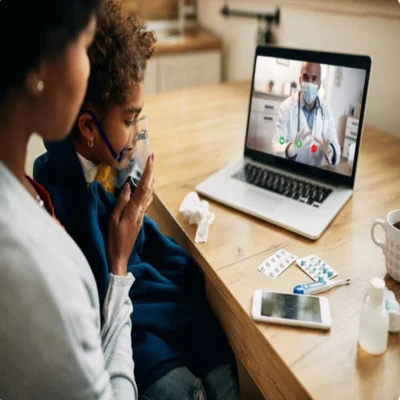
Recent advances in portable diagnostic technologies, secure digital connectivity, cloud-based data management, and artificial intelligence are enabling a new model of care: remote diagnostics delivered directly to patients’ homes. Rather than requiring patients to travel to healthcare facilities, diagnostic capabilities can increasingly be brought to them.
For healthcare leaders, remote diagnostics represents more than a technological advancement. It offers an opportunity to fundamentally redesign care pathways, improve operational efficiency, enhance patient satisfaction, and create more sustainable healthcare delivery models.
Moving Beyond Virtual Consultations
The first generation of telemedicine focused primarily on communication. Virtual consultations allowed physicians to evaluate symptoms, monitor chronic conditions, and provide follow-up care remotely.
However, effective clinical decision-making often depends on objective diagnostic information. Historically, obtaining that information required patients to visit dedicated facilities equipped with specialised devices and trained personnel.
Today, many diagnostic procedures can be performed outside traditional healthcare environments. Advances in miniaturisation, connectivity, and data transmission allow clinical measurements to be collected in the home and securely reviewed by specialists elsewhere. This evolution transforms telemedicine from a consultation platform into a comprehensive care-delivery ecosystem.
As healthcare systems continue shifting toward preventive care and population health management, remote diagnostics may become as important as remote consultations themselves.
Reducing Capacity Constraints and Waiting Times
One of the most significant advantages of home-based diagnostics is its ability to reduce pressure on hospitals and outpatient diagnostic centers.
Healthcare facilities frequently allocate substantial resources to routine monitoring activities that do not require hospital infrastructure. Follow-up assessments, screening programs, chronic disease monitoring, and non-urgent evaluations often occupy appointment slots that could otherwise serve patients with more complex needs.
By transferring appropriate diagnostic services into community and home settings, healthcare organisations can increase the availability of specialist appointments, diagnostic equipment, and clinical personnel.
This shift may reduce waiting times, improve throughput, and optimise the utilisation of existing healthcare assets without requiring major capital investments. In many healthcare systems, expanding physical infrastructure is costly and time-consuming. Remote diagnostics offers an alternative pathway to capacity expansion by distributing care delivery beyond facility walls.
Hospital administrators increasingly recognise that capacity challenges cannot be solved solely by building additional clinics or purchasing more equipment. Service redesign and care decentralisation may deliver greater long-term value.
Improving Health Economics
The true cost of diagnostic testing extends beyond the direct cost of the procedure itself.
Patients frequently incur significant indirect expenses when attending diagnostic appointments. These may include transportation costs, lost work hours, caregiver support, parking fees, accommodation expenses for rural patients, and productivity losses for accompanying family members.
For elderly individuals, patients with disabilities, and those living in remote regions, these barriers can be particularly significant.
Home-based diagnostics can substantially reduce these indirect costs while maintaining access to high-quality clinical evaluation. From a healthcare economics perspective, reducing logistical burdens may generate measurable savings at both the individual and system levels.
Furthermore, earlier diagnosis and improved monitoring can help prevent disease progression, reduce avoidable hospital admissions, and support more effective management of chronic conditions. These downstream benefits have the potential to create significant economic value across healthcare systems.
As payers and healthcare providers increasingly focus on value-based care, remote diagnostics aligns closely to deliver better outcomes at lower overall cost.
Enhancing Patient Compliance and Engagement
Patient compliance remains one of healthcare’s most persistent challenges.
Many individuals delay or avoid recommended diagnostic procedures due to inconvenience, transportation difficulties, anxiety, mobility limitations, or competing personal responsibilities. Missed appointments and delayed testing often contribute to later diagnoses and poorer clinical outcomes.
Home-based diagnostics can help address these barriers by bringing services into familiar environments that patients find more comfortable and accessible.
When healthcare becomes easier to access, adherence often improves. Patients are more likely to participate in routine monitoring programs, preventive screening initiatives, and chronic disease management protocols when the process requires less disruption to their daily lives.
In addition, remote diagnostic programs can foster greater patient engagement by creating more personalised healthcare experiences. Patients frequently report higher satisfaction levels when care is delivered in settings that prioritise convenience and comfort.
Improved engagement may ultimately translate into better clinical outcomes and stronger long-term relationships between healthcare providers and patients.
Enabling Integrated Diagnostic Pathways
Traditional healthcare delivery often requires patients to attend multiple appointments across different departments and facilities.
A patient managing several chronic conditions may need separate visits for ophthalmology assessments, metabolic monitoring, liver evaluations, wound care reviews, and gastrointestinal investigations. Coordinating these appointments can be difficult for both patients and healthcare organisations.
Remote diagnostics creates opportunities to redesign these fragmented pathways.
A single home visit may allow trained clinicians to perform multiple assessments during one coordinated session, collecting data from several diagnostic domains simultaneously. This integrated approach reduces duplication, minimises patient inconvenience, and improves care coordination.
For healthcare organisations, consolidated diagnostic workflows can increase efficiency while providing a more comprehensive view of patient health.
As multidisciplinary care becomes increasingly important, integrated diagnostic models may become a cornerstone of future healthcare delivery.
Workforce Transformation and New Employment Models
Healthcare workforce shortages remain a global concern. Recruiting and retaining qualified professionals has become increasingly difficult across many clinical disciplines.
Remote diagnostics introduces opportunities to rethink workforce utilisation and create more flexible employment models.
Specialised diagnostic teams can operate across hospitals, community settings, and home-care programs. Clinicians may choose flexible schedules, part-time participation, evening services, or hybrid work arrangements that combine facility-based and community-based responsibilities.
These models may improve workforce satisfaction while increasing healthcare system capacity.
Remote diagnostics also supports more efficient use of specialist expertise. Diagnostic data collected in patients’ homes can be reviewed centrally by experts, enabling a single specialist to support larger patient populations across broader geographic areas.
For healthcare leaders, workforce redesign may prove just as transformative as the underlying technology itself.
Quality Assurance, Transparency, and Accountability
As healthcare services move beyond traditional facilities, maintaining quality standards becomes essential.
Successful remote diagnostic programs require robust clinical protocols, standardised operating procedures, secure data management systems, and continuous quality monitoring.
Interestingly, home-based healthcare may also introduce new opportunities for transparency and accountability. Patients often have greater visibility regarding the professionals providing their care and may contribute valuable feedback regarding service quality, communication, and overall experience.
Healthcare organisations can leverage this information to drive continuous improvement and strengthen patient-centered care initiatives.
The integration of quality metrics, patient-reported outcomes, and service-performance indicators will be critical to ensuring that remote diagnostics consistently meets the same standards expected within hospital environments.
Promoting Geographic Equity in Healthcare Access
Geographic disparities remain a major challenge in healthcare delivery worldwide.
Patients living in rural, remote, or underserved communities frequently have limited access to advanced diagnostic technologies and specialist expertise. In many regions, healthcare quality remains closely linked to proximity to major medical centers.
Remote diagnostics offers a powerful mechanism for addressing these inequalities.
By deploying portable technologies and digitally connected care models, healthcare organisations can extend advanced diagnostic capabilities far beyond urban hospitals. Patients can access sophisticated assessments without traveling long distances or relocating temporarily to receive care.
This approach supports a more equitable healthcare system in which access is determined less by geography and more by clinical need.
For policymakers and healthcare leaders, remote diagnostics may become an important tool for reducing disparities and improving population health outcomes.
The Role of Artificial Intelligence
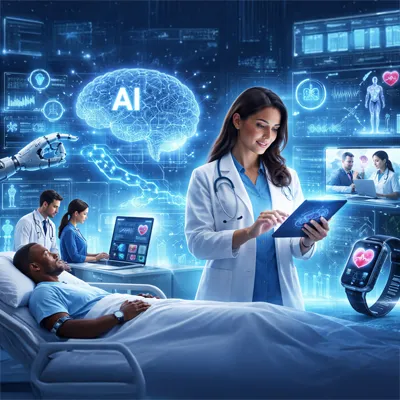
Artificial intelligence is expected to play an increasingly important role in the future of remote diagnostics.
AI-enabled systems can assist with image analysis, pattern recognition, risk stratification, workflow optimisation, and clinical decision support. These capabilities may help clinicians identify abnormalities earlier, prioritise high-risk patients, and improve diagnostic consistency.
Importantly, AI should be viewed as an augmentation tool rather than a replacement for clinical expertise. The greatest value is likely to emerge from collaborative models in which technology enhances human decision-making while preserving clinical oversight.
As adoption expands, healthcare organisations will need to address governance, validation, cybersecurity, and ethical considerations to ensure responsible implementation.
Strategic Considerations for Hospital Leaders
The transition toward remote diagnostics requires more than technology acquisition. Success depends on thoughtful organisational planning and alignment with broader healthcare objectives.
Hospital leaders should evaluate:
- Clinical services suitable for remote delivery.
- Regulatory and reimbursement frameworks.
- Workforce training requirements.
- Data security and interoperability needs.
- Patient selection criteria.
- Quality assurance mechanisms.
- Integration with existing care pathways.
Organisations that approach remote diagnostics strategically are likely to achieve greater operational, clinical, and financial benefits.
Conclusion
Remote diagnostics represents the natural next step in the evolution of telemedicine. By extending diagnostic capabilities into patients’ homes, healthcare organisations can reduce capacity pressures, improve patient experience, lower indirect healthcare costs, enhance compliance, and expand access to care.
The technology required to support this transformation already exists and continues to mature rapidly. The primary challenge now lies in redesigning healthcare delivery models to fully leverage these capabilities.
For hospital executives and healthcare leaders, remote diagnostics should not be viewed simply as a new service line. It represents a strategic opportunity to build more efficient, accessible, patient-centered, and sustainable healthcare systems for the future.




-(1).webp)