Combating Child Malnutrition in Asia: A Public Health Perspective

Kate Williamson
Editorial Team, Asian Hospital & Healthcare Management
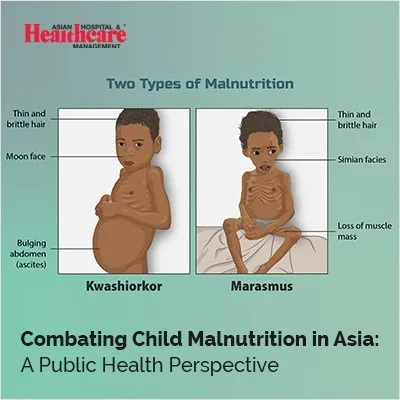
Millions of children in Asia are malnourished due to which children suffer from stunting, wasting and they are unable to concentrate mentally. Derived from poverty, hunger, malnutrition, diseases and culture, it has health and economic implications. Solutions include breastfeeding promotion, food fortification, nutrition education and communication, school feeding programs and healthcare. When people join together in organizations, they can guarantee better health outcomes for children.
Introduction:
How to halt malnutrition among children has become one of the biggest public health issues in Asia. Even now, enormous quantum of children in the region are experiencing the effects of malnutrition while the region and countries involved have recorded relative improvement in their economic statuses and improvements in the health care system. This article aims at outlining the reasons of child malnutrition in Asia, the effects of malnutrition, and the means, by which this issue might be solved from the viewpoint of public health.
Understanding Child Malnutrition
Inadequate provision of nutrients in body growth and development is described as malnutrition in a child. It can manifest in three primary forms:
Under-nutrition: Encompasses stunting defined as short height for age, wasting defined as low weight for height, and underweight, meaning low weight for age.
Micronutrient deficiencies: Deficiency in some of the compounds such as vitamin A, iron and iodine in their diets.
Over-nutrition: Generally referred to as being caused by excessive intake of calories, although less prevalent among the less affluent population.
The Scale of Malnutrition in Asia
Over half of the global number of underweight children live in Asia. Low- and middle-income countries such as India, Pakistan, Bangladesh, and Afghanistan still face high stunting and wasting, whereas China, Malaysia, and others of the Asia-Pacific region are experiencing a rising tide of early childhood obesity. To that extent, this is a matter of socio-economic disparities, and lack of food security, coupled by poor knowledge on the part of the populace about nutrition.
Causes of Child Malnutrition in Asia
1. Poverty and Food Insecurity
Many families in Asia struggle to afford nutritious food. A diet lacking fruits, vegetables, protein, and healthy fats leads to malnutrition. Climate change and natural disasters further impact food availability in many countries, worsening the crisis.
2. Lack of Education
Parents and caregivers may not understand the importance of balanced diets and proper feeding practices, especially during a child’s early years.
3. Poor Maternal Health
Malnourished mothers are more likely to give birth to underweight babies. This results in a cycle of poor feeding that end up cycling generations of families.
4. Inadequate Healthcare Access
Despite, the global immunization program mmes, lack of access to vaccines including clean water and sanitation sharply raises prevalence of infections which heightens malnutrition in children.
5. Cultural Practices and Traditions
In social cultures or in some societies pregnant women and young children are barred from consuming some healthy foods.
Impacts of Malnutrition on Children
The effects of malnutrition are devastating and long-lasting:
a. Physical Health
Stunted children are more particularly shorter than other children and they are also weak. Wasting contributes to the increased susceptibility of children to various infections, diseases including diarrhea and pneumonia.
b. Cognitive Development
Malnutrition leads to stunting which has an impact the children’s capacity to functions in school since their brain grows slower.
c. Economic Consequences
Malnutrition has adverse effects on human growth especially in adulthood therefore increases poverty levels.
d. Increased Mortality Rates
Malnutrition weakens the immune system of the involved children, and it is to blame for nearly 45 percent of child deaths under the age of five years across the world.
Combating Malnutrition: Public Health Solutions
Governments, healthcare providers, and international organizations are taking steps to address child malnutrition in Asia. Here are some key strategies:
1. Improving Maternal and Child Nutrition
Formula feeds comprises of the appropriate type of foods for children up to the age of six months. Promoting the early provision of complementary foods that include proteins, vitamins and minerals.
2. Food Fortification Programs
The consumption of fortified staple foods such as rice, wheat flour and salt has begun in many countries with iron, iodine, and vitamin A fortifications. Such programs are however cheaper with impact felt from the large number of people who benefit from them.
3. Promoting Nutrition Education
Awareness creation through home-based country-specific group and worldly-wise crusades assist the parents understand the balanced diet, prepared methods of food and personal cleanliness.
4. School Meal Programs
Through government and non-profit organizations, prepared nutritious meals are easily availed in schools at discounted price to prevent the incidence of sick children in schools.
5. Healthcare Access
Vaccination and other forms of healthcare increase children’s immunization hence protect them from diseases that worsen malnutrition. Growth monitoring saves the day as it assists spot the vulnerable children at the right time.
6. Agriculture and Food Security Initiatives
Hearing the cry of the small scale farmers who are often culture into growing the staple crop alone increases food availability if they are assisted to also grow other crops. Irrigation and storage equipment can be promising to minimize food wastage and make the food easily available for consumption all year round.
7. Addressing Cultural Barriers
The legendary taboos likewise need to be discussed by community members together with leaders to enhance their nutrient intake practices.
8. Combating Obesity
Promoting physical activity and decreasing the intake of sugary drinks and fast food are prospective interventions for combating childhood obesity in urban children.
Success Stories in Asia
Several Asian countries have made notable progress in combating child malnutrition:
Bangladesh - Current efforts directed towards improving maternal health as well as encouraging other community nutrition-related programs have helped to bring down the stunting rate greatly in the last decade.
India - The Integrated Child Development Services (ICDS) supplies food, preschool education, and sometimes even health checkups to tens of millions of children.
Vietnam – Fortification of fish sauce and adding iron has made drastic improvement in the anemic problem including children and women.
Challenges Ahead
While there is progress, challenges remain:
- In middle-income countries urbanization and changes in food consumption are causes of obesity.
- Violence and forced displacement which affects nations such as Afghanistan and Myanmar deepen the food insecurity level.
- Climate change poses risks to food production, particularly that which is produced by livelihood vulnerable groups.
A Call to Action
To completely eradicate child malnutrition in Asia, it takes the efforts of all.
Governments should give policy attention to nutrition planning and funding, finance on one hand, and co-operate with intergovernmental organizations on the other. Families and communities have their roles to play by practicing better ways that support access to quality nutrition.
Together, we can guarantee that every child in Asia gets the opportunity to live a bright healthy and productive life for the benefit of the society.
Superficially, child malnutrition is a health problem, but it is so much more than that: it is a moral and an economic problem. Working on fundamentals that make an impact and implementing focused best practice approaches, Asia is in a position to shape a brighter future for its children. The time to act is now.



.webp "From AI Tools to Workflow Transformation in Healthcare")




.webp)