Digital Workforce Training Tools: Building the Healthcare Workforce of Tomorrow, Today

Dr. Devanand Kolothodi
Regional CEO, Aster DM Healthcare’s Cluster and Co-Founder, Nextenti
Digital workforce training tools are transforming healthcare education by enabling flexible, personalised, and competency-based learning through AI, simulation, virtual reality, and microlearning. These technologies help healthcare organisations address workforce shortages, accelerate skill development, improve knowledge retention, and ensure continuous readiness, ultimately supporting safer and higher-quality patient care.
-(1).webp)
Introduction:
Healthcare training has always been a high-stakes endeavor. The cost of an inadequately trained healthcare professional isn't just a failed procedure or missed revenue; it's patient harm. Yet for decades, healthcare education has faced significant limitations: scarce simulation resources, rigid classroom schedules, geographic barriers for rural staff, and an almost complete reliance on the time and availability of experienced practitioners. Digital workforce training tools are simultaneously overcoming these constraints, revolutionising how, where, and when healthcare professionals learn.
The Training crisis in contemporary Healthcare
Globally, the healthcare workforce is undertrained relative to demand. Rapid advancements in clinical knowledge, technology, and care models mean that yesterday's competencies may be insufficient tomorrow. The COVID-19 pandemic compressed decades of potential change into mere months. This exposed critical gaps in workforce readiness for surge scenarios, unfamiliar protocols, and rapid role adaptation.
Simultaneously, traditional training delivery is under strain. Dedicated time for education is eroding due to service demands, and training budgets are tight. Furthermore, a workforce spanning multiple generations, learning styles and technical proficiencies requires far more flexible and personalised approaches than traditional classroom lectures or mandatory e-learning modules have historically offered.
What digital training tools bring to Healthcare?
Digital workforce training tools encompass a broad spectrum of technologies, including learning management systems (LMS), simulation platforms, virtual reality (VR) and augmented reality (AR) environments, microlearning applications, AI-driven adaptive learning, and competency assessment platforms. Their shared characteristic is the ability to deliver high-quality, measurable learning experiences independent of physical location or fixed schedules.
The most effective digital training tools in healthcare possess several key qualities:
- Clinical authenticity: Scenarios, assessments, and content that accurately reflect real-world practice.
- Adaptive personalisation: Learning pathways that adjust to individual needs and pace.
- Completion and competency tracking: Clear evidence of what has been learned and retained.
- Integration with Workforce systems: Seamless connection so training completion directly informs scheduling and credentialing.
- Mobile accessibility: Learning that can happen wherever and whenever staff can engage.
Modalities reshaping Healthcare training
1. Simulation-based learning
High-fidelity simulation has long been the gold standard for clinical training in controlled environments. Digital platforms now extend simulation to desktops and mobile devices, offering branching clinical scenarios that test decision-making, communication, and technical knowledge. AI-driven simulation can adapt difficulty in real time, ensuring learners are consistently challenged at their optimal level.
2. Virtual and Augmented Reality
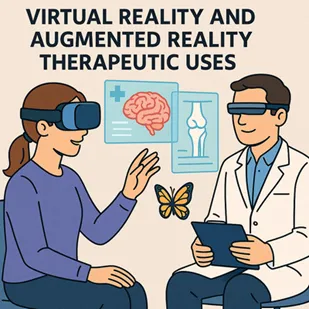
VR is transforming surgical training, procedural skills development, and emergency response preparation. Trainees can practice intubation, laparoscopic techniques, or mass casualty triage in immersive, consequence-free environments, building muscle memory and confidence before encountering real patients. AR overlays clinical guidance onto real-world tasks by supporting just-in-time learning at the point of care.
3. Microlearning and Spaced Repetition
Research consistently demonstrates that short, frequent learning exposures distributed over time yield better retention than extended block learning sessions. Microlearning platforms deliver five-to-ten-minute evidence-based modules optimised for mobile consumption, utilising spaced repetition algorithms to resurface content precisely when it is most likely to be forgotten and then retained.
4. AI-Powered Adaptive Learning
Adaptive learning systems construct a dynamic model of each learner's strengths, gaps, and preferred learning styles. Rather than adhering to a fixed curriculum, the platform continuously adjusts content, pacing, and assessment types to maximise individual learning efficiency. This personalisation is particularly valuable for a healthcare workforce with highly varied baseline knowledge and experience.
5. Competency Assessment and Verification
Shifting from attendance-based to competency-based training records significantly enhances patient safety. Digital assessment platforms provide validated evaluations of knowledge and practical skills, create auditable records, and identify individuals who have not met required competencies before they interact with patients unsupervised.
Training Impact: Healthcare organisations utilising adaptive digital learning platforms report a 40% faster time-to-competency for new staff. They also observe significantly higher knowledge retention rates, with 90-day assessments showing better results compared to traditional classroom methods.
Designing effective digital training programs
Technology alone does not create a well-trained workforce. Effective digital training programs are built on sound instructional design principles, aligned with clinical competency frameworks, and integrated into a broader culture of continuous learning.
Key design principles for healthcare include:
- Involving frontline clinicians in content development to ensure relevance and credibility.
- Aligning learning objectives with national and institutional competency standards.
- Ensuring accessibility for staff with disabilities or lower digital literacy.
- Integrating social and peer learning elements to complement self-directed digital study.
- Measuring the impact of learning on clinical outcomes, not just completion rates.
Addressing the digital divide
Not all healthcare workers have equal access to or comfort with digital training platforms. Rural and community-based staff may face limited connectivity. Older workers might be less familiar with technology interfaces. Staff for whom English is an additional language may struggle with content not available in their native tongue.
Inclusive digital training programs invest in device access, connectivity support, multilingual content, and dedicated digital skills training for those who need it. The goal is to ensure that digital transformation in training expands access to learning, rather than concentrating it among already advantaged groups.
Measuring the impact of digital training investment
The return on investment from digital training tools should be evaluated using a balanced scorecard, considering:
- Learning efficiency: Time-to-competency, completion rates, and knowledge retention scores.
- Clinical safety: Incident rates, near-miss reporting trends, and audit performance.
- Workforce outcomes: Staff confidence, satisfaction with development opportunities, and retention rates.
- Operational efficiency: Reduction in onboarding time and less duplication of mandatory training.
- Financial: Cost per learning hour compared to classroom delivery, and reduction in locum costs linked to competency gaps.
The future of the healthcare workforce training
The convergence of AI, extended reality, and big data is creating the conditions for profoundly personalised, continuously adaptive learning ecosystems. Future training platforms will anticipate competency needs before they arise, using workforce analytics to identify developing skill gaps across a health system and proactively deploying targeted learning interventions.
Generative AI will enable the on-demand creation of clinical scenarios, assessment questions, and learning resources, dramatically reducing the cost and time required to keep training content current with clinical evidence. Virtual AI tutors will provide individualised coaching, feedback, and encouragement at scale.
For healthcare organisations navigating rapid change, investment in digital training tools is not a discretionary benefit, it is a strategic imperative. The workforce capable of delivering safe, high-quality, compassionate care in the decade ahead will be one that learns continuously, adapts readily, and has the tools to do both.
The most advanced technology in a hospital is only as capable as the people who use it. Digital training tools ensure that capability keeps pace with complexity and that every member of the healthcare team is equipped to perform at their best.