Home Diagnostic Kits vs. Lab Tests: What You Need To Know

Kate Williamson
Editorial Team, Asian Hospital & Healthcare Management
Home diagnostic tests deliver fast assessments and house-based product solutions although they produce outcomes which differ from conventional lab diagnoses. This article evaluates home kit accuracy together with their cost and reliability compared to laboratory diagnostic tests by presenting their benefits and drawbacks. It demonstrates the situations that call for home kits and when laboratory tests become essential for accurate health evaluations.

Introduction:
Diagnostic test kits available at home represent a transformative development for individual medical care in modern life because of their convenience qualities. What makes the accuracy levels and cost aspects of at-home tests differ from those of conventional laboratory examinations? Does their accuracy meet the standard of laboratory professionals? This piece explores the entire comparison between home testing devices and traditional laboratory testing while presenting the benefits and constraints along with essential factors for you to make better choices.
The Growing Popularity of Home Diagnostic Kits
Modern healthcare advancement coupled with cost-effective and speed-delivered diagnostic testing has enabled home diagnostic testing to become increasingly popular. Home tests provide a convenient substitute to laboratory visits by allowing users to conduct self-testing for glucose monitoring and pregnancy testing and COVID-19 and cholesterol examination. What is their precision comparison in relation to professional medical equipment?
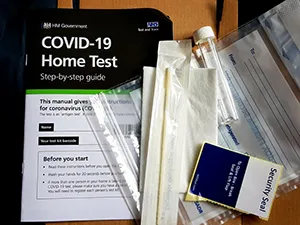
Understanding the Differences: Home Kits vs. Lab Tests
|
Feature |
Home Diagnostic Kits |
Laboratory Tests |
| Accuracy | May have variations due to user error or sample quality | Highly accurate due to controlled conditions and expert analysis |
| Convenience | Done at home, anytime | Requires travel and appointments |
| Cost | Generally cheaper | Higher costs due to professional handling and advanced equipment |
| Turnaround Time | Instant or within minutes | Hours to days, depending on the test |
| Regulatory Approval | Some FDA-approved, but not all | Strict regulatory standards |
| Scope of Testing | Limited to basic conditions | Can diagnose complex conditions |
Advantages of Home Diagnostic Kits
1. Convenience and Accessibility
The primary benefit of home diagnostic kits is to let people forego visiting hospital facilities. Corporal testing enables users to monitor their blood sugar and identify infections directly within their home environment.
2. Speedy Results
Not knowing the results of lab examinations produces anxiety for most people. Testing at home through kits delivers fast results so users can take immediate necessary actions if required.
3. Cost-Effective
The affordability of home testing devices surpasses lab testing because the costs from doctor visits and laboratory costs and transport expenses are eliminated.
4. Privacy and Comfort
Home testing of sensitive issues such as STD examinations together with pregnancy checks helps people protect their privacy so they do not feel anxious or embarrassed.
Limitations of Home Diagnostic Kits
1. Accuracy and Reliability Concerns
Home kits have become more precise but their accuracy remains subject to small mistakes. The risk of obtaining incorrect test outcomes occurs when samples are poorly handled or when devices operate improperly or when contamination occurs.
2. Limited Diagnostic Capability
A home test can only detect particular health issues.
These devices do not possess the diagnostic capabilities needed to detect diseases that need multiple examination types or extensive laboratory studies.
3. No Expert Consultation
People who receive medical diagnosis from their test results without expert guidance face the risk of incorrect diagnosis along with unnecessary stress.
4. False Positives and False Negatives
Inaccurate test results will trigger either incorrect emergency alerts or create unfounded security illusions for patients. Medical diagnosis of cancer specifically requires early detection which makes this topic essential.
When Should You Opt for Lab Tests?
Home diagnostic kits serve well to monitor health routinely, but official laboratory tests represent the standard in medical diagnostics during specific situations.
- Comprehensive health check-ups: The examination process for annual health assessments together with disease observation depends on accurate laboratory data.
- Serious medical conditions: Medically serious conditions require professional laboratory assessments because their testing requires highly specialized medical expertise.
- Confirming home test results: People should obtain laboratory testing to verify abnormal findings from home testing devices.
- Legal or official documentation: Several employers together with government institutions and insurance providers need verified laboratory examination reports as official documentation.
Case Studies: Real-Life Comparisons
Case 1: Diabetic Monitoring
Every day John performs testing on his blood sugar with his home glucose monitor because he has diabetes. A regular laboratory evaluation revealed that his long-term blood sugar management marker HbA1c delivered contrasting test results to his self-monitored measurements. The different test results between home monitoring and lab testing helped John understand that home monitoring serves for daily needs yet long-term diabetes management requires lab testing.
Case 2: Pregnancy Test
The home pregnancy test performed by Anna yielded a positive result. She went to a lab both for a blood test and ultrasound to confirm her pregnancy status while checking for potential complications. The data from home kits functions as a starting point for main healthcare choices only through laboratory verification.
Case 3: COVID-19 Testing
People turned to rapid antigen tests as a home testing solution throughout the pandemic period. The tests sometimes proved ineffective for identifying infections particularly during tests of individuals who remained asymptomatic. PCR lab tests maintained their status as the most accurate diagnostic method.
The Future of Home Testing
Artificial intelligence and biotechnology advancements create conditions for developing advanced home diagnostic testing equipment. Some emerging trends include:
Advancements in artificial intelligence and biotechnology are paving the way for even more sophisticated home diagnostic kits. Some emerging trends include:
- Smartphone-integrated tests: Devices that sync with apps for better tracking and interpretation.
- Lab-on-a-chip technology: Small devices with integrated miniature labs represent the technology known as Lab-on-a-chip technology.
- Wearable diagnostics: Wearable diagnostics refer to smartwatches and biosensors which track health conditions in live situations.
Final Verdict: Which One Should You Choose?
Various elements determine whether people should use home diagnostic kits instead of visiting a laboratory for testing.
- For routine monitoring: Human beings prefer home diagnostic kits for regular screening because they offer both accessibility and affordability.
- For accurate diagnosis: Health assessments require precise diagnosis which can only be achieved through laboratory testing.
- For urgent results: Home kits generate quick test outcomes yet people must confirm the results by getting additional testing at a laboratory when the situation is urgent.
The advancements in personal healthcare through home diagnostic kits do not eliminate the necessity of lab tests for certain medical purposes. The most suitable method integrates home testing devices for regular screenings followed by medical laboratory testing for complete evaluation.
Conclusion
The conflict between home diagnostic kits and lab tests exists in discerning their appropriate usage rather than competing against one another. Medical decisions heavily depend on accurate and detailed information which home kits provide at a lower cost but lab tests deliver with greater accuracy. Your health decisions turn into better choices when you obtain information through education.