Leveraging Digital Health Solutions for Accessible and Affordable Care in Asia
.webp)
Kate Williamson
Editorial Team, Asian Hospital & Healthcare Management
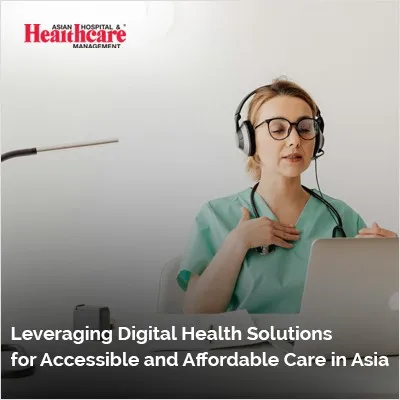
Telemedicine, mHealth Apps, diagnostics, and wearable technology is encompassing the component called digital health solutions which is transforming healthcare in Asia by making access to healthcare affordable and easy. These technologies solve problems of accessibility for remote regions, and effective treatment of patients with chronic illnesses, and lower costs to make healthcare delivery more effective and available to demographically, and geographically diverse and populated areas in the region.
Introduction:
Asia with its over 4.5 billion people present an enormous need for healthcare and this has resulted in a boom for any healthcare institution planning to set up base in Asia. Steady population growth, increased incidence of chronic diseases and longevity also challenge conventional health care models. Nonetheless, increasing the use of digital health solutions is beneficial in countering these challenges due to increased accessibility and affordability into present and future densely populated nations. This paper considers current developments in technologies such as telehealth, m-health apps, artificial intelligence and remote care delivery in Asia.
The Challenges in Asia’s Healthcare System
There are major challenges in the Asian healthcare systems in response to the size, heterogeneity, and relative income, and geographic zones that are not well equipped with the contemporary healthcare technology. Some countries within the region household have big rural populations that have little or no access to healthcare centers.
For example, large populations in countries such as India and Indonesia live in rural areas that may take a day’s travel to get to a hospital or clinic. This has contributed to expansion of the healthcare divide between the urban and the rural persons since most of these regions do not have affordable healthcare facilities.
Another is the freshly current non-communicable diseases (NCDs) such as diabetes, cardiovascular and respiratory diseases which are attributed to modifications in the prevalent lifestyles. Also, what Asian countries experience is economic inequality where even expensive services such as health care are still unattainable by many families with low incomes. All these factors make digital health solutions to be an excellent tool to fill the gaps in healthcare across the continent.
The Rise of Digital Health Solutions
Digital health solutions refer generally to the use of various technologies to enhance the delivery of health care, health management and even diagnosis. They are telemedicine, wearable health devices, mHealth, AI in diagnostics, and EHRs.
- Telemedicine: Telemedicine is amongst the most effective approaches that have been discovered to counter the challenge of accessing patients in the hard-to-reach areas. Telemedicine enables the consultation with the help of video calls, phone or online chat without meeting the doctor in person. This is especially beneficial to people in the rural setting who would otherwise have to make several trips to a health care expert. For example, In India, how apps such as Practo, Tata Health, help patients to get doctors’ appointments at home regardless their locations, makes health care possible.
- Mobile Health (mHealth) Applications: mHealth applications are the health apps delivered through mobile platforms that allow the user services starting from disease symptoms tracking, through medication alarms, to mental health support, and lifestyle consult. These app have been applied in Asia given high cell phone usage. In countries like China, apps like Ping A Good Doctor offer online consultation, and check-up, and even prescription delivery. This convenience not allows receiving different sorts of recommendations or gaining necessary information without visiting a hospital, but also contributes to the decrease of heath care costs and load on healthcare institutions.
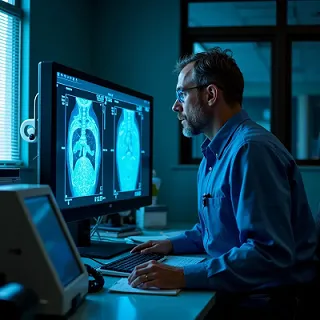
- Artificial Intelligence (AI) in Diagnostics: AI revolution in diagnostics is about doing diagnosis in a quicker and much accurate manner. It also seen that the machine vision and analysis can analyze diseases like cancer simply by guessing peoples X-rays and MRI scans which sometimes can be more accurate than the doctor. Infact AI is being utilized in South Korea, to diagnosis fatal diseases such as tuberculosis from chest X-ray scans in a matter of minutes. This kind of innovations in healthcare help to make it cheaper and easier with low costs of diagnostic methods and quicker time for the patient to seek the doctor’s help.
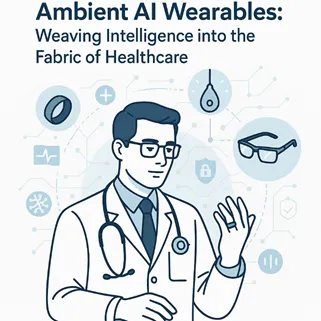
- Wearable Health Devices and Remote Monitoring: Smart devices being clothing includes fitness bands, smartwatches, and blood pressure monitor where patients are enabled to check their health timeously. These can be shared with doctors for instance, to monitor chronic illnesses such as diabetes or hypertension from an afar. For example, in Japan, a country that is experiencing a demographic problem of an aging population, remote monitoring means that families and healthcare practitioners can follow signs indicating the health condition of their loved on. The above solution is especially valuable for the care of elderly and chronic patients.
- Electronic Health Records (EHRs): EHRs also help to manage a patient’s data and retrieve when needed by another care provider. It also allows a synchronized approach to treatment, especially for those clients, who could possibly have to talk to doctors from different facilities. In Singapore, the gateway known as the National Electronic Health Record system permits permitted medical care professionals to view a client’s past health records, to ensure that there is sharing of the patient’s medical record with various healthcare organizations.
Benefits of Digital Health in Making Healthcare Accessible and Affordable
Most of the stakeholders perceive the possibility of enhancing the healthcare opportunities through digital health solutions as a great opportunity. Here are some key benefits:
- Improved Access to Healthcare: Digital solutions are often not limited by geographic location and thus help effected people especially those living in rural areas and areas with little or no health facilities. The use of telemedicine or extension of mHealth solutions will allow patients not only to receive consultations and continue their treatment without travel.
- Reduced Costs: Digital health solutions help in saving costs related to travel; consultation fees and hospitalization. Due to early diagnosis and preventive measures offered by these solutions, the expenses of the costly treatments are reduced in future. Patients are costs less, and healthcare organizations decrease operational costs through the access of less number of patients to hospitals through the utilization of telemedicine and remote patient monitoring.
- Personalized and Continuous Care: In this regard, wearable devices and remote monitoring allow healthcare providers to provide patient-centered care derived from health information acquired in the patients’ domiciles. This means that if somebody has any disease the symptoms are known early and necessary precautions are taken to avoid adverse effects. Individually tailored care is of high value in chronic illnesses as recurring attention is given to maintain stability and prevent exacerbating illness to a state where emergency medical procedures are required.
- Enhanced Data Management: Electronic Health Records acts as a solution to data management challenges by availing patient’s history across various health care facilities. This enhances the accuracy in diagnosing patient’s illnesses, cuts the number of repeat tests, and provides doctors with the full patient history needed to treat the patient.
- Increased Efficiency in Healthcare Delivery: The solutions make it possible for the health facility to deliver some services faster to its clients. For instance, whereas AI diagnostics can analyze complex medical records in a few minutes hence minimizing the number of hours patients spend in queues, mHealth apps help patient’s book appointments, receive appointment reminders, and even order prescription drugs.
Challenges in Implementing Digital Health in Asia
However, using effective digital health solutions in Asia also has conceptual challenges when it is being implemented. Telemedicine and mHealth applications are limited by low internet connection in rural regions. Considering cost issues, a factor such as cost of devices including the wearables can be very expensive to low income groups. Moreover, data privacy issues are critical because the human body information obtained should work as an argument against possible cyber threats.
Many countries are in the process of developing standards for regulating digital health and, therefore, quality of services in this sector cannot be standardized. This concerns them, and poor awareness of remote options, especially the older population and residents of rural areas, may not have proper traditional computer literacy and may require advertising and training on how to use applications.
Moving Forward: The Future of Digital Health in Asia
The conclusion drawn is that for Asia, the future of digital health is in the design of solutions that meet the peculiarities of the region. National governments as well as private organizations need to join hands for developing the fundaments of digital Health so that these can be created economically and inclusive of all, duly integrated with security frameworks. For example, website with information on the availability of telemedicine services might foster advancements in Internet connectivity in rural spaces; cheap digital devices, such as chronic disease monitoring wearables, might be made accessible through low-income subsidies.
It becomes imperative that the healthcare providers develop regional solutions in digital health. The technology the lays the foundation for mHealth applications and telemedicine platforms should include Asia’s linguistic diversities.
It becomes imperative that the healthcare providers develop regional solutions in digital health. The technology the lays the foundation for mHealth applications and telemedicine platforms should include Asia’s linguistic diversities. Furthermore, AI and machine learning models should be trained on local data in order to raise diagnostic yield and applicability to the Asian population.
Conclusion
Digital health solutions has the potential of revolutionizing stakeholder management in Asia due to its effectiveness. Telemedicine strategies that use mHealth, applications, artificial intelligence diagnosing methods, and wearable devices engage millions who cannot afford hospital treatment. However, obstructions such as internet connection, costs of internet and data security are some of the barriers that must be meet; hence, the future for health Asia is bright. The digital health solutions should be encouraged, not only financially but also in terms of people’s creative ideas, in order to develop a healthcare system that satisfies the needs of all and has available, cheap, and effective solutions.
Digital health acts as a gap filler to ensure that those who never used to access quality healthcare can be helped, and with proper support it can one day be an essential tool in improving healthcare across Asia.