From Detection to Precision: How Molecular Diagnostics and PCR Are Transforming Clinical Decision-making

Chandni Hussain
Industry Analyst, Frost & Sullivan
Molecular diagnostics and PCR have emerged as cornerstones of modern clinical testing. This article will explore the various ways in which innovations in high-throughput automation, assay design, and multiplex capabilities are expediting disease detection in the fields of infectious diseases, oncology, and genetic disorders. Such developments will enable enhanced clinical precision, faster diagnostics, and expand the role of molecular testing in routine healthcare practice.
Introduction:
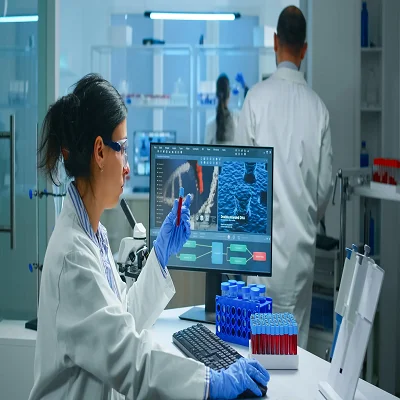
Over the past two decades, the molecular diagnostics field has evolved from a specialised laboratory technique to a fundamental component of the modern clinical practice. At the centre of this transformation is the polymerase chain reaction (PCR), a technology that enables rapid amplification and detection of genetic material from pathogens, tumours, and inherited genetic variants. Once limited to research laboratories, PCR-based molecular testing is now widely integrated into routine clinical workflows across hospitals, diagnostic laboratories, and public health systems worldwide.
This transformation is being accelerated by developments in multiplex technology, automation, and test design. By using modern molecular platforms, multiple biomarkers or infections can be simultaneously detected through a single sample, which helps in getting results much faster. These capabilities are enabling healthcare providers to move beyond simple detection towards detailed molecular profiling that supports personalised, data-driven clinical care. Molecular diagnostics is no longer just a laboratory tool—it is rapidly becoming the clinical decision engine guiding modern healthcare.
Why Molecular Diagnostics Is Becoming Central to Clinical Decision-making
Growing Demand for Rapid and Accurate Diagnostics
The increasing need for faster and more accurate disease detection methods has become the primary factor that drives the adoption of molecular diagnostics. The traditional diagnostic methods, which include culture-based microbiology and immunoassays, show low sensitivity during the early disease phases and need extended time for processing. The limitations have been overcome by molecular techniques, particularly PCR, which directly detects nucleic acids that are associated with pathogens or disease-related genetic changes.
Molecular diagnostics has expanded its capabilities beyond infectious disease detection to support outbreak management and disease surveillance operations. The public health authorities are now employing PCR-based testing platforms to detect new variants, monitor pathogen spread, and epidemiological patterns.
Technological Advancements in PCR Platforms
Advancements in PCR technologies are enhancing testing efficiency and capacity. The traditional PCR methods used in clinical laboratories restricted testing capacity, as their operations required complex workflows and staff members to handle processes manually. Today, the testing capabilities have been significantly enhanced with the advancement of automated high-throughput platforms, digital PCR, and real-time PCR (qPCR).
Real-time PCR enables clinicians to achieve faster and more accurate results through its ability to detect and measure nucleic acids during the amplification process. The digital PCR system achieves higher sensitivity through its ability to further separate samples into multiple micro-reactions, which enables the detection of rare mutations and low-abundance targets that would otherwise remain undetected.
Expanding Applications Across Clinical Specialities
Infectious Diseases: The Foundation of Molecular Diagnostics
Infectious disease diagnostics remains one of the most prominent applications of PCR-based molecular testing. The ability to detect pathogens quickly establishes essential support for clinical decisions, infection control measures and public health monitoring activities. The molecular testing can detect bacterial, viral, and fungal pathogens with high accuracy, even in cases where the traditional culture methods fail or generally require prolonged incubation.
Multiplex PCR assays have become especially vital for testing respiratory and gastrointestinal diseases. These assays enable clinicians to test multiple pathogens at once, which helps them make complete diagnoses based on a single sample. For instance, the multiplex respiratory panels enable the identification of multiple respiratory viruses and bacteria, which assists physicians in easily differentiating between pathogens that may present with similar symptoms.
Oncology: Molecular Insights Guiding Precision Therapy
Molecular diagnostics has established itself as a vital component of modern oncology care. Clinicians use molecular testing to detect mutations, which they use to select therapies that are tailored to specifically target those specific mutations. The application of PCR-based assays enables the detection of clinically actionable mutations that occur in multiple types of cancers, including breast cancer, colorectal cancer and lung cancer. These molecular tests allow oncologists to match patients with targeted therapies that are specifically designed to inhibit the specific molecular pathways that are involved in tumor growth.
Also, molecular diagnostics not only helps in the selection of therapies, but it also gains traction within the growing demand for disease monitoring. Now, molecular diagnostics enables healthcare professionals to use liquid biopsy methods that can analyse circulating tumor DNA (ctDNA) in blood samples to monitor the tumor progression rate and identify early signs of recurrence without needing invasive tissue biopsies. PCR technologies are instrumental in these applications, as they facilitate the highly sensitive detection of genetic material derived from tumors.
Genetic Disorders and Inherited Diseases
Molecular diagnostics and PCR are also frequently employed to identify genetic disorders that are inherited. Molecular testing enables clinicians to identify the precise genetic mutations that cause conditions like sickle cell disease, cystic fibrosis, and thalassemia. Molecular testing provides early detection that can facilitate timely interventions, genetic counselling, and informed family planning decisions.
In both prenatal and neonatal care settings, molecular diagnostics enable healthcare providers to identify genetic conditions during their earlier stages of life, which allows doctors to implement early treatment strategies that have the potential to substantially enhance long-term outcomes. It is anticipated that genetic testing will become more affordable through improved accessibility, which will lead to molecular diagnostics becoming a vital tool for both preventive measures and personalised healthcare solutions.
Multiplex and High-throughput Testing: A New Era of Diagnostic Efficiency
The multiplex PCR technologies development stands as the most significant advancement across the molecular diagnostics field. Traditional PCR assays, which detect one specific target per test, need multiple tests to screen for various pathogens or genetic markers. This challenge is addressed by the multiplex assays, which enable the simultaneous detection of multiple targets within a single testing process.
The medical field benefits from multiplex testing as it enables healthcare professionals to test multiple potential infectious causes, which include respiratory infections, sexually transmitted infections and bloodstream infections.
High-throughput molecular platforms allow laboratories to simultaneously process large quantities of samples, which boosts diagnostic effectiveness. The automated systems use advanced data analytics and robotics to achieve testing consistency while reducing manual task handling and accelerating operational workflows.
Integration with Digital Health and Laboratory Automation
The digital transformation of healthcare currently shows stronger support for molecular diagnostics than before. The integration of molecular testing platforms with laboratory information systems (LIS) and electronic health records (EHRs) enables clinical teams to share data seamlessly.
The system provides real-time access to actionable insights for clinicians through automatic
diagnostic result integration, which updates patient records. The molecular diagnostics field shows growing acceptance of automated systems and artificial intelligence technologies. The combination of AI-driven data analysis tools with genomic datasets enables clinicians and researchers to identify patterns that improve their ability to diagnose medical conditions while predicting disease risk with greater precision.
Challenges to Widespread Adoption
The field of molecular diagnostics has grown rapidly, yet its implementation across healthcare systems faces multiple challenges that block its widespread adoption globally. The advanced molecular testing technologies, together with laboratory infrastructure costs, represent one of the most significant barriers.
In addition to other factors, workforce proficiency remains a significant barrier. The molecular diagnostics testing process requires trained laboratory personnel who can possess the skills to analyse the highly complex genetic and molecular data. It is imperative to ensure that healthcare professionals receive the required training and education to achieve maximum benefits from these technologies.
Also, the process of molecular testing generates a substantial amount of genetic data, which creates challenges associated with data management and privacy. To ensure the protection of patient genetic data while facilitating its utilisation for clinical decision-making and research, healthcare systems must establish a highly robust data security framework.
The Future of Molecular Diagnostics
In the upcoming years, the molecular diagnostics industry will be transformed through newly developed technologies and their subsequent clinical applications. The CRISPR-based diagnostics, together with Next-generation PCR and integrated multi-omics systems, will further drive enhancements to diagnostic capabilities.
For instance, the CRISPR-based diagnostic platforms have shown the potential to detect nucleic acids with high sensitivity and specificity while simultaneously offering faster and potentially more affordable testing alternatives to traditional PCR workflows. The technologies enable molecular testing to occur at the point of care in settings with inadequate laboratory infrastructure.
Parallelly, the molecular diagnostics field is expanding beyond detecting only single genes to developing comprehensive molecular profiling as a result of advancements in genomics and bioinformatics. By utilising the multi-omics approaches that combine transcriptomic, genomic, and proteomic data, clinicians will now gain more profound insights into disease mechanisms and
treatment responses.
Actionable Intelligence for Healthcare Leaders
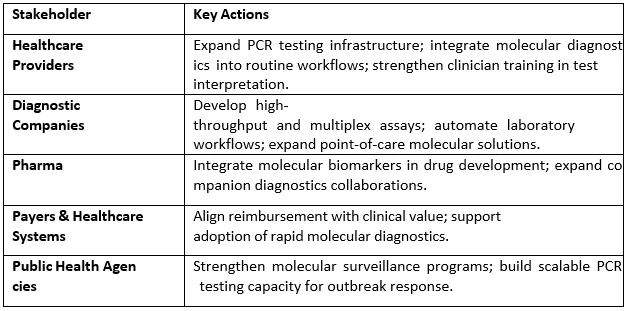
The Path Forward: From Diagnostic Tool to Clinical Intelligence Platform
Molecular diagnostics is entering a new phase of clinical impact. What began as a powerful method for detecting genetic material is evolving into a comprehensive platform for generating actionable clinical intelligence.
Healthcare systems increasingly recognise the value of molecular testing in improving diagnostic accuracy, accelerating clinical decision-making, and enabling more personalised treatment strategies. As technologies continue to advance and become more accessible, molecular diagnostics will play an even greater role in shaping the future of medicine.
Hospitals, diagnostic laboratories, and healthcare organisations that invest in advanced molecular testing infrastructure, digital integration, and workforce development will be better positioned to harness the full potential of these innovations.
Ultimately, molecular diagnostics will serve as a critical bridge between disease detection and precision medicine, transforming how healthcare systems diagnose, monitor, and treat disease.
Reference:
-
https://pmc.ncbi.nlm.nih.gov/articles/PMC12584703/
(2025 – Advances in clinical molecular diagnostics and next-generation diagnostic technologies) - https://www.sciencedirect.com/science/article/abs/pii/S0732889325005450
(2025 – Advances in molecular diagnostic technologies in clinical microbiology) - https://pmc.ncbi.nlm.nih.gov/articles/PMC12655715/
(2025 – Role of molecular diagnostics and nucleic acid amplification tests in infectious disease detection) - https://pmc.ncbi.nlm.nih.gov/articles/PMC12403756/
(2025 – Digital PCR performance and clinical applications in viral diagnostics) - https://pmc.ncbi.nlm.nih.gov/articles/PMC12278255/
(2025 – Digital PCR technology development and diagnostic applications) - https://pmc.ncbi.nlm.nih.gov/articles/PMC12658282/
(2025 – Next-generation sequencing and molecular diagnostics in infectious diseases) - https://pmc.ncbi.nlm.nih.gov/articles/PMC11717804/
(2025 – Emerging CRISPR-based diagnostic technologies and applications) - https://pmc.ncbi.nlm.nih.gov/articles/PMC12854756/
(2026 – CRISPR-on-chip diagnostics for infectious diseases and personalized medicine) - https://www.nature.com/articles/s43856-025-00933-4
(2025 – Advances in CRISPR-based molecular diagnostic systems) - https://www.mdpi.com/2309-608X/11/10/720
(2025 – PCR and next-generation molecular diagnostic methods in clinical pathogen detection)