Navigating Anxiety and Stress in a Post-Pandemic World

Kate Williamson
Editorial Team, Asian Hospital & Healthcare Management
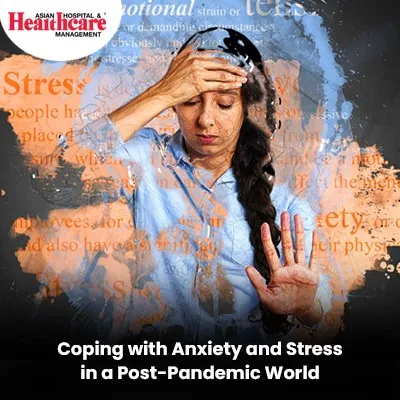
The subject of this article, post-pandemic, has increased stress and worried levels because of the health state, future unpredictability, and social transformation. Using principles of acceptance, incorporating structure into one’s life, being present, reintegrating social interactions, and avoiding exposure to adverse information. People have to turn to specialists, practice gratitude, and care for children to be strong and stable during such a pandemic.
Introduction:
The COVID-19 cases impacted everyone causing drastic changes in our daily activities, including working, socializing, and self-care checks. In many individuals, the majority of them living in a post-COVID-19 world, anxiety is common and stress levels remain high. It simply remains significant to comprehend the way to negotiate this new measure and attain methods for handling these feelings. Check out the following informative article to find detailed recommendations on how to manage anxiety and stress in the present situation.
Understanding Anxiety and Stress
• Fear of illness or health concerns.
• Uncertainty about jobs, finances, or education.
• Adjusting to new routines, such as remote work or hybrid learning.
• Grieving personal losses experienced during the pandemic.
• Difficulty reconnecting socially due to prolonged isolation
These are triggers that one has to identify if control is to be exercised over them successfully. Another way of avoiding conflicts is to be able to identify these triggers.
The Importance of Acknowledging Your Feelings
Another important thing that helps to deal with anxiety is the recognition of the user’s feelings. But do not worry too much for stress and anxiety are just our body’s reaction to substantial changes in life. When such feelings are denied or ignored, they become worse or are elevated to some other level. Instead:
• Name your emotions: It can be said about anxiety that: “I feel anxious because…” to identify the root cause.
• Talk to someone you trust: It can be so relieving and even liberating a good way to sort things out to share it with a friend or a family member if you have one.
• Seek professional help if needed: Friends and loved ones may help, but therapists and counselors can be very useful in providing tools to work with anxiety.
Admitting that you do have such feelings locates the beginning of the process of dealing with those feelings and mastering them.

Build Healthy Routines
The pandemic affected almost every sphere of our lives, so creating a healthy schedule will help to regain a sense of normalcy. Start by:
1. Setting a consistent schedule: Everyday sleep at the same time and wake up at a certain time, this helps one maintain their body circadian rhythms.
2. Incorporating physical activity: Taking exercises will eliminate stress hormones such as cortisol level while at the same time increasing other hormones like endorphin which is associated with happiness. Try and get at least 30 minutes of exercise in a day whether it be a brisk walk, yoga, or a cycle around the neighborhood.
3. Prioritizing nutrition: Healthy food and nutrients with good amounts of fruits, green vegetables, whole grains, and lean protein sustains energy levels and is also good for the brain.
4. Taking breaks: If you are carrying out home-based work, ensure that you create time to take a break and refresh your musculoskeletal system, ensure that you hydrate or give your mind a break.
5. Practicing self-care: Give time to interest, books, or occupation that gives pleasure to that specific individual.
Schedules provide for eradicating expectations expelling novelty and, in a context that is becoming more challenging, reassuring.
Mindfulness and Relaxation Techniques
Mindfulness is defined to combat a busy mind and to improve concentration and balance through various practices one of which is believed to be as important as the other. Some effective techniques include:
• Deep breathing exercises: Take deep breaths while slowly starting to breathe in counting to four then breathe out counting to six while holding your breath to four. This makes your heart beat slower and you wish to calm down.
• Meditation: Meditate for 10 – 15 minutes a day by continually trying to focus on the breath or a calming picture to counteract any racing thoughts.
• Progressive muscle relaxation: Tense and then relax each muscle in your body since the muscle tension due to stress affects physical well-being.
• Journaling: Take time and jot down what you are currently stressed about or put down on paper one thing you are thankful for. It is an effective way of demisting your thoughts and looking at the positive perspective of life.
Practice is the word when it comes to using mindfulness techniques and achieving the goal.
Reconnect with Loved Ones
The COVID-19 pandemic influenced consumers and their mental health; it caused feelings of loneliness. Stress and loneliness can be reduced when a person gets in touch with his or her friends and family. Try:
• Scheduling regular meet-ups: Just as important as the meal, coffee, or a walk with friends, this is quality time spent with people and it can make you feel happier.
• Rebuilding your social confidence: If you’re uncomfortable around many people, begin with small groups.
• Using technology: Video calls and messages from a phone or a computer are always a great idea in case you cannot meet people face to face.
This research shows that having felt support or feeling valued in one’s relationships decreases anxiety.
Limit Your Exposure to Negative News
Lack of knowledge can be dangerous but continuously feeding our brains with distressing news can trigger anxiety. To maintain balance:
• Limit the consumption of news during the day and avoid watching or reading the news during odd hours.
• Be careful with information sources to prevent giving the wrong information.
• Avoid negative news and present them alongside positive stories or any other positive content
Feeling supported and valued in your relationships can significantly reduce anxiety.
Seek Professional Help When Needed
Often, anxiety and stress may seem like too much to bear and handle on one’s own. If such is the case, then do not wait for the situation to get worse and seek the help of a professional. One’s therapist or counselor could then offer a means to objectify the situation and offer some ways to deal with it. Further, if the case is severe then one can go for it only under a prescription from the doctor.

Cognitive behavioral therapy for instance is fairly useful in replacing negative thoughts and behaviors.
Helping Children Cope
Children may also feel the effects of the post-pandemic world. As a parent, you can support them by:
• Allowing them to share their fears or concerns as they are.
• Staying on a schedule helps one feel secure if one’s environment is in disarray.
• Reducing their contacts with distressing news sources.
• They should include teaching the child relaxation techniques that are appropriate for their age.
In creating an environment of safety, comfort, and support, a child can develop enough ‘strength’ to face change.
The Role of Gratitude and Positivity
Being grateful can definitively help change your perception of things and lower stress levels. Start a practice of counting your blessings no matter how dire your circumstances may be.
• Keeping a notebook with three things that the person is thankful for in that day.
• Saying thank you to everyone in your life.
• What one has learned about oneself during the pandemic?
Optimism is not about leaving out the negative – it is about inviting in those areas of hope and rebuilding.
Conclusion
Living with anxiety and stress in the post-pandemic world is not easy and hence it calls for adequate patience, empathy, and active problem-solving. These have included identifying and respecting your emotions, creating a healthy daily plan, getting involved in mindfulness, and seeking help when overwhelmed. This is not the path that only you’re on, millions of people across the world are in the process of trying to heal and become stronger. As the years go by and with perseverance, you too can at least regain the chance to find demise and serenity in your life.

.webp "From AI Tools to Workflow Transformation in Healthcare")