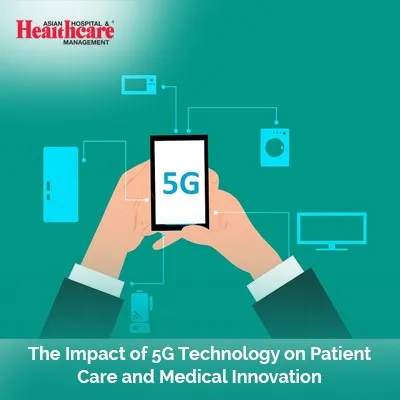
The Impact of 5G Technology on Patient Care and Medical Innovation
.webp)
Kate Williamson
Editorial Team, Asian Hospital & Healthcare Management
The advent of 5G technology holds immense potential for revolutionizing patient care and medical innovation. With faster and more reliable connectivity, 5G enhances telemedicine, facilitates real-time data transfer for quicker diagnoses, and supports IoT-enabled devices. Challenges include infrastructure deployment and data security concerns. Embracing 5G can lead to a future of personalized, efficient, and accessible healthcare.
Introduction:
In today's fast-paced world, technology continues to revolutionize various industries, and healthcare is no exception. With the advent of 5G technology, patient care, and medical innovation are set to reach new heights. The impact of 5G on these areas is immense, promising faster and more reliable connections that can transform the way healthcare is delivered.
Understanding the Healthcare Industry's Need for Advanced Technology
The healthcare industry has always been at the forefront of adopting advanced technology to improve patient care. From electronic health records to telemedicine, technology has played a significant role in enhancing healthcare delivery. However, the limitations of current networks have hindered the full potential of these innovations. This is where 5G technology comes in.
How Does 5G Technology Improve Patient Care?
One of the key advantages of 5G technology is its ability to support more connected devices and enable seamless communication between them. This means that healthcare professionals can access patient data in real-time, collaborate with experts remotely, and make informed decisions faster than ever before.
Enhanced Connectivity for Telemedicine and Remote Patient Monitoring
Telemedicine and remote patient monitoring have gained significant traction in recent years, allowing patients to receive medical consultations and monitor their health from the comfort of their homes. However, the success of these solutions heavily relies on a reliable and high-speed internet connection. With 5G, telemedicine and remote patient monitoring can become more efficient, allowing for remote consultations and continuous monitoring of patients' health. This not only improves access to healthcare services but also reduces the burden on hospitals and clinics.
Real-time Data Transfer and Analysis for Faster Diagnosis and Treatment
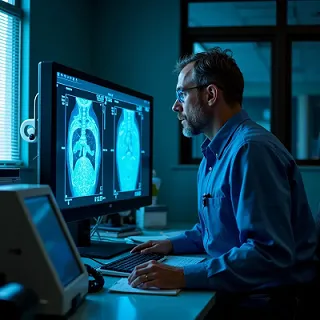
In healthcare, time is critical. With 5G technology, the transfer and analysis of patient data can happen in real-time, enabling faster diagnosis and treatment. This is particularly beneficial in emergencies where every second counts. With 5G-enabled devices, healthcare professionals can access patient information, test results, and imaging data instantly, allowing them to make well-informed decisions and provide timely care.
IoT-enabled Medical Devices and Wearables
The Internet of Things (IoT) has already made its way into the healthcare industry, with the integration of devices like fitness trackers and smartwatches. These devices can monitor vital signs, track physical activity, and provide valuable health data to both patients and healthcare providers. With 5G technology, the capabilities of these devices can be expanded, allowing for more accurate and real-time monitoring. The low latency and high bandwidth of 5G networks ensure that data is transmitted quickly and reliably, enabling seamless communication between devices and healthcare professionals.
Advancements in Surgical Procedures and Robotic-assisted Surgeries
The field of surgery has seen significant advancements in recent years, with robotic-assisted surgeries becoming more common. These procedures rely on precise control and real-time feedback, which can be enhanced with 5G technology. The ultra-low latency and high bandwidth of 5G networks enable the seamless transfer of large amounts of data, allowing surgeons to control robotic systems remotely with minimal delay. This opens up new possibilities for complex surgeries that were previously not feasible. Furthermore, 5G can enable augmented reality (AR) for surgical training, providing surgeons with a realistic and immersive learning experience.
The Role of 5G in Medical Innovation and Research
In addition to improving patient care, 5G technology has the potential to power groundbreaking medical innovations. The ultra-low latency and high bandwidth of 5G networks can support the development and deployment of advanced medical applications. For example, 5G can enable the use of virtual reality (VR) for pain management and rehabilitation, providing patients with immersive experiences that aid in their recovery. Additionally, 5G can facilitate real-time collaboration between researchers and healthcare professionals, accelerating the pace of medical breakthroughs.
Overcoming Challenges and Concerns with Implementing 5G in Healthcare
While the potential benefits of 5G in healthcare are significant, some challenges and concerns need to be addressed. One of the main challenges is the infrastructure required to support 5G networks. The deployment of 5G infrastructure, including small cells and network densification, is a complex and costly process that requires collaboration between telecommunication providers, healthcare organizations, and regulatory bodies. Additionally, there are concerns regarding data privacy and security, as the increased connectivity brought by 5G opens up new vulnerabilities. Healthcare organizations must implement robust security measures and protocols to protect patient data and ensure privacy.
Improved Patient Experience through Augmented Reality (AR) and Virtual Reality (VR)
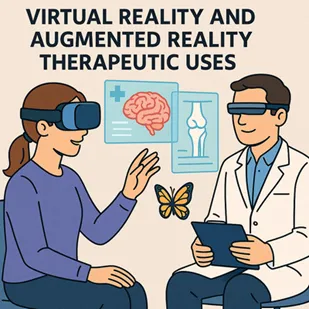
5G's high bandwidth and low latency enable the seamless integration of augmented reality (AR) and virtual reality (VR) into patient care. These technologies can be utilized for immersive therapy sessions, offering innovative approaches to pain management, rehabilitation, and mental health treatment. Patients can engage in therapeutic activities within a virtual environment, enhancing their overall well-being. Furthermore, AR and VR can be employed for patient education, providing individuals with interactive simulations to better understand their medical conditions, treatment options, and post-operative care.
Remote Training and Skill Development for Healthcare Professionals
5G facilitates high-quality, real-time communication and collaboration, making it an invaluable tool for remote training and skill development among healthcare professionals. Surgeons can participate in virtual surgical simulations and training sessions, refining their techniques and staying updated on the latest advancements in their field. This not only ensures a continuous learning curve for healthcare practitioners but also promotes standardized, evidence-based practices across the industry.
Accelerating Remote Research and Clinical Trials
The robust connectivity provided by 5G can significantly accelerate the pace of medical research and clinical trials. Researchers can remotely access and analyze vast datasets, collaborate with peers globally, and efficiently conduct virtual clinical trials. This streamlined approach enhances the efficiency of the research process, potentially speeding up the development of new treatments, medications, and medical devices. The ability to collect and process data in real-time also contributes to more accurate and timely research outcomes.
Smart Health Infrastructure and Predictive Analytics
5G technology enables the creation of smart health infrastructure, incorporating sensors and IoT devices to monitor healthcare facilities' operational efficiency, resource utilization, and patient flow. These interconnected systems can facilitate predictive analytics, allowing healthcare providers to anticipate patient needs, allocate resources effectively, and identify potential issues before they escalate. The proactive management of healthcare facilities improves overall patient care quality and optimizes resource utilization.
Challenges in Implementing 5G for Healthcare Innovation
While the potential benefits are immense, there are challenges to overcome in implementing 5G for healthcare innovation. The standardization of protocols, interoperability between devices, and regulatory frameworks need careful consideration. Additionally, ongoing efforts to address cybersecurity concerns and ensure data privacy are crucial for maintaining patient trust and safeguarding sensitive health information.
Conclusion: The Future of Patient Care with 5G Technology
As the healthcare industry embraces 5G technology, patients can expect to receive more personalized, efficient, and accessible care. The possibilities are vast, and the impact of 5G on patient care and medical innovation is just beginning to be realized. From improved connectivity for telemedicine to advancements in surgical procedures, 5G has the potential to revolutionize healthcare delivery. However, it is important to address the challenges and concerns associated with implementing 5G to ensure that patient data remains secure and privacy is protected. With the right infrastructure and safeguards in place, 5G technology can truly transform patient care and pave the way for a future of innovative medical solutions.





.webp)