Augmented Reality in Physical Rehabilitation: Where Healing Meets Imagination
.webp)
Dr. Devanshi Jobanputra
Cardiopulmonary Physiotherapist, Cipla Digital Health Ltd
.webp)
Dr. M Ravi Krishna
Head of Department, Critical Care Medicine & ECMO KIMS ICON Hospital
Augmented Reality (AR) is transforming physical rehabilitation by making exercises engaging and interactive. It enhances motivation, provides real-time feedback, and personalizes therapy. By incorporating gamified elements, AR fosters a sense of achievement and joy in recovery, turning the rehabilitation journey into a shared adventure filled with meaningful milestones.
The New Dimension of Healing
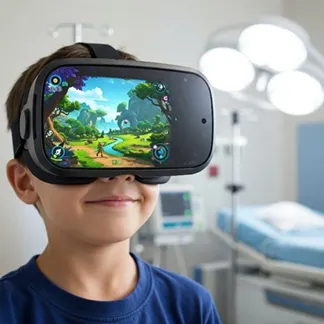
In a sunlit rehab clinic, 8-year-old Dev straps on a lightweight AR headset. Moments later, his physiotherapist taps a tablet, and the room transforms. The floor becomes a river of glowing stepping stones; the walls ripple with animated fish. Dev, who once dreaded his daily exercises for cerebral palsy, now giggles as he stretches to "rescue" a virtual dolphin. "I’m not just walking—I’m a superhero!" he declares.
This is the promise of augmented reality (AR) in physical rehabilitation: a fusion of cutting-edge tech and childlike wonder that makes recovery feel less like work and more like play. By overlaying digital elements onto the physical world, AR bridges the gap between clinical rigor and human emotion, offering patients—from stroke survivors to amputees—a path to healing that honours their resilience and imagination.
Bridging the Virtual and Physical Worlds
Traditional rehab exercises—repetitive motions in sterile gyms—often lead to disengagement. Studies show 30–40% of patients skip sessions due to boredom or frustration. AR disrupts this cycle by embedding therapy into interactive narratives.
How It Works
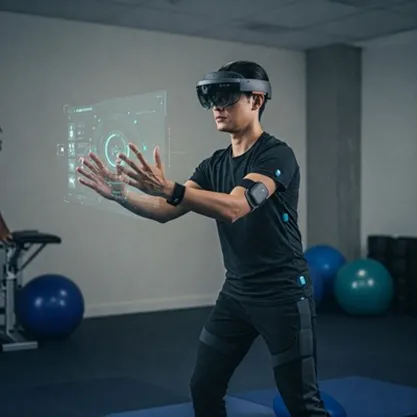
Wearables: Headsets (Microsoft HoloLens), smart glasses, or even smartphone cameras project digital cues into the patient’s environment.
Sensors: Motion trackers monitor joint angles, weight distribution, and muscle activation.
Adaptive Software: Algorithms adjust difficulty in real time, ensuring challenges match the patient’s evolving abilities.
Case Study: Relearning to Walk with "Starry Paths"
After a car accident left her with a spinal injury, Devika, 34, struggled with balance. Her therapist prescribed AR-guided gait training. Through her headset, Devika sees a path of twinkling stars on the clinic floor. To "collect" stars, she must shift her weight precisely. If she leans too far left, the stars dim; proper alignment makes them burst into cheers. "It’s like dancing again," she says. Within weeks, her balance improved 27% faster than with conventional methods.
The Psychology of Play: Making Courage Contagious
AR’s secret weapon is its ability to hack into human psychology. By framing exercises as games, it taps into intrinsic motivation:
- Gamification: Patients earn points for reaching targets (e.g., holding a stretch for 10 seconds unlocks a virtual trophy).
- Storytelling: A child recovering from burns "heals" a digital dragon by performing arm exercises, reframing pain as purpose.
- Social Connection: Multiplayer modes let patients collaborate, like two stroke survivors "building" a virtual bridge together by mirroring each other’s movements.
The Clinician’s Lens: Data Meets Intuition
AR doesn’t replace therapists - it amplifies their expertise. Real-time data dashboards reveal nuances invisible to the naked eye:
- A Parkinson’s patient’s tremor patterns, mapped as ripples in a virtual pond.
- The millisecond delay when a stroke survivor lifts their arm, highlighted by a lagging hologram.
"Before AR, I’d guess if a patient was compensating with their good side," says therapist Luis Gómez. "Now, the tech shows me exactly where to focus our sessions."
The Shadow Side: Challenges to Overcome
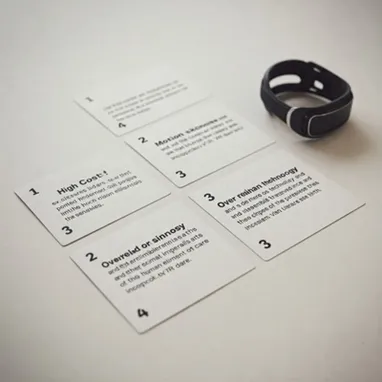
- Cost: High-end headsets remain unaffordable for many clinics.
- Motion Sickness: 15–20% of users report dizziness during sessions.
- Over-Reliance: "Tech can’t replace the human touch,” "A patient crying after a setback needs a hand to hold, not a hologram."
- Privacy: Body-tracking data could be exploited by insurers or employers.
The Future: Collaborative Creativity
Pioneers are tackling these hurdles head-on:
Haptic Feedback: Gloves that let patients "feel" virtual objects, aiding neuroplasticity.
AI Integration: AR systems that predict fatigue by analysing facial expressions.
Community Hubs: Libraries loaning AR kits, ensuring equitable access.
A Glimpse Ahead
At Stanford’s AR Lab, researchers are testing "empathy simulations." Therapists don headsets to experience a day in their patient’s body - feeling the drag of a prosthetic limb or the tremor of Parkinson’s. "It’s revolutionizing how we design therapies," says lead developer Marco Chen.
Conclusion: Healing as a Shared Adventure
Augmented Reality (AR) in rehabilitation transcends the allure of cutting-edge visuals, anchoring itself in the profound human experience of recovery. It redefines therapy by intertwining technology with empathy, transforming mundane exercises into meaningful journeys. Let’s unpack this vision:
1. Beyond Graphics: The Human-Centric Design of AR
AR’s power lies not in spectacle but in its ability to create immersive, interactive environments tailored to individual needs. Unlike traditional methods, AR engages patients in purposeful tasks—like Frank’s virtual wood-sawing—that mirror real-world activities. This approach restores agency, allowing patients to do rather than simply repeat, fostering motivation and adherence. By focusing on functional recovery, AR bridges the gap between clinical exercises and the skills needed for daily life, making progress tangible and empowering.
2. Personalization: Reigniting Identity and Purpose
Frank’s story exemplifies how AR can resurrect a sense of self. For a retired carpenter, sawing wood isn’t just physical therapy—it’s a reconnection to his identity. AR’s adaptability allows therapists to design exercises around a patient’s history, hobbies, or profession, transforming therapy into a narrative of rediscovery. This personalization combats the existential despair often accompanying illness, replacing it with hope. When patients see themselves as capable individuals—not merely “cases”—their emotional resilience strengthens, accelerating holistic healing.
3. Gamification: Turning Struggle into Play
Rehabilitation is often gruelling, but AR injects joy through gamification. By framing exercises as challenges or games—like stacking virtual blocks or “gardening” to improve motor skills—AR reduces monotony and anxiety. Playful engagement releases dopamine, a neurotransmitter linked to motivation and learning, which can enhance neuroplasticity. For children, this might mean slaying dragons to practice limb movements; for adults, rebuilding a virtual house. The struggle becomes a quest, making persistence feel natural rather than forced.
4. Connection: Combating Isolation with Shared Experiences
AR can dissolve the loneliness of recovery. Multi-user platforms enable patients to collaborate in virtual tasks—say, two stroke survivors baking a digital cake together—or allow therapists to guide sessions remotely. These shared experiences foster camaraderie, turning isolation into solidarity. Family members might even join via AR, cheering as a patient climbs a virtual hill. Such connections remind patients they’re not alone, nurturing emotional well-being alongside physical progress.
5. Data as a Story of Empathy
While AR systems track metrics like range of motion or repetition counts, this data isn’t sterile—it tells a human story. Therapists can visualize a patient’s journey, identifying patterns and celebrating milestones. For instance, Frank’s improving grip strength becomes a narrative of “rebuilding his workshop,” making progress relatable. This data-driven empathy allows caregivers to tailor interventions with nuance, honouring each patient’s unique pace and potential.
6. The Joyful Horizon of Recovery
When dignity, play, and connection converge, healing becomes a celebration of possibility. AR’s promise is a future where recovery isn’t a passive ordeal but an active, joyful adventure. Imagine adaptive AI environments that evolve with a patient’s progress, or VR/AR hybrids that simulate beach walks for gait training. Such innovations could redefine rehabilitation as a space where patients don’t just regain function—they reclaim their lives with wonder and pride.
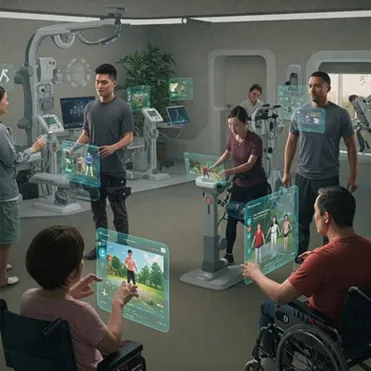
In essence, AR reimagines rehabilitation as a collaboration between technology and humanity. It’s not about fixing “broken” people but empowering them to rewrite their stories. By blending science with soul, AR crafts a world where healing is as much about the heart as it is about the body—a shared adventure toward wholeness.