ClinicalKey - “Unlocking the Power of Clinical Research Content”.

ClinicalKey is a clinical insight engine which answers key clinical research requirements of physicians, medical librarians, CMO/CMIOs, and healthcare professionals. It is comprehensive, trustworthy, and fast.
ClinicalKey is a product developed by Elsevier's Global Clinical Reference (GCR) team in consultation with more than 2,000 doctors across the world over the past two years. It is the next generation online clinical information resource.
Elsevier is a world-leading provider of scientific, technical and medical information products and services. The company works in partnership with the global science and health communities to publish more than 2,000 journals, including The Lancet and Cell, and close to 20,000 book titles, including major reference works from Mosby and Saunders. Elsevier’s online solutions include SciVerse ScienceDirect, SciVerse Scopus, Reaxys, MD Consult and Mosby’s Nursing Suite, which enhance the productivity of science and health professionals, and the SciVal suite and MEDai’s Pinpoint Review, which help research and health care institutions deliver better outcomes more cost-effectively.
“Much like their peers in other parts of the world, doctors in Asia Pacific are crunched for time and need access to reliable clinical content quickly. On top of that, there is a wide diversity of local languages, medical guidelines and clinical information available in this region. Therefore it’s important that tools such as ClinicalKey not only provide the breadth of content, but are also able to deliver at the local level,” said Robert Gorter, Director of Sales and Marketing, APAC of Elsevier. “For example, the ClinicalKey Australia edition is localized with Australian drug information and a local medical taxonomy and we will expand this localization effort to Japan, China and other Asian countries in the coming months.”
ClinicalKey proves to be:
- • Comprehensive: ClinicalKey draws answers from the largest collection of clinical resources, covering every medical and surgical specialty. ClinicalKey also indexes more than 22 million MEDLINE abstracts, which are retrieved each day from the National Library of Medicine
- • Trusted: The authoritative medical and surgical content comes from Elsevier’s vast online medical portfolio
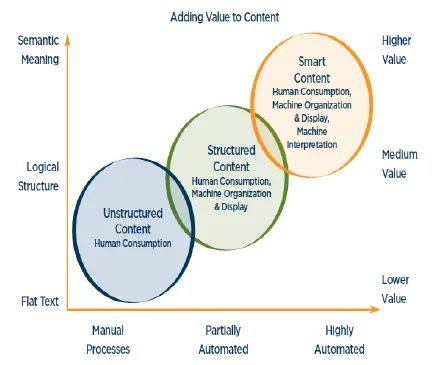
- • Fast: Smart Content, powered by Elsevier Merged Medical Taxonomy (EMMeT), enables fast discovery of answers that are more relevant than those provided by conventional clinical search engines, thereby reducing search time.
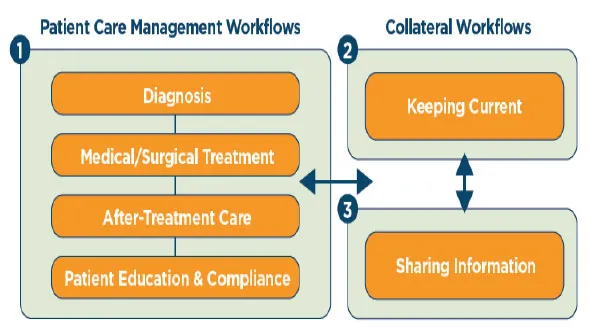
 Information found on ClinicalKey is also easily shared, helping colleagues and care teams make the best decisions for patients
ClinicalKey is designed to complement these workflows in which Hospital-based physicians are engage into.
ClinicalKey was introduced on the concept of Smart Content and Elsevier is employing it to enhance searches for clinical information performed by members of the medical community.
Elsevier Smart Content maps content to a proprietary medical taxonomy. It enables the computer to recognize not only that an article is about myocardial infarction, but also that myocardial infarction has a synonym, “heart attack”; a relevant acronym, “MI”; is a type of cardiovascular disease associated with high cholesterol; and that MI can be treated by certain drugs or surgical procedures.
EMMeT: A new standard for clinical taxonomies
EMMeT (Elsevier Merged Medical Taxonomy) is a new proprietary taxonomy created by Elsevier. It combines the most clinically useful terms from standard medical vocabularies such as MeSH, SNOMED CT, RxNorm, ICD-9, and LOINC into a single hierarchically organized taxonomy. EMMeT utilizes the Unified Medical Language System (UMLS) to map across these vocabularies. EMMeT contains more than 250,000 core clinical concepts and more than 1 million synonyms. Searchable content from Elsevier’s broad variety of clinical sources, including journal articles, book chapters, videos, and images, will all be mapped to EMMeT at a granular level to create clinical Smart Content.
 EMMeT is constantly evolving. It is managed by a dedicated team of Elsevier medical informaticists who ensure that concepts and relationships are updated regularly and referenced with the appropriate evidence. Semantic relationships refer to the connection between two concepts, for example, “drug treats disease” or “disease has symptoms.” Through the ongoing development of relationships, EMMeT is evolving from a hierarchical taxonomy into ontology. By building a semantic framework of relationships, Smart Content can bolster the discovery of content, enabling the exposure of connections that would be missed by a traditional keyword search.
A guide to Clinical Research queries
ClinicalKey, powered by Elsevier Smart Content, will return answers that are more clinically relevant than those provided by conventional clinical search engines.
Also, with content mapped to EMMeT and relationships building into a semantic framework, they will highlight connections between medical concepts and point to related content that keyword searches on conventional clinical search engines may miss.
Users of ClinicalKey are given full-text access to over 500 of Elsevier's journals, 900 books, and 13,000 medical and procedural videos. To help users decide which are the most relevant articles and authoritative authors, the system provides a series of original reviews by subject matter experts known as “First Consult”. First Consult is an authoritative evidence-based and continuously updated clinical information resource for healthcare professionals. Designed for use at the point-of-care, it provides instant, user-friendly access to the latest information on evaluation, diagnosis, clinical management, prognosis, and prevention.