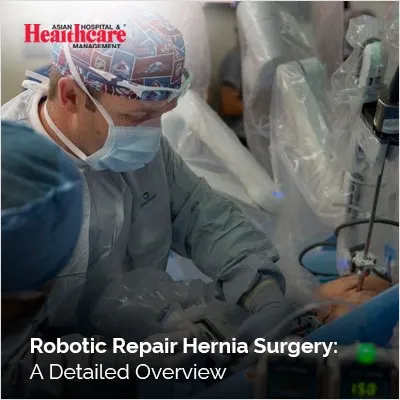
Robotic Repair Hernia Surgery: A Detailed Overview

Kate Williamson
Editorial Team, Asian Hospital & Healthcare Management
Robotic repair hernia surgery utilizes robotic systems to perform minimally invasive hernia repairs with greater precision and reduced recovery time. The procedure involves small incisions, robotic arms controlled from a console, and specialized surgical instruments. Advantages include less pain, quicker recovery, and shorter hospital stays, though risks like infection and bleeding remain.
Introduction to Hernia Surgery
A condition in which an organ or a tissue herniates or sticks through a gap in the muscle or connective tissue. While the most frequent localization of a hernia is the abdominal wall, the pathology can affect other areas as well. Usually, hernia requires surgery and with advancement in technology, the surgeries are easy to carry out and safe. It also consists of mechanical augmented hernia repair surgery as one of the innovations.
What is Robotic Repair Hernia Surgery?
In robotic repair hernia surgery, the surgeon mainly uses a robotic instrument in performing corrective surgery of a hernia. Robotic surgery is unique from usual surgery where the surgeon has to make a big cut, whereas in robotic surgery small cuts are made and small instruments utilized. These instruments are operated by the surgeon through a control panel which is present in a console and which permits auxiliary handling of the surgical area.
How Does the Robotic System Work?
Common components found in the robotic system being used in hernia surgery comprise of the following:
a. Robotic Arms: These arms capture and work on the tools in the operating theatre within the patient’s body. They are fine motors and can move in minute and highly regulated ways.
b. Surgical Instruments: These are devices which are specifically used in the surgery and they include the graspers, the scissors and the suture devices. They are relatively much smaller in size than the apparatus applied in open surgery.
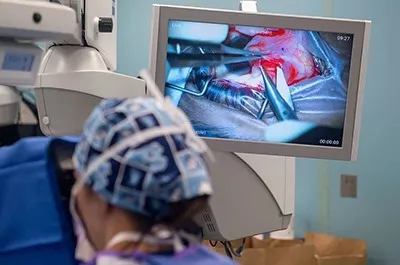
c. Surgeon Console: This is the part at which the surgeon is seated and controls the arms of the robot. The console offers a clear three-dimensional picture of the surgical field facilitating the surgeon’s ability to both view and interact with the hernia repair site.
Advantages of Robotic Repair Hernia Operation
1. Minimally Invasive: Robotic surgery also is one of the minimally invasive surgical procedures which are practiced in the medical field today. Through laparoscopy the surgeon cuts the body not more than a few times unlike when he makes a big incision. This implies that fewer tissues around are affected and the risk of acquiring an infection is diminished.
2. Greater Precision: It is less invasive as compared to the manual surgical operations because of the ability of the robotic system to make movements which are more precise in nature. This precision contributes towards making of better attempts and hence improving on the results that are made.
3. Less Pain and Faster Recovery: Patients treated surgically using robot shows less pain to the patient and hence the patient has quick recovery period. They involve less skin and tissue cutting and thereby produce less scarring and patients are easily able to get back to their normal lives.
4. Shorter Hospital Stay: Since more and more patients can be sent home on the day of the operation at the earliest and the day after the operation at the latest, the size of hospitals and their stays should again diminish.
Procedure Overview
a. Preparation: There are several steps involved in the surgery; the patient is first administered an anesthesia, so that he/she does not feel any pain.
b. Incision and Placement: The surgeon cuts a few tiny incisions in the area of the abdomen. These are the hole through which the robotic arms and instruments are sited.
c. Surgery: The specific functions of robotic arms and surgeon operate under the console and fix the hernia defect. The robotic arms accomplish the precise operations consisting of stitching and placing the meshes that help strengthen the given region.
d. Completion: Once the repair has been accomplished, the instruments are sponged off and the minor cuts are stitched up.
e. Recovery: Once the surgery is complete, patients can be kept for a short while under observation, but more often, are allowed to go home and take care of themselves.
Postoperative Care
The next important step that is equally important as the entire surgical adventure is the postoperative care. It is expected of the patients to adhere to the surgeon’s advice as to the levels of physical activity allowed, the dressing regimen, and appointments for a follow-up visit.
Postoperative care is crucial for a smooth recovery. Patients should follow the surgeon’s instructions regarding activity levels, wound care, and follow-up appointments. After the operation most patients are able to return to normal activities within several weeks, but lifting objects and participating in other forms of strenuous labor should be followed as advised by the surgeon.
Potential Risks and Complications
Despite the fact, robotic hernia repair surgery is generally safe, patients should not ignore the possibility of risks. These can include:
- Infection
- Bleeding
- He or she may also suffer from injury of the organs that are in the near vicinity.
- Complications from anesthesia
It is wise, therefore, for the patient to engage the surgeon in a discussion about these risks and what they entail so that the expectations are clear.
Conclusion:
The implementation of robotic system in conducting hernia surgery is notable improvement in hernia repair. That is why, being a less invasive technique, precise, and with shorter time for recovery, it is considered as a potential solution to many patients. As with any population that undergoes surgery, one is advised to consult a competent surgeon to decide upon the most effective course of action based on the patient’s prospective path and clinical colloid.
Most Read Articles